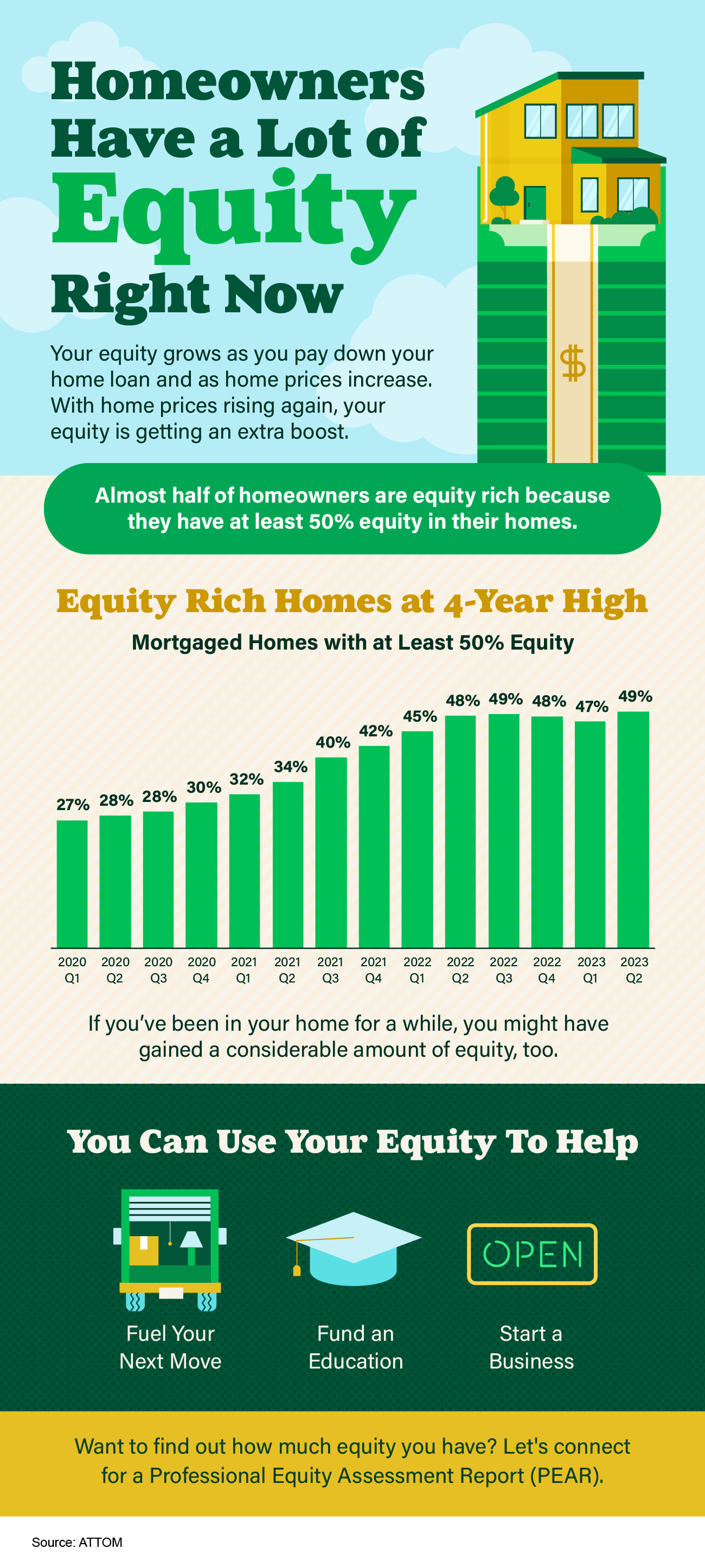
- Your equity grows as you pay down your home loan and as home prices increase. With home prices rising again, your equity is getting an extra boost.
- Almost half of homeowners are equity rich because they have at least 50% equity in their homes. If you’ve been in your home for a while, you might have gained a considerable amount of equity, too.
- Want to find out how much equity you have? Connect with a trusted real estate agent for a Professional Equity Assessment Report (PEAR).
Share this with your friends


(864) 895-9791
Expert Real Estate Team
Search Greenville SC Real Estate & Homes
Expert Real Estate Team: Your Trusted Source for Up-to-Date Real Estate Knowledge
Welcome to the Expert Real Estate Team blog! Whether you're a seasoned realtor, a homeowner looking to sell, or a first-time buyer embarking on your real estate journey, we're here to be your trusted source of valuable information.
Our blog is packed with insightful articles and expert advice on a wide range of real estate topics. We cover everything from market trends and local insights to navigating the buying and selling process, financing options, and homeownership tips.
Here's what you can expect:
- Realtors: Stay ahead of the curve with market updates, marketing strategies, legal and regulatory changes, and expert tips to elevate your real estate career.
- Sellers: Get inside knowledge on preparing your home for sale, maximizing your return on investment, and navigating negotiations with confidence.
- Buyers: Learn about different mortgage options, discover the secrets to successful homefinding, understand local market dynamics, and make informed decisions.
Our goal is to empower you with the knowledge and tools you need to achieve your real estate goals. We believe in fostering a community of informed and confident real estate professionals and homeowners.
Sept. 1, 2023
Homeowners Have a Lot of Equity Right Now [INFOGRAPHIC]
Posted in
Real Estate Market News
no comments yet
Aug. 29, 2023
Why You May Still Want To Sell Your House After All

Even though you may feel reluctant to sell your house because you don’t want to take on a mortgage rate that’s higher than the one you have now, there’s more to consider. While the financial side of things does matter, your personal needs may actually matter just as much. As an article from Bankrate says:
“Deciding whether it’s the right time to sell your home is a very personal decision. There are numerous important questions to consider, both financial and lifestyle-based, before putting your home on the market.”
So, ask yourself this: why did I want to move in the first place?
Chances are your primary motivation wasn’t just financial in nature. Why you’re really thinking about selling likely has more to do with something changing in your life or a shift in what you need out of your house.
Reasons Homeowners Still Need To Sell Today
Let’s explore some of the most common reasons sellers are moving today. A recent article from Builder Online helps shed light on this. In this research, they identified the following categories:
- Marriage – If you just got married, you may find you either need more space than you currently have, or the two of you want to find a new place you picked out together.
- Divorce – If you’re getting separated or are divorcing your partner, chances are it’ll be difficult to live under the same roof. Selling the place you have, so you can own get your own spot, may be necessary.
- Births – If your household is growing, you may need more square footage, including more bedrooms. If you’re running out of room for everyone, you may not be able to wait to move.
- Deaths – If you’ve recently lost a loved one, it can be hard to spend time in that home. You may need to move for financial reasons or because you no longer need all the space.
- Retirement – If you’re in the process of retiring, or you just did, you may be looking to downsize to cut costs, relocate to be closer to loved ones, or move to a dream location. In this new phase of life, your current home may not be able to deliver what you need.
You may find you share one of these top motivators. If any of these resonate with you, it may be time to move so you can find a house better suited to your changing needs. A survey from Realtor.com finds other sellers are in the same boat. It says, 1 in 4 sellers are choosing to move for personal reasons, even with current mortgage rates:
“. . . more than half of seller-buyers (56%) who are planning to sell in the next 12 months said they are waiting for rates to come down, while 25% need to sell soon for personal reasons.”
If you need to sell now because something in your own life has changed, don’t let rates hold you back from what you want. You have options to help make that move possible. You can use the equity you already have in your current home toward your next purchase. And with how much equity homeowners have right now, you may be able to finance less than you’d expect, or pay all cash to avoid borrowing at all.
Bottom Line
When you're ready to prioritize your changing needs, let’s connect. You need an expert on your side to help you list your house and find a home that delivers on everything you're looking for.
Posted in
Selling
Aug. 25, 2023
Why You Need a True Expert in Today’s Housing Market

The housing market continues to shift and change, and in a fast-moving landscape like we’re in right now, it’s more important than ever to have a trusted real estate agent on your side. Whether you’re buying your first home or selling once again, it’s mission critical to work with an expert who can guide you through each unique step of the process.
The reality is, not all agents operate the same way. To truly make a powerful and confident decision as you buy or sell a home, you need a real estate expert who uses their knowledge of what’s really happening with home prices, housing supply, industry projections, and more to give you the best possible advice. Someone who can provide clarity and trust like that is essential to your success. Jay Thompson, Real Estate Industry Consultant, explains:
“Housing market headlines are everywhere. Many are quite sensational, ending with exclamation points or predicting impending doom for the industry. Clickbait, the sensationalizing of headlines and content, has been an issue since the dawn of the internet, and housing news is not immune to it.”
Unfortunately, when information in the media isn’t clear, it can generate a lot of fear and uncertainty for consumers. As Jason Lewris, Co-Founder and Chief Data Officer at Parcl, says:
“In the absence of trustworthy, up-to-date information, real estate decisions are increasingly being driven by fear, uncertainty, and doubt.”
But it doesn’t have to be that way. Buying a home is a big decision, and it should be one you feel confident making. You can lean on an expert to help you separate fact from fiction and get the answers you need.
The right agent can assist you in figuring out what’s going on at the national level and in your local area. They can debunk headlines using data you can trust. Experts have in-depth knowledge of the industry and can provide context, so you know how current trends compare to the normal ebbs and flows in the housing market, historical data, and more.
Then, to make sure you have the full picture, an agent can tell you if your local area is following the national trend or if they’re seeing something different in your market. Together, you can use all that information to make the best possible decision.
After all, making a move is a potentially life-changing milestone. It should be something you feel ready for and excited about. And that’s where a trusted expert comes in.
Bottom Line
If you want sound advice and trusted information about our local housing market, let’s connect.
Posted in
Home Tips
Aug. 21, 2023
The Value of an Agent When Buying Your New Construction Home

Buying a new construction home can be an exciting experience. From being the very first owner, to customizing your home’s features, there are a lot of benefits. But navigating the complexities of buying a home that’s under construction can also be a bit overwhelming. This is where a skilled real estate agent can make all the difference.
An article from The Mortgage Reports sums it up like this:
“Your Realtor or real estate agent will be key to helping you navigate this process. . . . they can guide you through construction and help anticipate and solve for any possible snags along the way.”
Here’s how your agent is an invaluable resource in your search to find and buy your new home.
Agents Know the Local Area and Market
Your agent is well-versed in the emerging communities and upcoming developments that could influence your decision. For example, you'll want to be aware if there were any plans to construct a highway through the woods behind your prospective backyard. It’s important to consider how the neighborhood and the surrounding area might evolve before making your home purchase. Your agent can help you find a community that perfectly aligns with your preferences, lifestyle, and future needs.
Knowledge of Construction Quality and Builder Reputation
An agent also has the expertise to evaluate the construction quality and reputation of different builders. Their knowledge and experiences with local builders allow them to offer insights into each one’s track record, customer satisfaction, and construction practices. This information can help you avoid any potential risks and help you confidently select a builder known for delivering quality homes.
Assistance with Customization and Upgrades
The most obvious benefit of opting for new home construction is the opportunity to customize your home to suit your preferences. Your agent will guide you through that process and share advice on the upgrades that are most likely to add long-term value to your home. Their expertise ensures you focus your budget on areas that will give you the greatest return on your investment later on.
Understanding Builder Contracts and Negotiations
Builder contracts can be complex and differ from traditional home purchase agreements. Your agent can help you navigate these contracts to make sure you fully understand the terms and conditions. They’re also skilled negotiators who can advocate on your behalf, potentially securing better deals, upgrades, or incentives for you throughout the process.
Bottom Line
The guidance and expertise of a local real estate agent can make all the difference in turning your vision of the perfect home into a reality. Let’s connect so you can feel confident about purchasing your new construction home.
Posted in
Buying
Aug. 11, 2023
Home Prices Are Back on the Rise
Some Highlights
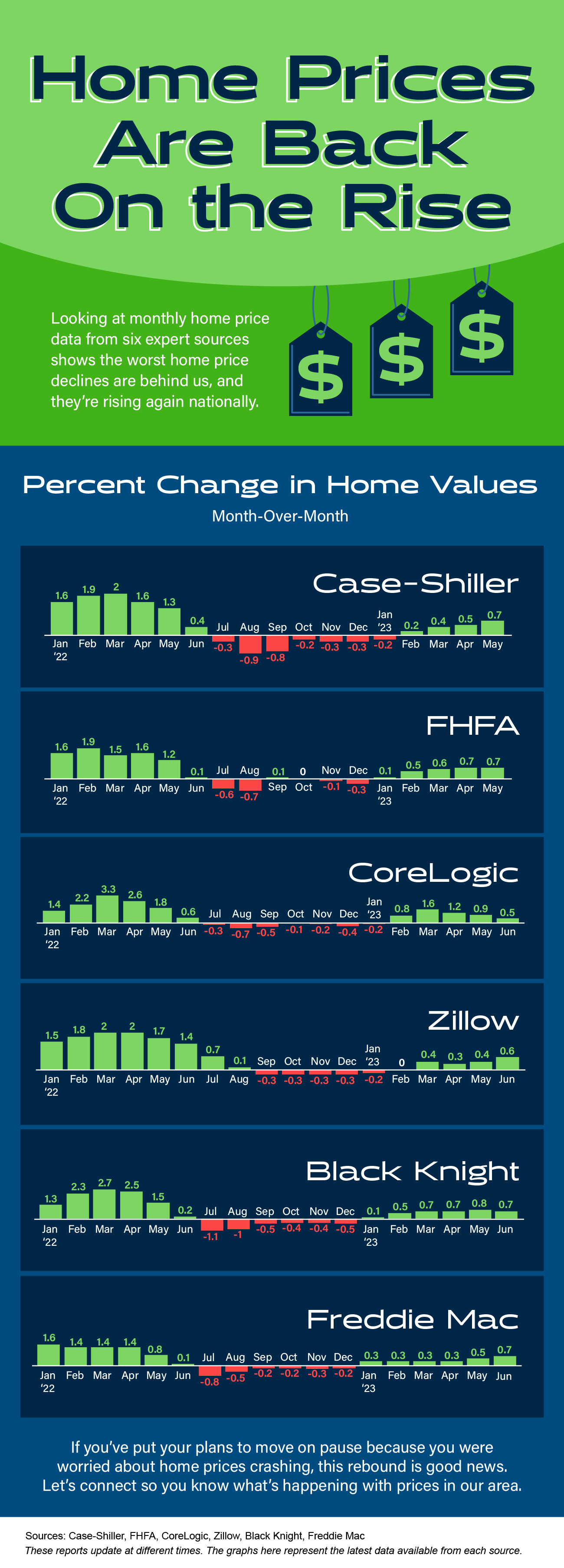
- Looking at monthly home price data from six expert sources shows the worst home price declines are behind us, and they’re rising again nationally.
- If you’ve put your plans to move on pause because you were worried about home prices crashing, this rebound is good news.
- Let’s connect so you know what’s happening with prices in our area.
Posted in
Real Estate Market News
Aug. 7, 2023
Four Ways You Can Use Your Home Equity

If you’re a homeowner, odds are your equity has grown significantly over the last few years. Equity builds over time as home values grow and as you pay down your home loan. And, since home prices skyrocketed during the ‘unicorn’ years, you’ve likely gained more than you think.
According to the latest Equity Insights Report from CoreLogic, the average homeowner has more than $274,000 in equity right now. That much equity can help you achieve certain goals. In a recent article, Bankrate elaborates:
“While the pandemic created serious challenges, the silver lining for anyone who owned a home was the sizable equity gain. Understanding how home equity works, and how to leverage it, is important for any homeowner.”
Here are a few examples of how you can put your home equity to work for you.
1. Buy a Home That Fits Your Needs
If your current space no longer meets your needs, it might be time to think about moving to a bigger home. And if you've got too much space, downsizing to a smaller home could be just right. Either way, you can put your equity toward a down payment on a home that fits your changing lifestyle. A real estate agent can help you figure out how much equity you've got and how to use it when buying your next home.
2. Reinvest in Your Current Home
Renovations are a great option if you want to change your living space, but you aren’t yet ready to make a move. Home improvement projects give you the freedom to tailor your home to match your needs and personal style. But it's important to consider the long-term benefits certain upgrades can bring to your home’s value. Lean on a real estate professional for the best advice on which improvement projects to prioritize in order to get the greatest return on your investment when you sell later on.
3. Pursue Personal Ambitions
Home equity can also serve as a catalyst for realizing your life-long dreams. That could mean investing in a new business venture, retirement, or funding an education. While you shouldn’t use your equity for unnecessary spending, using it responsibly for something meaningful and impactful can really make a difference in your life.
4. Understand Your Options to Avoid Foreclosure
Today the number of foreclosure filings remains below the norm, so there’s no need to fear a wave of foreclosed homes flooding the market. But unfortunately, there are still some homeowners who experience the foreclosure process each year. If you’re facing financial difficulties, having a clear understanding of your options and how your equity can help is crucial. Equity can act as a financial cushion that can be used in times of unexpected challenges or unforeseen circumstances that may disrupt your ability to make mortgage payments on time.
In an article, Freddie Mac explains it this way:
“If exiting your home is the best option for you, selling with equity may be a good option. When selling with equity, you are using the proceeds from selling your home at a higher price than the amount you owe on your mortgage to pay off your remaining mortgage debt.”
Bottom Line
Your equity can be a game changer in reinvesting in your needs, pursuing your goals, and even helping you avoid foreclosure during difficult times. If you’re unsure how much equity you have in your home, let’s connect so you can start planning your next move.
Posted in
Home Tips
Aug. 4, 2023
Housing Market Forecast for the Rest of 2023 [INFOGRAPHIC]
Some Highlights
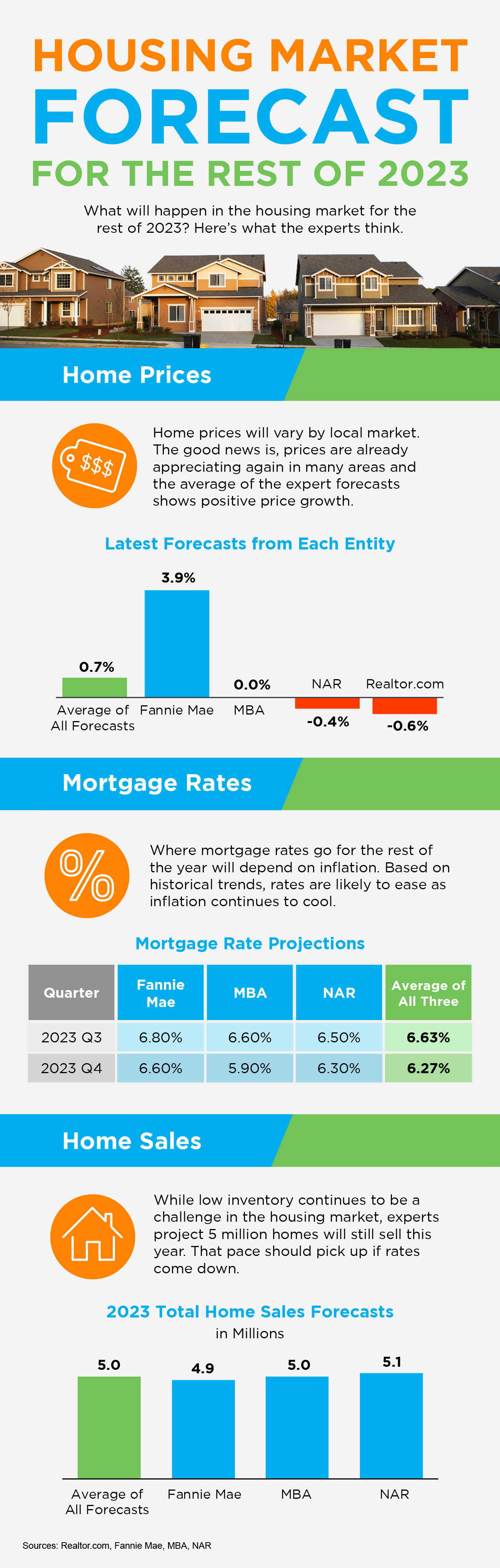
- Want to know what experts say will happen in the rest of 2023? Home prices are already appreciating again in many areas. The average of the expert forecasts shows positive price growth.
- Where mortgage rates go for the rest of the year will depend on inflation. Based on historical trends, rates are likely to ease as inflation continues to cool.
- Even though low inventory continues to be a challenge, experts project 5 million homes will still sell this year. That pace should pick up if rates come down.
Posted in
Real Estate Market News
Aug. 1, 2023
Sellers: Don’t Let These Two Things Hold You Back
 Many homeowners thinking about selling have two key things holding them back. That’s feeling locked in by today’s higher mortgage rates and worrying they won’t be able to find something to buy while supply is so low. Let’s dive into each challenge and give you some helpful advice on how to overcome these obstacles.
Challenge #1: The Reluctance to Take on a Higher Mortgage Rate
According to the Federal Housing Finance Agency (FHFA), the average interest rate for current homeowners with mortgages is less than 4% (see graph below):
 But today, the typical 30-year fixed mortgage rate offered to buyers is closer to 7%. As a result, many homeowners are opting to stay put instead of moving to another home with a higher borrowing cost. This is a situation known as the mortgage rate lock-in effect.
The Advice: Waiting May Not Pay Off
While experts project mortgage rates will gradually fall this year as inflation cools, that doesn’t necessarily mean you should wait to sell. Mortgage rates are notoriously hard to predict. And, right now home prices are back on the rise. If you move now, you’ll at least beat rising home prices when you buy your next home. And, if experts are right and rates fall, you can always refinance later if that happens.
Challenge #2: The Fear of Not Finding Something to Buy
When so many homeowners are reluctant to take on a higher rate, fewer homes are going to come onto the market. That’s going to keep inventory low. As Lawrence Yun, Chief Economist at the National Association of Realtors (NAR), explains:
“Inventory will remain tight in the coming months and even for the next couple of years. Some homeowners are unwilling to trade up or trade down after locking in historically-low mortgage rates in recent years.”
Even though you know this limited housing supply helps your house stand out to eager buyers, it may also make you feel hesitant to sell because you don’t want to struggle to find something to purchase.
The Advice: Broaden Your Search
If fear you won’t be able to find your next home is the primary thing holding you back, remember to consider all your options. Looking at all housing types including condos, townhouses, and even newly built homes can help give you more to choose from. Plus, if you’re able to work fully remote or hybrid, you may be able to consider areas you hadn’t previously searched. If you can look further from your place of work, you may have more affordable options.
Bottom Line
Instead of focusing on the challenges, focus on what you can control. Let’s connect so you’re working with a professional who has the experience to navigate these waters and find the perfect home for you.
Posted in
Selling
July 21, 2023
Real Estate Continues To Be the Best Investment

Some Highlights
- According to a recent Gallup poll, real estate has been voted the best long-term investment for 11 years in a row, beating gold, stocks, bonds, and more.
- Owning real estate means more than just having a home—it’s an investment in your future. That’s because it’s typically a stable and secure asset that tends to increase in value as time goes on.
- Let’s connect if you’re ready to buy a home and invest in your future.
Posted in
Real Estate Market News
July 7, 2023
Today’s Housing Inventory Is a Sweet Spot for Sellers

One of the biggest challenges in the housing market right now is how few homes there are for sale compared to the number of people who want to buy them. To help emphasize just how limited housing inventory still is, let’s take a look at the latest information on active listings, or homes for sale in a given month, as it compares to more normal levels.
According to a recent report from Realtor.com:
“On average, active inventory in June was 50.6% below pre-pandemic 2017–2019 levels.”
The graph below helps illustrate this point. It uses historical data to provide a more concrete look at how much the numbers are still lagging behind the level of inventory typical of a more normal market (see graph below):

It’s worth noting that 2020-2022 are not included in this graph. That’s because they were truly abnormal years for the housing market. To make the comparison fair, those have been omitted so they don’t distort the data.
When you compare the orange bars for 2023 with the last normal years for the housing market (2017-2019), you can see the count of active listings is still far below the norm.
What Does This Mean for You?
If you’re thinking about selling your house, that low inventory is why this is a great time to do so. Buyers have fewer choices now than they did in more normal years, and that’s continuing to impact some key statistics in the housing market. For example, sellers will be happy to see the following data from the latest Confidence Index from the National Association of Realtors (NAR):
- The percent of homes that sold in less than a month ticked up slightly to 74%.
- The median days on market went down to 18 days, showing homes are still selling fast when priced right.
- The average number of offers on recently sold homes went up to 3.3 offers.
Bottom Line
When supply is so low, your house is going to be in the spotlight. That’s why sellers are seeing their homes sell a little faster and get more offers right now. If you’ve thought about selling, now’s the time to make a move. Let’s connect to get the process started.
Posted in
Selling