


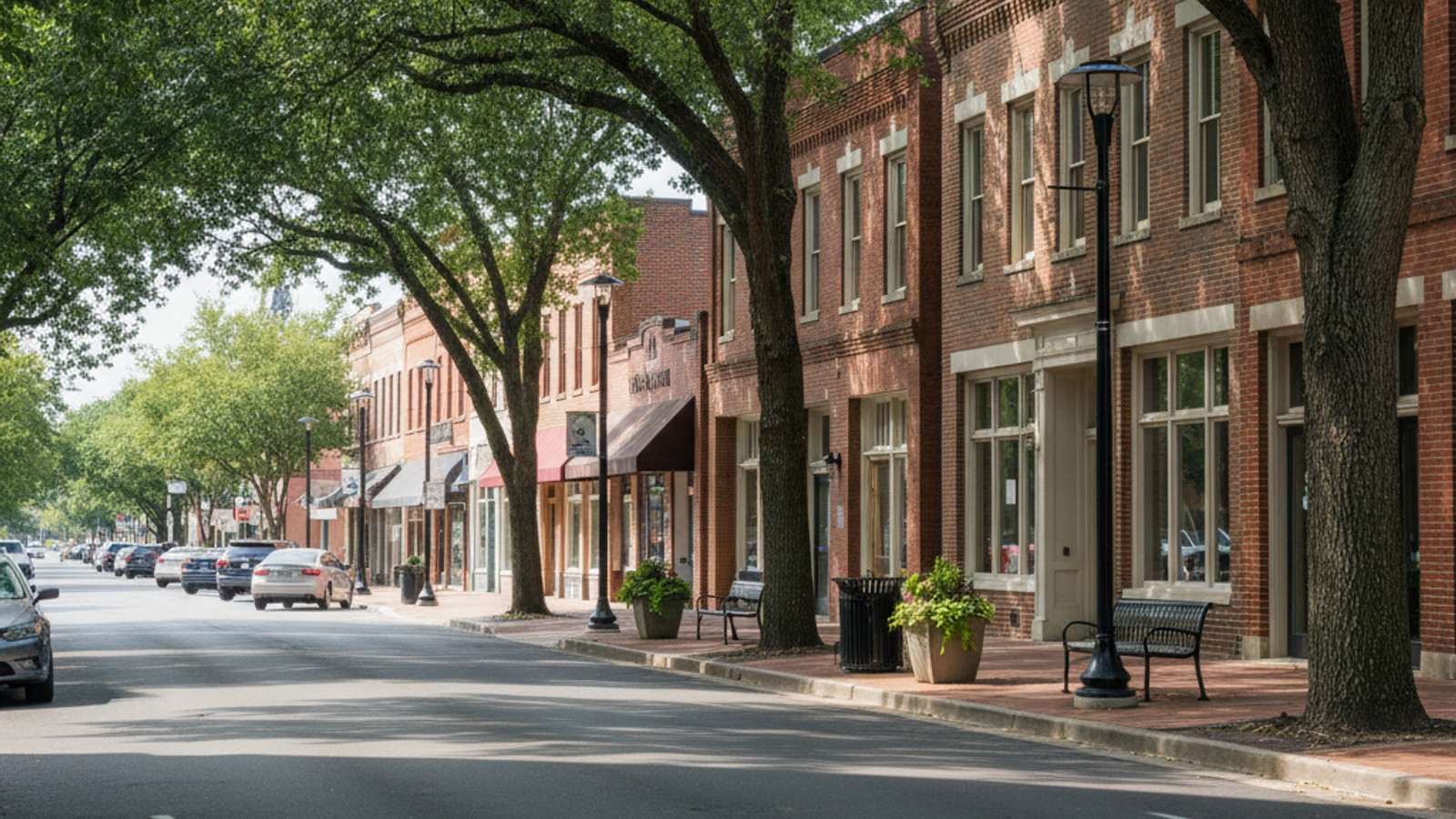
If you look at a map of the Upstate, Greer sits right in the "golden corridor" between Greenville and Spartanburg. A decade ago, it was seen primarily as a bedroom community. Today, it is an economic powerhouse in its own right.
For investors, Greer represents a strategic middle ground. It offers the job security of an industrial hub combined with a quality of life that rivals downtown Greenville. With the local population projected to hit nearly 50,000 and an annual growth rate hovering around 4-5%, the demand for housing here isn't speculative—it’s structural.
Let’s dig into the numbers and see why smart money is looking closely at this specific slice of South Carolina.
Greer Real Estate Market Trends (2026 Analysis)
The frenzied bidding wars of the post-pandemic years have cooled, leaving us with a much healthier, more sustainable market in 2026. Right now, we are seeing a balanced market that leans slightly toward sellers. Inventory is tightening, but it isn't non-existent.
For an investor, this is good news. It means you aren't overpaying due to panic, but the asset you buy is likely to hold its value. Median sold prices currently sit between $330,000 and $360,000. While that is higher than five years ago, it remains a significantly lower entry point than what you will find just fifteen minutes down the road in downtown Greenville.
Appreciation here is steady rather than volatile. We are tracking year-over-year appreciation at approximately 3.7% to 4.9%. It’s the kind of boring, predictable growth that builds long-term wealth.
However, don't mistake "steady" for "slow." The sale-to-list ratio is hovering around 98%, which tells us that buyers are serious and homes are selling very close to their asking price. The days on market have normalized to about 70-80 days. This is actually a sweet spot for investors; it provides enough breathing room to run your numbers and perform due diligence without losing the deal in hours.
Rental Market Statistics: Cash Flow & Vacancy
If you are looking at buy-and-hold strategies, the rental math in Greer is solid, provided you buy right. Following the post-pandemic boom, rents have stabilized. You can generally expect average rents to land between $1,580 and $1,650 per month.
The tenant pool here is robust. You aren't just relying on one demographic. We see a mix of young professionals working in healthcare or engineering, as well as households prioritizing access to specific school districts. Approximately 28-29% of households in Greer are renter-occupied.
There is one metric to watch closely: vacancy rates are sitting slightly higher than the national average, around 9%. This indicates a competitive market. Tenants have choices. To command top-tier rents and minimize vacancy, your property needs to be well-maintained and located near key amenities. The "slumlord" model does not work here; quality attracts quality tenants.
When analyzing the price-to-rent ratio, many residents still find it attractive to buy, but high interest rates keep a significant portion of the workforce in the rental pool, sustaining demand for single-family rentals.
The Economic Engine: Jobs Driving Housing Demand
Real estate doesn't exist in a vacuum; it follows jobs. Greer has arguably the strongest industrial resume in the state.
BMW Manufacturing is the anchor. It is difficult to overstate the impact of this facility. It’s not just about the direct jobs at the plant; it’s the "multiplier effect." Economists estimate that for every one job at BMW, roughly 3.5 support jobs are created in the surrounding area. With BMW’s recent $1.7B investment in EV production, that anchor is secure for decades.
Beyond automotive, logistics is the new boom. The South Carolina Inland Port in Greer recently completed a massive $55M expansion in the 2024/2025 cycle, doubling its capacity. Cargo growth has exploded by 355% over the last decade. This drives massive demand for warehousing, which in turn drives demand for workforce housing.
Add in the proximity to the Greenville-Spartanburg International Airport (GSP) and major healthcare systems like Prisma Health, and you have a diversified economy that insulates your investment from single-industry downturns.
Where to Invest: Best Neighborhoods & Zip Codes
Greer is geographically large, and the "vibe" changes drastically depending on which zip code you are in. Local agents usually divide the area into the "Greenville side" and the "Spartanburg side."
-
Zip Code 29650 (The Greenville Side): This area borders the Eastside of Greenville. It is generally more expensive, with entry prices often exceeding $400,000. You’ll find established subdivisions like Sugar Creek here. This zip code is excellent for appreciation plays and attracts long-term tenants focused on the highly-rated school district.
-
Zip Code 29651 (The Growth Side): This covers downtown Greer and extends toward Spartanburg. This is where the volume is. You can still find entry points in the low $300s. There is a significant amount of new construction here, offering value-add opportunities or turnkey builder options.
-
Downtown Greer: The historic center has undergone a revitalization. It offers high walkability to restaurants and parks, making it a magnet for young professionals.
-
Rural/Outskirts: As you move further out in 29651, you will find new construction communities. These are popular with investors who want warranty-backed rentals with predictable maintenance costs.
When browsing homes for sale in 29650, expect competition for the best lots. Conversely, looking at homes for sale in 29651 might give you more negotiating power with builders.
Investment Strategies that Win in Greer
Not every strategy works in every market. Here is what is working on the ground in Greer right now.
Long-term Buy & Hold is the safest bet. Given the population growth and the industrial expansion, holding property here for 5-10 years is a proven wealth builder. The appreciation is consistent, and the tenant base is employed in stable sectors.
New Construction Rentals are gaining traction. With the expansion of the 29651 area, many investors are buying new builds. While the upfront cost is higher than a fixer-upper, the CapEx (capital expenditures) are near zero for the first few years, and builders often offer closing cost incentives that improve your cash-on-cash return.
Short-Term Rentals (Airbnb) require caution. While downtown Greer is a great destination, you must verify city ordinances and HOA restrictions. Many subdivisions strictly ban rentals under 30 days. If you go this route, focus on properties near the downtown corridor or unique properties that aren't bound by restrictive covenants.
Frequently Asked Questions About Investing in Greer
Is Greer SC a good place to invest in real estate?
Yes. Greer offers a unique combination of industrial job growth (BMW, Inland Port) and lifestyle appeal. The steady appreciation rates and expanding population provide a stable environment for both cash flow and equity growth.
What is the average property tax rate in Greer SC?
South Carolina has a unique tax structure that investors must understand. Owner-occupied homes are taxed at a 4% assessment ratio, while investment properties (non-primary residence) are taxed at 6%. This can significantly increase your monthly holding costs compared to a primary residence, so always run your numbers using the 6% rate.
How does the rental market in Greer compare to Greenville?
Greer offers a more affordable entry point than downtown Greenville while commanding comparable rents relative to the purchase price. Occupancy remains stable due to the heavy industrial workforce that prefers Greer's proximity to major employers.
What is the 2% rule and does it apply in Greer?
The 2% rule (monthly rent being 2% of the purchase price) is rarely achievable in this market, or almost any stable market in 2026. Investors in Greer should focus on the 1% rule or, more realistically, prioritize long-term appreciation and tax benefits over massive immediate cash flow.