


Introduction to Greenville
Greenville is located in the foothills of the Blue Ridge Mountains, right where Interstate 85 links Atlanta to Charlotte.
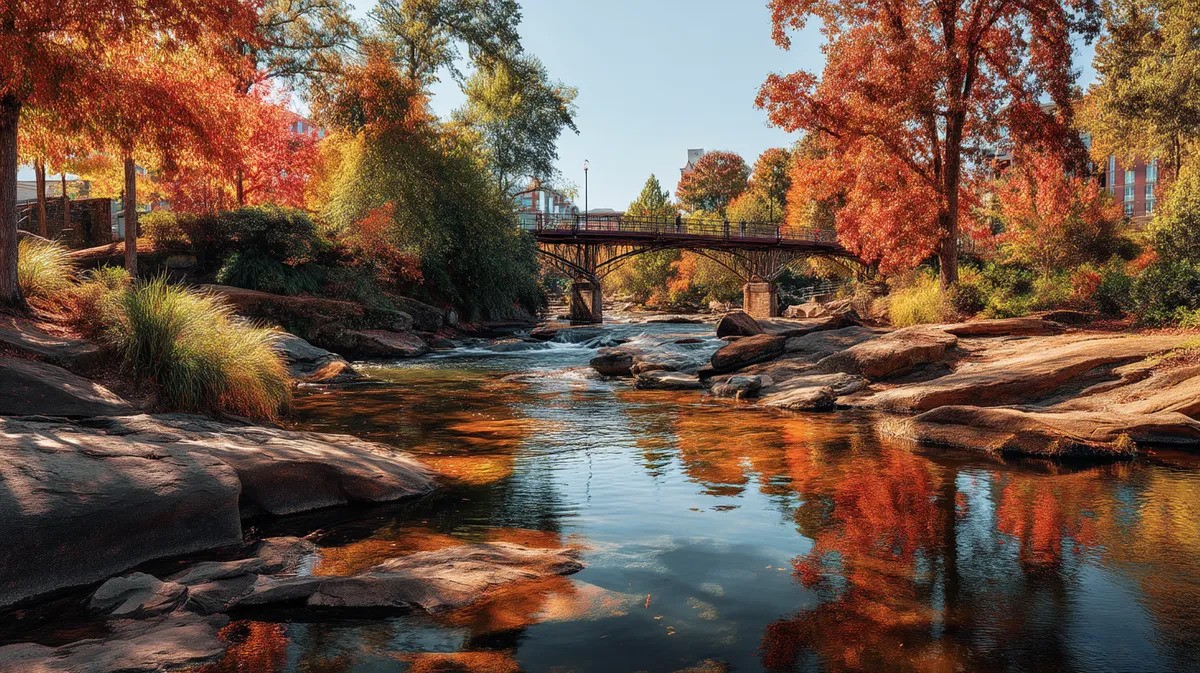
Locals will tell you the City of Greenville blends small-town friendliness with urban energy, and downtown is absolutely beautiful thanks to a walkable Main Street stitched together by the Liberty Bridge that floats above Falls Park on the Reedy.
Greenville draws people at different stages of life, helping it earn frequent recognition as one of the top mid-sized cities in the Southeast.
Brief History and Cultural Influence
Textile mills once powered the Greenville area, but innovation in automotive, healthcare, and tech has rewritten the script. Evidence of the city’s mill-town past still dots the West End, yet the mood today is artsy and international.
You’ll see it in the galleries inside the Greenville County Museum of Art, the flavors served up during Fall for Greenville, and the feeling you get while strolling the Swamp Rabbit Trail with Greenville residents from every corner of the U.S.
Cost of Living in Greenville
If you’re checking out homes for sale in Greenville, be ready for numbers that beat similarly sized metro areas.
The latest Redfin cost-of-living calculator shows housing running roughly 26 percent under the national average, and Zillow places the 2025 median sale price near $356,000, with most listings hovering just under $400,000.
That price point gives first-time buyers real traction, especially when stacked against hotter cities in South Carolina like Charleston.
Utilities, Transportation, and Groceries
RentCafe’s 2025 dashboard pegs the overall cost of living in Greenville at about seven percent under U.S. norms, with utilities and groceries both a few points cheaper than the national basket.
Commuters burn less gas thanks to short drive times around Greenville, and the award-winning public transit system, Greenlink, keeps fares modest while expanding coverage across Greenville County.
Neighborhoods and Communities
Greenville’s neighborhoods each carry their own personality, from the bustle of downtown sidewalks to the family-friendly pace of surrounding suburbs. Whether you’re drawn to warehouse lofts, roomy suburban homes, or creative pockets just finding their stride, the city offers a mix of communities that fit different lifestyles.
Downtown Greenville
Living downtown means morning coffee on Main Street, evening shows at the Peace Center, and a quick walk to Falls Park or the buzzy West End of downtown Greenville.
Lofts carved from old warehouses sit next to sleek new condos, giving buyers plenty of ways to live in Greenville’s urban core.
Friendly Suburbs
Greenville County stretches north to Travelers Rest and south toward Mauldin, each suburb offering good schools, pocket parks, and a slower pace.
Simpsonville has become a popular place to live for buyers needing more square footage, while Greer balances small-town charm with big-name employers nearby.
Up-and-Coming Areas for Young Professionals
Young renters hunt in the Village of West Greenville for its artist studios and easy Swamp Rabbit Trail access, but they’re also watching sections of Nicholtown and the new Unity Park corridor. Affordable craftsman bungalows here let newcomers live somewhere walkable without downtown condo prices.
Lifestyle and Amenities
Greenville balances small-town charm with big-city perks, giving locals plenty of ways to fill their weekends. From chef-driven restaurants and craft barbecue to miles of trails and parks, the city leans outdoorsy yet keeps its cultural calendar busy with markets, live shows, and festivals. It’s the kind of place where dinner, a hike, and a concert can all fit into the same day.
Dining and Food Scene
Greenville’s appetite starts on Main Street at Soby's, where locals still swear by the shrimp-and-grits and an ever-changing cocktail list that leans seasonal. Two blocks south, date-night energy shifts upscale at Halls Chophouse Greenville; a tux-clad host walks you past a live pianist to rib-eyes big enough to share.
Craving pasta or oysters with a Falls Park view? Grab the patio rails at Jianna and watch the Liberty Bridge light up while the kitchen cranks out cavatelli and freshly shucked Gulf singles. A few doors away, Scoundrel pours French wine beside steak frites under crystal chandeliers, proving you don’t need Charleston for white-tablecloth swagger.
Newer to the mix, CAMP pulls crowds with brisket pappardelle, cauliflower shawarma, and a patio made for people-watching on Greenville’s mild spring nights.
Barbecue loyalists hike north of downtown to Lewis Barbecue, where Texas-style peppered brisket and green-chile corn pudding land Lewis on Southern Living’s “Best Barbecue Joints” list for 2025.
Over in the Village of West Greenville, The Anchorage turns farmers-market hauls into ever-shifting small plates and natural-wine pairings under exposed-brick beams.
Whether you’re splurging on wagyu or nibbling smoked wings on a picnic table, the city’s lineup easily competes with much larger dining scenes, and it’s still growing.
Outdoor Activities and Parks
Hiking and biking trails are everywhere.
The Swamp Rabbit Trail cuts 22 miles from downtown to Travelers Rest, and Paris Mountain State Park waits ten minutes north with kayaking, camping, and some of the best mountain-bike single-track in Upstate South Carolina.
Add Falls Park on the Reedy, Unity Park, and nearby Lake Jocassee, and you’ll experience all four seasons outside without driving far.
Shopping and Entertainment
Haywood Mall, the biggest shopping center in South Carolina at about 1.2 million square feet and more than 170 stores, covers sneakers, tech, and a quick food-court refuel in one climate-controlled loop.
From May through October, the TD Saturday Market shuts down two blocks of Main Street every Saturday morning for heirloom tomatoes, local honey, and buskers that keep shoppers lingering long past their grocery lists.
Big-ticket shows roll into the Peace Center all year, and the 2025 slate even brings back the Tony-winning MJ: The Musical alongside arena-size comedy tours.
Prefer a smaller scene? The up US-276 layers craft booths, food trucks, and live music beside the Swamp Rabbit Trail, making it an easy Saturday add-on after a morning coffee ride.
Job Market and Economy
Greenville is home to global powerhouses like BMW Manufacturing in nearby Greer, Michelin North America headquarters, and GE Gas Power, plus health-care giant Prisma Health and Greenville County Schools.
This blend keeps unemployment low and attracts talent from Furman University, Clemson University, and North Greenville University.
Current Employment Trends
South Carolina just logged record employment in mid-2025, and analysts credit much of that growth to Upstate hubs such as the Greenville housing market, where manufacturing and life sciences are adding jobs faster than national averages.
Median household income has climbed to roughly $68,000 in the city and more than $74,000 across Greenville County. That means household income gains are keeping pace with home prices.
Education and Schools
Greenville public schools are managed by the largest district in South Carolina, known for magnet programs in engineering, languages, and fine arts.
Parents looking for private classrooms can choose from Christ Church Episcopal School, St. Joseph’s Catholic School, or Greenville Classical Academy, each draws families considering moving into the district.
Higher Education Opportunities
Furman University and Clemson University bookend the county, while Greenville Technical College anchors workforce development downtown.
Clemson’s ICAR campus focuses on automotive research, and Greenville Technical offers certificate paths tied directly to local employers, so students rarely lack internship options.
Transportation and Accessibility
Greenville makes getting around surprisingly painless, whether you’re commuting on interstates, hopping a local bus, or strolling downtown. Short drive times and growing transit options keep the city connected, while rail links and walkable streets add flexibility for those who’d rather leave the car at home.
Roadways and Commuting
I-85, I-385, and the Southern Connector make day-to-day driving smooth, even during humid summers when out-of-towners flood the city.
Average commute times hover near 20 minutes, beating many similarly sized metro areas.
Public Transit and Walkability
Greenlink buses run eleven fixed routes six days a week, with ridership up more than two percent last year as new lines reached Clemson and Mauldin.
Downtown’s grid is tight enough to ditch the car entirely, and the Amtrak Crescent gives residents rail access from New Orleans to New York.
Pros and Cons of Living in Greenville
Greenville is a great place for anyone craving a lower cost of living than coastal markets, while still landing a job at a respected company like Prisma Health.
Outdoor lovers savor hiking and biking without losing big-city dining.
The crime rate in Greenville is lower than many peer cities, and the city has to offer cultural perks that feel outsized for its population. Food & Wine even placed Greenville among the nation’s best small-city dining scenes for 2025, crediting its “farm-to-table ethos” and chef-driven restaurants.
Property taxes help the budget too. The median effective rate sits at 0.88 percent, under the 1.02 percent U.S. average, which shaves hundreds off annual bills.
With three universities feeding concerts, lectures, and Division I sports into the calendar, Greenville residents rarely run short of weekend plans or chances to pick up discounted continuing-education credits.
Challenges to Consider
Humid summers can surprise newcomers, and public transit coverage still lags behind older U.S. metros.
Congestion is increasingly top-of-mind; an SCDOT survey found 63 percent of Upstate respondents named bottlenecks their biggest transportation headache, a sign the road network is straining under population gains.
Inventory is tight as well. Realtor.com expects sales to outpace new listings again in 2025, a recipe for bidding wars on the most desirable homes.
Allergy sufferers should note that the Asthma and Allergy Foundation of America ranks Greenville #9 on its 2025 “Allergy Capitals” list, thanks to high grass and weed pollen counts each spring and fall.
Things to Know and Moving Tips
Trash pickup is managed by the City of Greenville Solid Waste Division; punch your address into the Residential Collection Zone Map to see your day, and call 864-467-4345 if you still need a cart delivered.
Water flows through the Greenville Water Start-Stop-Move portal, so you can flip the taps on before the movers unload. Sewer bills come from ReWa, which also staffs a 24-hour emergency line at 864-299-4004 for any backup scares.
Electricity almost always runs through Duke Energy; their dashboard even offers same-day connections if the house has a smart meter.
For taxes, voter registration, or pet tags, bookmark the Greenville County site and skip an extra trip downtown.
Advice for a Smooth Transition
After you sign the dotted line, hop onto the SCDMV portal and log your new Greenville address. State law asks you to do it within ten days, or snag an online appointment at the Edgeworth Street branch if you still need a South Carolina license.
Once Duke Energy has the lights on, text REG to 57801 or grab the Duke Energy app to get automated outage alerts and usage reminders.
Turn the taps on ahead of move-in with Greenville Water’s Start-Stop-Move form so the fridge is ready for that first grocery run.
Taking care of those three clicks now keeps your first week in town blissfully paperwork-free when you’d rather be exploring Main Street.
FAQ’s on Moving to Greenville, SC
What should I know about Greenville's subtropical climate?
Expect four distinct seasons. Winters in Greenville are mild with occasional dustings, while July and August bring humid heat in the high 80s.
Afternoon thunderstorms cool things down quickly, keeping yards green without long droughts.
Is downtown Greenville safe at night?
The City of Greenville publishes real-time crime data, and most incidents cluster outside entertainment blocks.
Common sense, well-lit parking garages, and walking with friends usually keep evenings trouble-free, which is why downtown ranks among the safest parts of Greenville County.
How does the cost of living in Greenville compare to cities in the Southeast?
Overall expenses sit below Atlanta and Charlotte, and housing beats coastal South Carolina markets by a wide margin.
Utilities and groceries track just under national averages, so many people living in Greenville find monthly budgets easier to balance here.
Will I need a car, or can I rely on public transit?
Owning a car remains the fastest way to explore Upstate South Carolina, but Greenlink’s bus network covers key job centers. If you live in the West End or near Main Street, daily errands often happen on foot orby bike.
What are some things to do in Greenville on weekends?
Catch a Greenville Drive game, tour Falls Park on the Reedy, hike Paris Mountain State Park, or sample fine dining across the West End. With museums, farmers' markets, and endless festivals and events, you definitely won’t get bored living in Greenville