


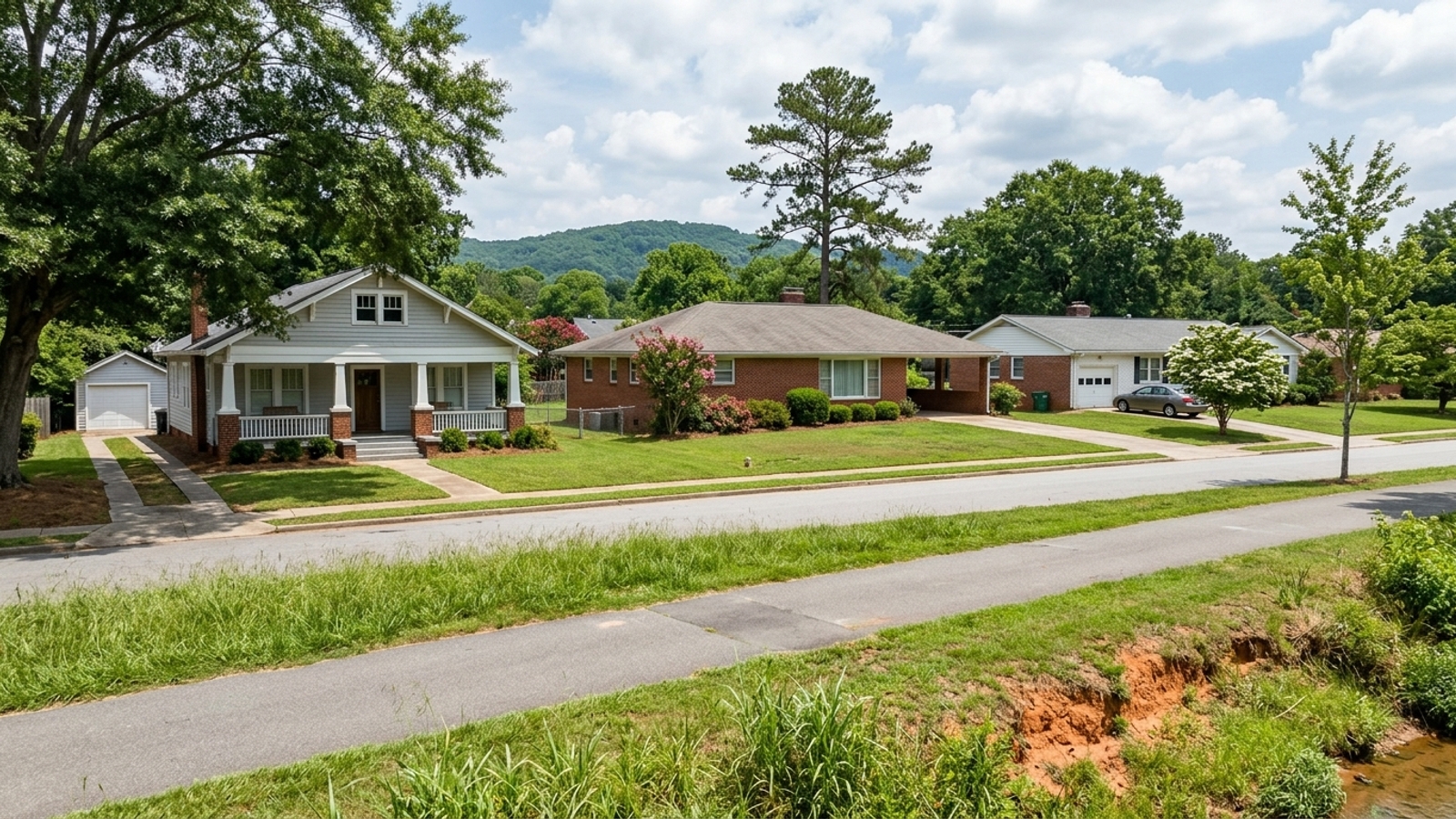
Greenville, SC continues to see steady real estate activity, with the broader market recently sitting around a median sale price of $514,659. Buyers looking for the best neighborhoods in Greenville, SC outside the immediate downtown core often land on Sans Souci and Berea - two unincorporated census-designated places that don't get nearly the attention they deserve.
These two adjacent areas in Greenville County have different housing stocks, different historical roots, and different commercial roads anchoring daily life. What it comes down to is your preferred property age, your highway access, and how you spend your days.
Where Sans Souci and Berea Are Located
Sans Souci and Berea sit side-by-side northwest of downtown Greenville. Sans Souci is bordered to the west by Berea, and the two are directly linked by South Carolina Highway 253 - known locally as West Blue Ridge Drive. Both feed into the broader Greenville County road network, with Interstate 85 and Interstate 385 available to residents who need to reach regional employment centers.
Highway Access and Commutes
Sans Souci relies on U.S. Route 276, also known as Poinsett Highway, which forms its eastern border and runs directly south into downtown Greenville. Commuters also use SC Highway 253, which connects to SC 291, or Pleasantburg Drive.
Berea comes in primarily via U.S. Route 25, or White Horse Road, and SC Highway 183. Both highways tie into the larger Greenville network, so Berea residents have more than one reasonable option for the daily drive.
Local History and Markers
Sans Souci takes its name from the estate of former Governor Benjamin F. Perry, who lived from 1805 to 1886. A historical marker erected in 2008 stands at the intersection of West Blue Ridge Drive and North Franklin Road, and the area also carries ties to the historic Union Bleachery textile mill.
Berea's history centers around a Baptist church formed in 1843. The area was originally settled by Scots-Irish immigrants after the Revolutionary War, and by 1916 the community's center had shifted to the intersection of Farr's Bridge Road and Franklin Road, growing near the foot of Paris Mountain.
Real Estate Prices and Market Trends
The overall Greenville market recently showed roughly 425 available homes and an average of 67 days on market. Sans Souci and Berea both price well below the broader regional median of $514,659 - that gap is one of the more practical reasons buyers end up here.
Single-family homes in both areas often list between $250,000 and $290,000. That said, you'll want to pull recent sales data for whichever specific area you're focused on, because local values shift more than the top-line numbers suggest.
Property Values in Sans Souci
Recent estimates place the median home price in Sans Souci between $275,000 and $281,664. Data from early 2026 showed a median sale price of approximately $278,000 in this specific area.
The housing stock skews older, so prices move around depending on the condition and renovation status of individual homes. Two houses on the same street can be priced very differently.
Property Values in Berea
Berea offers comparable pricing, with median home values ranging from roughly $253,953 up to $289,900. Some recent 12-month median price data points to an average around $273,500.
The numbers are close enough that the real financial differences usually come down to the specific street and the condition of the house, not the area median.
County Taxes and Fees
Both Sans Souci and Berea fall under the same Greenville County tax millage, so the underlying property tax rates are identical for both locations. Your annual bill will reflect the assessed value of the specific property, not some distinct neighborhood rate.
Historical data for mortgaged homes in Sans Souci shows median real estate property taxes ranging from roughly $1,558 to $1,998. Buyers in Berea can expect similar figures for similarly priced homes.
Home Styles and Neighborhood Layouts
This is where the two areas feel different. The housing stock reflects distinct architectural eras, and that shapes the look, the maintenance picture, and the renovation potential of everything you'll tour.
Both areas are predominantly established single-family homes on defined lots - no large new subdivisions here. The difference is when those homes were built.
Architecture in Sans Souci
Many residences in Sans Souci were built between 1940 and 1969, with some additions built between 1970 and 1999. The area includes properties dating back before 1960, and it shows in the lot layouts and the bones of the houses.
The Sans Souci Heights sub-neighborhood is worth knowing about specifically. It functions as a historic bungalow community with Craftsman-style character dating from the 1920s through the 1960s - a different feel from the rest of the area.
Architecture in Berea
Berea began transitioning from a rural area to a suburban community in the early 1950s, with residential growth stimulated by G.I. Bill and Federal Housing Act programs during that era. The result is a neighborhood built largely on mid-century and later-20th-century foundations.
A large portion of the residences were built between 1970 and 1999, though you'll still find homes dating back to the 1940s if you look around.
Everyday Amenities and Commercial Corridors
Daily life in Sans Souci and Berea runs along different roads, and that matters more than people expect when they're deciding where to land. Neither area has a single prominent named park of its own, but each connects to different parts of Greenville's broader infrastructure.
Drive the main routes in both areas before you decide. The commercial mix follows the major state highways through each location, and what lines those highways is different enough to feel meaningful day-to-day.
Trails and Outdoor Recreation
Search records show no officially named major park within Sans Souci itself, but the area benefits from proximity to regional greenways. The Sans Souci Heights sub-area provides walkable access to the Swamp Rabbit Trail, a multi-use greenway that connects northern Greenville neighborhoods directly to downtown - a genuine amenity.
Available sources identify no specific named park or trail system within Berea.
Shopping and Highway Corridors
Sans Souci's main commercial activity runs along U.S. Route 276 and SC Highway 253, where you'll find the area's retail spaces and local businesses.
Berea's primary commercial corridor runs along U.S. Route 25, or White Horse Road. That stretch has seen recent growth, including development projects like Lenhardt Townes built just off the highway.
Common Questions About the Area
What is the difference in home prices between Sans Souci and Berea in Greenville, SC?
The difference is minimal. Median values in both areas generally range from $250,000 to $290,000, which sits well below the broader Greenville median of $514,659. The exact price difference usually comes down to the individual home's condition rather than the neighborhood.
What types of homes are available in Sans Souci vs Berea?
Both areas offer established single-family properties, but from different eras. Sans Souci features older properties, including 1920s to 1960s Craftsman bungalows. Berea offers a mix of mid-century and later-20th-century homes, with a large portion built between 1970 and 1999.
How do commute times to downtown Greenville compare between Sans Souci and Berea?
It depends on your exact starting point, but both areas offer direct highway routes. Sans Souci residents typically use U.S. Route 276 to head south into downtown. Berea commuters rely on U.S. Route 25 and SC Highway 183 to reach the city center.
Which neighborhood has better access to the Swamp Rabbit Trail and outdoor amenities, Sans Souci or Berea?
Sans Souci provides better access to this specific trail. The Sans Souci Heights sub-area offers walkable access to the Swamp Rabbit Trail. Available sources do not list a comparable named trail system within Berea.
Is Sans Souci or Berea considered a better area for finding fixer-upper homes and real estate investments in Greenville?
It depends on the era of home you prefer to renovate. Sans Souci offers older housing stock dating back to the 1920s and 1940s. Berea provides opportunities to update mid-century properties from the 1950s or homes built in the 1970s and 1980s.
Are there other neighborhoods to consider outside of downtown Greenville besides Sans Souci and Berea?
Buyers expanding their search beyond the downtown core often look at multiple established communities across the county. Depending on your preferred property age and highway access, a location like Chestnut Hills provides another option for single-family homes. Comparing these different areas helps clarify which local commercial corridors best fit your daily routine.
How do Sans Souci and Berea compare to other established Greenville communities?
While Sans Souci and Berea offer median home values well below the broader regional average, buyers often weigh them against other distinct parts of the city. Areas like the Augusta Road community present different historical roots and local commercial networks. The right choice ultimately depends on your budget and which highway makes your daily drive easier.