


If you're researching the best neighborhoods in Greenville, SC and keep seeing listings tagged as both "West Greenville" and "West Village," you're not alone in finding that confusing. Buyers run into this constantly, and it sends people down a rabbit hole of comparing neighborhoods that don't need to be compared.
Here's the short version: West Greenville and West Village are the same place. The full name is the Village of West Greenville, and both terms point to the same arts-district neighborhood just outside downtown. There's no split market, no separate school zone, no different commute. Once you know that, your search gets a lot simpler - you can stop trying to choose between two options and start focusing on the actual homes available in this area.
Real Estate Market and Housing Costs
Across the Greenville, SC region, the median sale price is currently around $514,659, with homes sitting on the market for roughly 67 days. Zoom into West Greenville specifically, and the median list price comes in at about $495,000. Trailing median sale prices in the neighborhood have ranged from $435,000 to $614,000, depending on the timeframe and which property types happened to close.
Because West Greenville and West Village are the same neighborhood, you won't find separate market statistics for each - there's one inventory pool. Right now that pool includes a mix of older residential structures and newer renovations. Regional inventory sits at roughly 425 available homes with a 4.7-month supply, which gives you a reasonable amount of time to look around. That said, well-priced homes in this arts district don't sit forever.
Property Types and Architecture
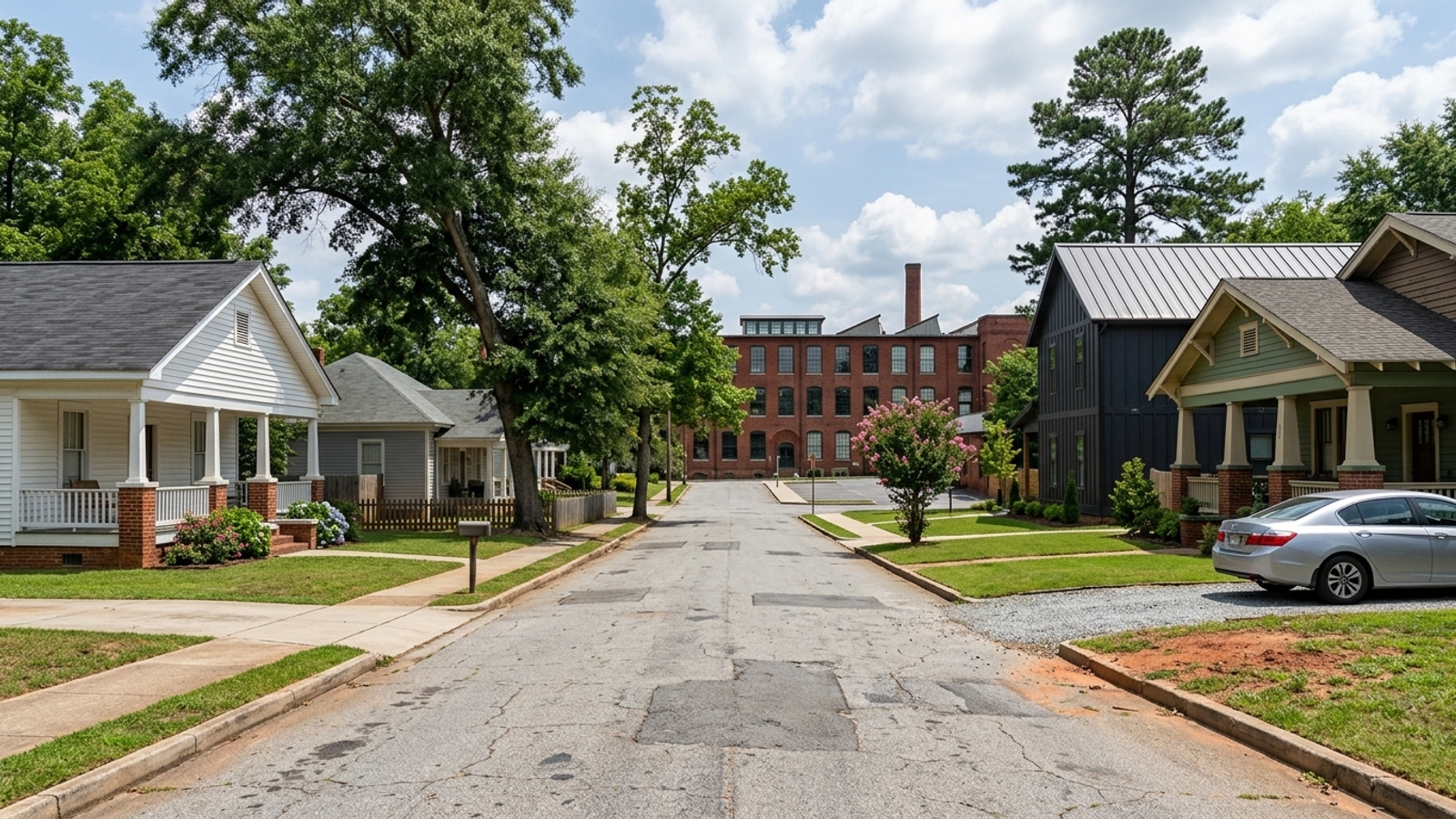
The housing stock here reflects the neighborhood's history as a mill town. Single-family homes - many of them renovated in recent years - make up a good portion of what you'll find, alongside historic textile mills that have been converted into residential, creative, and commercial spaces.
If you're not interested in yard maintenance, there are also loft-style apartments and condos inside those repurposed mill structures. You can realistically shop for a traditional detached house with a yard or a modern industrial loft and stay within the exact same neighborhood boundaries.
Location and Daily Commuting
The Village of West Greenville sits about 1.5 miles from the West End and Downtown Greenville. That's close enough that your commute into the city center is a non-issue whether you're driving or on a bike.
There's no dedicated transit line documented specifically for this neighborhood, but the distance to downtown is short enough that getting to Greenville's central business district or out toward major regional highways doesn't require much planning.
Trail Access and Getting Around
The Prisma Health Swamp Rabbit Trail is one of the most practical things about living here. The paved greenway runs 28 to 32 miles and connects the neighborhood directly to downtown Greenville, Furman University, and Travelers Rest.
It's an off-street route, so plenty of residents use it as an actual commuting option to reach the West End and downtown employment centers - not just a weekend ride. If trail access matters to you, this neighborhood has it built right in.
Lifestyle and Local Amenities
The Village of West Greenville has a distinct identity that's hard to miss. It functions as an arts-district commercial hub, anchored by the Greenville Center for Creative Arts, which runs monthly "First Fridays" open-studio events that pull visitors from all over the city.
That arts focus has brought real commercial development with it. Historic buildings along the main corridor now house coffeehouses, tea rooms, art galleries, and bars - walkable from the residential streets rather than a drive away.
Dining and Shopping Highlights
The dining situation is genuinely one of the things buyers mention when they're drawn to this neighborhood. Poe West is a mixed-use development offering dining, shopping, and space for a culinary school. The Anchorage, a James Beard-recognized restaurant, anchors the local food scene.
Both are within walking distance for residents. That kind of access doesn't show up in every Greenville neighborhood at this price point.
Parks and Recreation Access
Shoeless Joe Jackson Memorial Park sits within the neighborhood and serves as the main outdoor gathering space for the community. It's a real park, not just a patch of grass between subdivisions.
Pair that with direct Swamp Rabbit Trail access and you've got both a local spot and miles of uninterrupted trail right outside the front door. Outdoor recreation isn't something you have to drive to find here.
Next Steps for Your Greenville Home Search
Since West Greenville and West Village are the same arts district, your search parameters don't need to account for a choice between them. Focus on your budget, your preferred property type, and how important proximity to the commercial corridor along the Swamp Rabbit Trail is to your daily life.
With a median list price around $495,000, getting pre-approved before you start touring homes is worth doing before you fall for a renovated mill loft that moves faster than you expected. Homes across the broader Greenville, SC market are selling at about 97.4% of list price, which tells you sellers aren't taking low-ball offers. A local agent who tracks this neighborhood can help you structure an offer that fits current market conditions and flag new listings before they get crowded.
Frequently Asked Questions
What is the difference in home prices between West Greenville and West Village?
There is no difference, because West Greenville and West Village are the same neighborhood. The median list price in this area is around $495,000, with trailing median sale prices ranging from $435,000 to $614,000 depending on the timeframe.
What types of homes are available in West Greenville vs West Village?
The housing stock is identical - they're the same location. You'll find single-family homes, many of them renovated, along with historic textile mills converted into loft apartments and creative commercial spaces.
How do commute times compare between West Greenville and West Village?
They're exactly the same, because both names refer to the Village of West Greenville. The neighborhood is about 1.5 miles from the West End and Downtown Greenville, which is a short trip by car or via the Swamp Rabbit Trail.
Which area offers better walkability to Greenville's local arts and dining scene?
Same answer as all the others - they're the same arts district. Residents have easy access to the Greenville Center for Creative Arts, Poe West, and The Anchorage.
Are there historic district restrictions to worry about when buying and renovating a home in West Greenville or West Village?
The available data doesn't specify whether binding historic district restrictions apply to residential renovations here. If you're planning to update an older single-family home or a mill property, check directly with the City of Greenville's planning department to verify any local zoning or architectural guidelines before you get too far down the road.
How fast are homes selling in the West Greenville versus West Village real estate markets?
Across the broader Greenville, SC region, the median days on market is currently 67. Since West Greenville and West Village are the same neighborhood, properties here share the same local market dynamics and buyer demand.
What if I want to look at other neighborhoods near downtown Greenville besides the West Village?
If the renovated mill homes in the arts district do not fit your needs, you can expand your search to other established areas around the city. Buyers often look at properties in Chestnut Hills as another residential option within the broader Greenville market.
Are there other popular areas to consider when shopping for a home in Greenville?
Buyers who are evaluating the local market frequently compare different residential corridors to see which location best fits their daily routine. Expanding your search to include neighborhoods along Augusta Road provides another perspective on the housing options available outside the West Village.