


Upstate South Carolina continues to attract buyers looking for space, employment access, and proximity to downtown Greenville. Two of the most common landing spots for these buyers are Greer and Taylors. They sit right next to each other northeast of Greenville along the U.S. Route 29 corridor, but they operate under completely different municipal structures. Buyers often rely on the best realtor in Greer, SC to help them compare these local markets.
Available property types and local tax structures separate the two markets. One is a rapidly growing incorporated city spanning two counties, while the other is a large unincorporated area with a more suburban, established feel. Exact boundaries and market dynamics dictate where buyers focus their home search this year.
Municipal Boundaries and Local Governance
Greer is an incorporated city with its own mayor, city council, police force, and municipal services. It has grown large enough that its city limits now spill across the county line, meaning some Greer residents live in Greenville County while others live in Spartanburg County.
Taylors, on the other hand, is entirely unincorporated and sits entirely within Greenville County. It is not a city, meaning there is no Taylors city government or municipal police department. Residents here rely directly on Greenville County for most civic services and infrastructure.
Because they share a border, you can drive out of a Greer subdivision and immediately enter a Taylors neighborhood without noticing a change in the landscape. The physical dividing lines are often subtle, but the administrative differences show up quickly when you set up your utilities or review your annual tax bill.
Housing Types and Current Market Prices
As of mid-2026, the median sale price for a home in Greer, SC, sits around $335,000. Homes in this market are spending roughly 65 days on the market before closing, and sellers are getting about 98.8% of their list price. Taylors homes often price in a similar mid-$300,000s range, though the types of properties available differ noticeably.
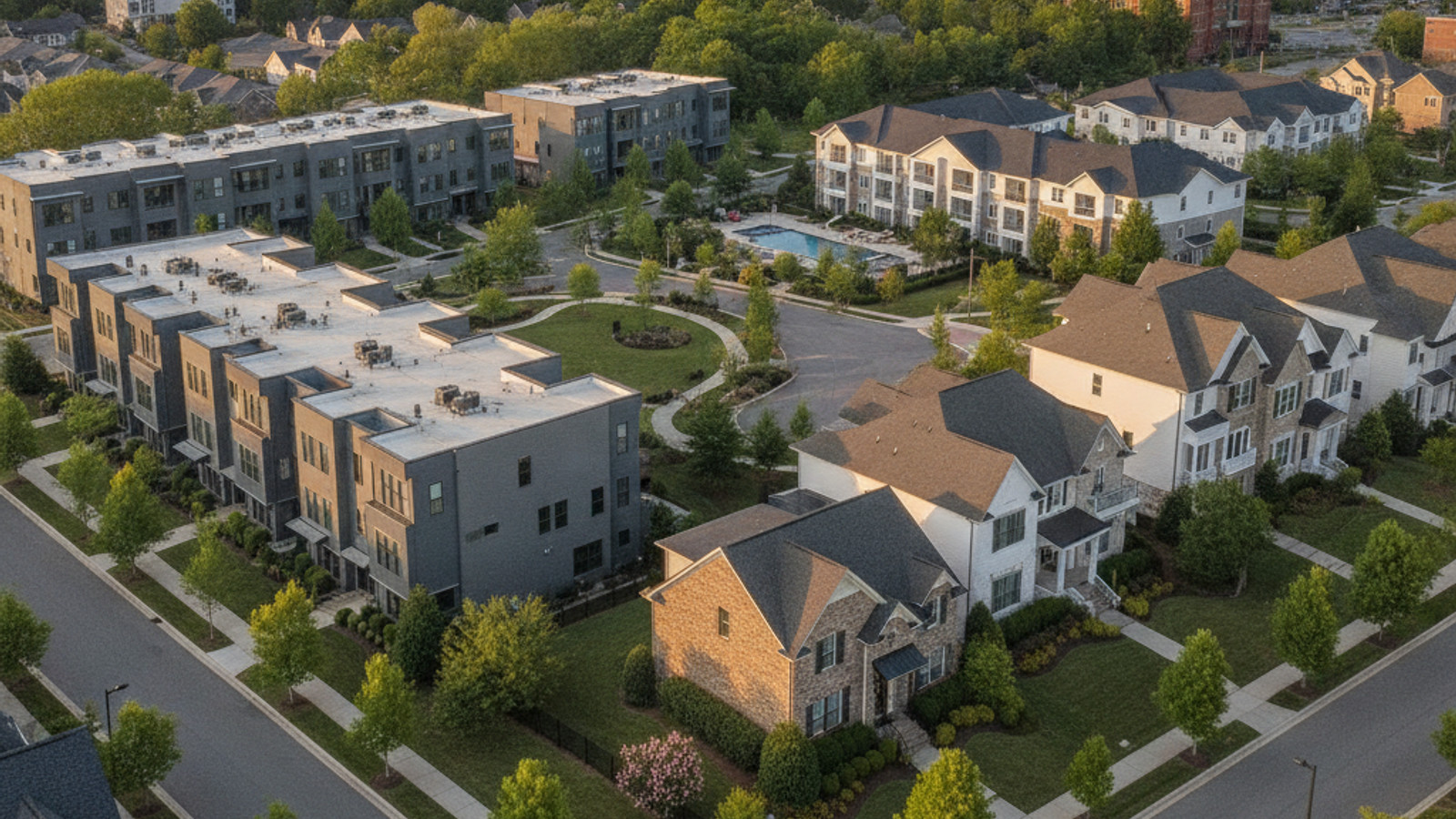
Greer features a heavy concentration of new construction subdivisions, luxury apartment complexes, and modern townhomes. Builders have focused their efforts on the areas surrounding the city's urban core, resulting in many neighborhoods governed by homeowner associations (HOAs). You will also find historic, early-20th-century houses immediately surrounding the downtown district.
Taylors offers a higher volume of mid-century homes and established subdivisions built out decades ago. Buyers looking for larger lot sizes without an active HOA often focus their search here. The mature tree canopies and varied architectural styles give Taylors a distinct suburban feel compared to the newer tracts in Greer.
Property Taxes and City Fees
A home inside the Greer city limits carries a city property tax on top of the base county tax. This dual-tax structure funds the dedicated municipal services, road maintenance, and city parks that Greer residents use daily.
Taylors residents avoid city taxes entirely due to their unincorporated status. However, living in an unincorporated zone means paying for certain services a la carte. Buyers should account for a few specific differences in ongoing costs:
- City Millage Rates: Greer homeowners pay the city millage rate annually, which increases the overall property tax burden compared to a similarly priced home in Taylors.
- Fire Districts: Taylors residents pay special tax district fees for fire protection, such as the Canebrake Fire District, which are billed alongside their county taxes.
- Trash Collection: Greer provides municipal trash collection as part of its city services, whereas Taylors residents hire private companies to pick up their garbage.
Even with the special fire district fees and private trash collection, the total annual carrying cost for a home in Taylors is generally lower than a home inside Greer city limits. Buyers should review the specific tax records of any property, as some homes with a Greer mailing address sit just outside the city limits and only pay county taxes.
Commute Times to Greenville and Major Employers
Taylors sits about 10 miles from downtown Greenville, making it the closer option for daily commuters heading into the city center. Most drivers use Wade Hampton Boulevard, and the trip typically takes 15 to 20 minutes during standard traffic conditions.
Greer is slightly further out, usually requiring a 20 to 30-minute drive to reach downtown Greenville. However, its location offers faster access to Spartanburg, SC, which sits to the east. Drivers commuting to Spartanburg from Greer can often make the trip in under 25 minutes via U.S. Route 29.
Greer also holds a distinct geographic advantage for regional travel and manufacturing jobs. The city provides immediate access to Interstate 85, the Greenville-Spartanburg International Airport (GSP), and the massive BMW manufacturing plant. Buyers working at the plant or traveling frequently for business often prefer Greer for its highway proximity.
Parks, Dining, and Commercial Centers
Downtown Greer, known locally as Greer Station, features roughly 40 blocks of retail, dining, and commercial space. Trade Street serves as the main corridor, lined with brick storefronts, local restaurants, and boutique shops. The city also maintains several large public spaces, including Greer City Park and Century Park, which offer walking trails and event spaces.
Taylors lacks a traditional downtown grid, but it centers much of its local commerce around the revitalized Taylors Mill. This former textile facility now houses a brewery, a coffee shop, art studios, and food vendors. The rest of the commercial activity in Taylors stretches out linearly along Wade Hampton Boulevard in the form of grocery stores and retail plazas.
For outdoor recreation, Taylors sits geographically closer to Paris Mountain State Park. Residents can reach the park's hiking trails and lakes with a short drive north. Greer residents also use the park, but they have closer access to the lakes and golf courses situated further east toward Spartanburg County.
School District Zoning Rules
Every home in Taylors is zoned for the Greenville County School District. Students living in this area typically attend schools like Eastside High School or Wade Hampton High School, depending on the specific neighborhood boundaries.
Greer's educational zoning is more complex because the city straddles two counties. Homes in the Greenville County portion of Greer are zoned for Greenville County Schools, which includes Greer High School and Riverside High School. Homes in the Spartanburg County portion fall under various Spartanburg County districts.
A zip code alone does not guarantee placement in a specific district. Buyers looking at Greer properties should verify the exact county and school assignment with the county assessor's office before making an offer.
Frequently Asked Questions
Are property taxes higher in Greer, SC or Taylors?
A $335,000 median-priced home inside Greer city limits will generally carry a higher annual tax burden than a similarly priced home in Taylors. To accurately forecast monthly payments, request the previous year's tax receipt from the seller to see the exact breakdown of city millage versus special fire district fees.
Do Greer and Taylors have downtown areas?
Only Greer maintains a traditional, walkable urban core. Buyers prioritizing centralized community events often prefer Greer Station, while those looking for adaptive reuse spaces gravitate toward the scattered commercial layout around Taylors Mill.
Which housing market is better for finding new construction homes versus established neighborhoods?
Search in Greer if you prefer luxury apartments, modern townhomes, and neighborhoods managed by an HOA. Taylors provides a better inventory for buyers who prioritize mid-century architecture and mature tree canopies without neighborhood restrictions.
Is the daily commute into downtown Greenville shorter from Greer or Taylors?
A standard trip from Taylors takes 15 to 20 minutes, making it the faster option for reaching Greenville's city center. Conversely, Greer places residents minutes away from the GSP airport and cuts the drive time to Spartanburg down to under 25 minutes.
How do school zoning and educational options differ between the two areas?
Taylors guarantees placement within the Greenville County School District, feeding into schools like Eastside or Wade Hampton. Greer properties require an extra verification step with the county assessor, as homes on the Spartanburg side fall under completely different administrative districts.
How far is Taylors, SC, from Greer, SC?
The two areas border each other directly, blurring the lines between subdivisions. Traveling between their respective commercial centers takes just over ten minutes, making it easy for residents of either community to share amenities.