


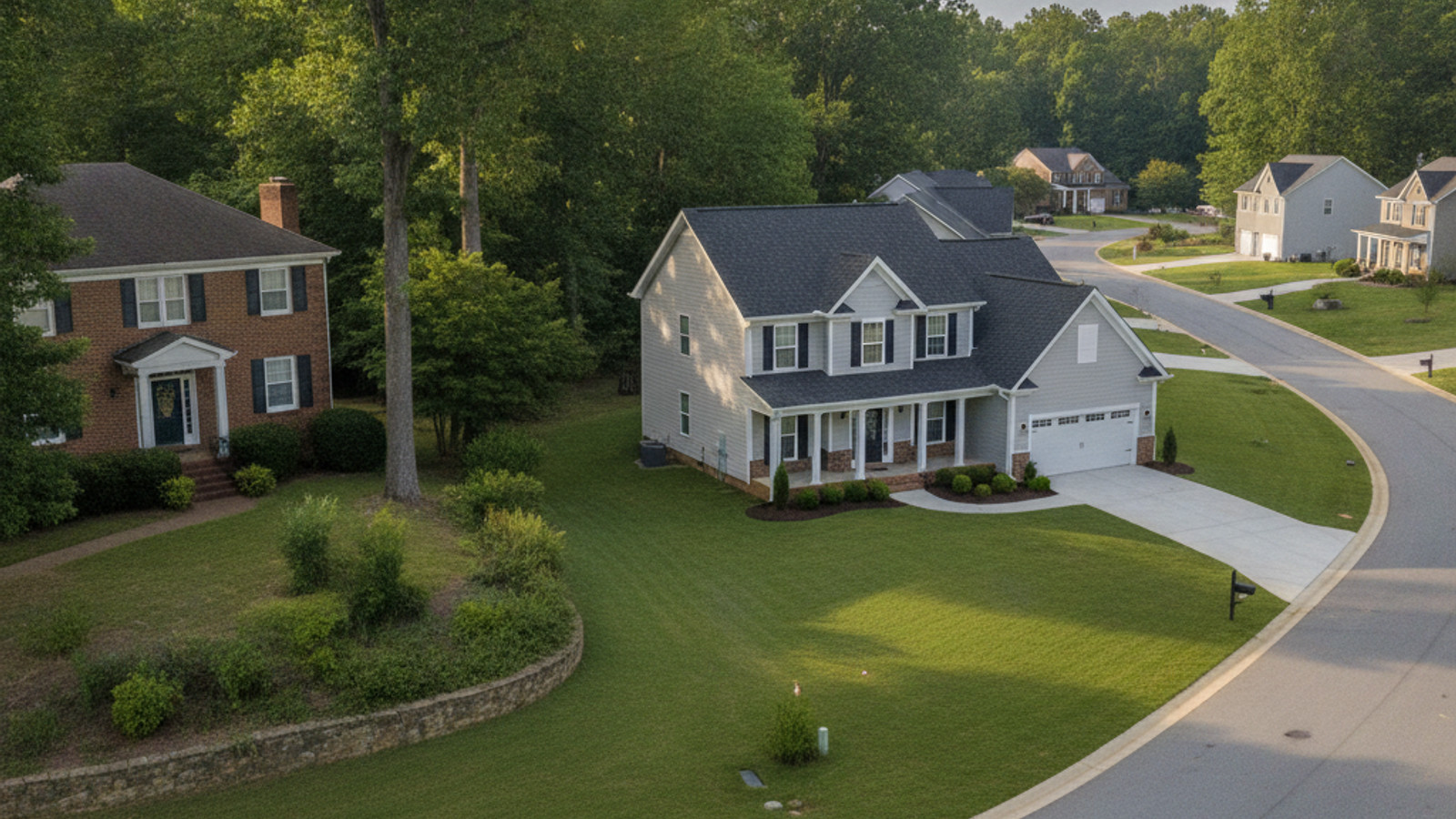
Upstate South Carolina's population growth has pushed many homebuyers toward the suburbs of Greenville. Two of the most popular options are Greer, SC and Travelers Rest, SC, both offering distinct housing markets within a 25-minute drive of downtown Greenville. Buyers looking to settle here usually start by contacting the best realtor in Greer, SC to view local listings.
Choosing between the two usually comes down to budget, preferred architecture, and weekend hobbies. While both towns provide easy access to the Blue Ridge Mountains and strong local economies, their real estate inventory and daily commute patterns look quite different in the summer of 2026.
Real Estate Markets and Home Prices
The median home sale price in Greer sits around $335,000 as of mid-2026, making it a more affordable entry point than Travelers Rest. Greer's market features a steady supply of new construction and established suburban subdivisions. Recent data shows approximately 274 active listings in Greer, with homes spending roughly 65 days on the market before closing.
Travelers Rest commands a higher price tag, with median sale prices ranging from $523,000 to $550,000. The housing inventory leans toward larger lots, custom builds, and properties offering mountain views. Homes in this area frequently sell at a premium due to the proximity to outdoor recreation and stricter zoning on high-density developments.
Sellers in Greer are currently seeing sale-to-list ratios around 98.8%, indicating a balanced market with room for standard negotiations. Buyers looking for acreage and privacy often lean toward Travelers Rest, while those prioritizing lower purchase prices and newer subdivision amenities should focus their search on Greer.
Commute Times and Highway Access
Both suburbs are located roughly 20 to 25 minutes from downtown Greenville, but they utilize entirely different highway systems. Travelers Rest sits directly north of Greenville along US-276. Commuters taking this route experience a fairly straight drive into the city center, though traffic volume increases during morning and evening rush hours.
The town's northern position also means faster access to the North Carolina border and the Blue Ridge Parkway. Greer is positioned to the east, spanning both Greenville and Spartanburg counties. Residents here rely on I-85 and US-29 to reach downtown Greenville or neighboring Spartanburg.
Greer provides immediate access to major regional employers and infrastructure. The Greenville-Spartanburg International Airport (GSP) and the massive BMW Manufacturing plant are both located within Greer's limits. Buyers who travel frequently for work or commute to the BMW facility often find Greer's location saves them hours of driving each week.
Parks, Trails, and Downtown Amenities
The 22-mile Swamp Rabbit Trail serves as the main economic and recreational engine for Travelers Rest. This multi-use greenway connects Travelers Rest directly to downtown Greenville, drawing cyclists and runners year-round. The town's commercial center has developed around the trail, featuring local breweries, outdoor outfitters, and independent restaurants.
Residents also live just minutes from Paris Mountain State Park, which offers hiking, kayaking, and camping. Greer offers a different style of weekend recreation centered around its expanding commercial districts. The downtown area, known as Greer Station, features brick-paved streets lined with boutiques, dining options, and a central park that hosts seasonal festivals.
While Travelers Rest acts as a gateway to mountain sports and trail activities, Greer functions as a traditional suburban hub. Buyers who prioritize immediate access to hiking trails usually prefer Travelers Rest, whereas those looking for a dense downtown dining scene tend to favor Greer.
Cost of Living and Property Taxes
South Carolina applies a 4 percent assessment rate for owner-occupied primary residences, keeping property taxes relatively low across the Upstate. Effective property tax rates in this region run around 0.50% to 0.57% of a home's assessed value. Travelers Rest is located entirely within Greenville County, meaning residents pay standard Greenville County taxes and local municipal millage rates.
Greer's geography complicates its tax structure, as the city limits cross the border into Spartanburg County. A home's exact property tax bill in Greer depends on which county it falls into, so buyers should verify the county lines on any specific listing. Utility costs remain comparable between the two towns, with Duke Energy serving as a primary provider for many neighborhoods.
However, buyers should factor in HOA fees when budgeting for their monthly expenses. These association dues are more common in Greer's newer master-planned subdivisions than in the rural pockets of Travelers Rest.
Schools, Healthcare, and Daily Necessities
Greenville County Schools operates as the largest public school district in South Carolina, serving the majority of students in both municipalities. Travelers Rest students attend schools entirely within the Greenville County system. Because Greer spans two counties, some neighborhoods are zoned for Greenville County Schools while others fall under Spartanburg County districts.
Buyers with specific school preferences should check the zoning maps before making an offer. Greer provides a denser concentration of daily infrastructure, including large grocery store chains, big-box retailers, and the Pelham Medical Center.
Residents rarely need to leave the city limits for medical appointments or weekly errands. Travelers Rest maintains a smaller-town atmosphere with fewer large-scale retail centers. While the town has local grocery stores and basic medical clinics, residents often drive into Greenville or neighboring Taylors for specialized healthcare and major shopping trips.
Frequently Asked Questions
Is Greer or Travelers Rest closer to downtown Greenville?
Both towns are about 20 to 25 minutes from downtown Greenville under normal traffic conditions. Travelers Rest offers a direct route south via US-276, while Greer residents typically take I-85 or US-29 west. The exact drive time depends on which specific neighborhood you choose in either suburb.
Are housing costs cheaper in Travelers Rest or Greer?
Homes in Greer are generally less expensive than those in Travelers Rest. In mid-2026, Greer's median sale price is around $335,000, compared to the $523,000 to $550,000 range typical of Travelers Rest. This price difference reflects Greer's larger inventory of standard subdivisions versus the acreage and mountain views found in Travelers Rest.
Does the Swamp Rabbit Trail go to Greer?
No, the Swamp Rabbit Trail connects Travelers Rest to downtown Greenville and does not extend into Greer. Greer residents looking for paved greenways typically use local city parks or drive 25 minutes west to access the Swamp Rabbit network.
Are property taxes higher in Greer, SC or Travelers Rest?
Base property tax rates are similar, hovering around 0.50% to 0.57% for owner-occupied homes. However, Greer spans both Greenville and Spartanburg counties, so a home's specific tax bill will vary based on its county and local millage district.
Which town offers better access to major hospitals and daily shopping, Greer or Travelers Rest?
Greer features more commercial infrastructure, including large retail centers and the Pelham Medical Center. Travelers Rest has local grocery stores and clinics, but residents often travel into Greenville for major medical procedures and big-box shopping.
How do the public schools in Greer compare to the schools in Travelers Rest?
Both towns are primarily served by Greenville County Schools, the state's largest district. The main difference is geographical: some eastern sections of Greer are zoned for Spartanburg County districts, whereas Travelers Rest is entirely within the Greenville system.