Expert Real Estate Team: Your Trusted Source for Up-to-Date Real Estate Knowledge

Welcome to the Expert Real Estate Team blog! Whether you're a seasoned realtor, a homeowner looking to sell, or a first-time buyer embarking on your real estate journey, we're here to be your trusted source of valuable information. 

Our blog is packed with insightful articles and expert advice on a wide range of real estate topics. We cover everything from market trends and local insights to navigating the buying and selling process, financing options, and homeownership tips. 

Here's what you can expect:

  • Realtors: Stay ahead of the curve with market updates, marketing strategies, legal and regulatory changes, and expert tips to elevate your real estate career. 
  • Sellers: Get inside knowledge on preparing your home for sale, maximizing your return on investment, and navigating negotiations with confidence. 
  • Buyers: Learn about different mortgage options, discover the secrets to successful homefinding, understand local market dynamics, and make informed decisions. 

Our goal is to empower you with the knowledge and tools you need to achieve your real estate goals. We believe in fostering a community of informed and confident real estate professionals and homeowners. 


April 7, 2026

Greer Station, SC Area Guide: Living in Historic Downtown Greer

Welcome to Greer Station: The Heart of Upstate South Carolina

Let's talk about Greer Station. If you are looking for that perfect blend of historic southern charm and modern convenience, this vibrant downtown district in Upstate South Carolina is calling your name. Nestled perfectly between Greenville and Spartanburg, it is a place where history meets a revitalized, walkable lifestyle.

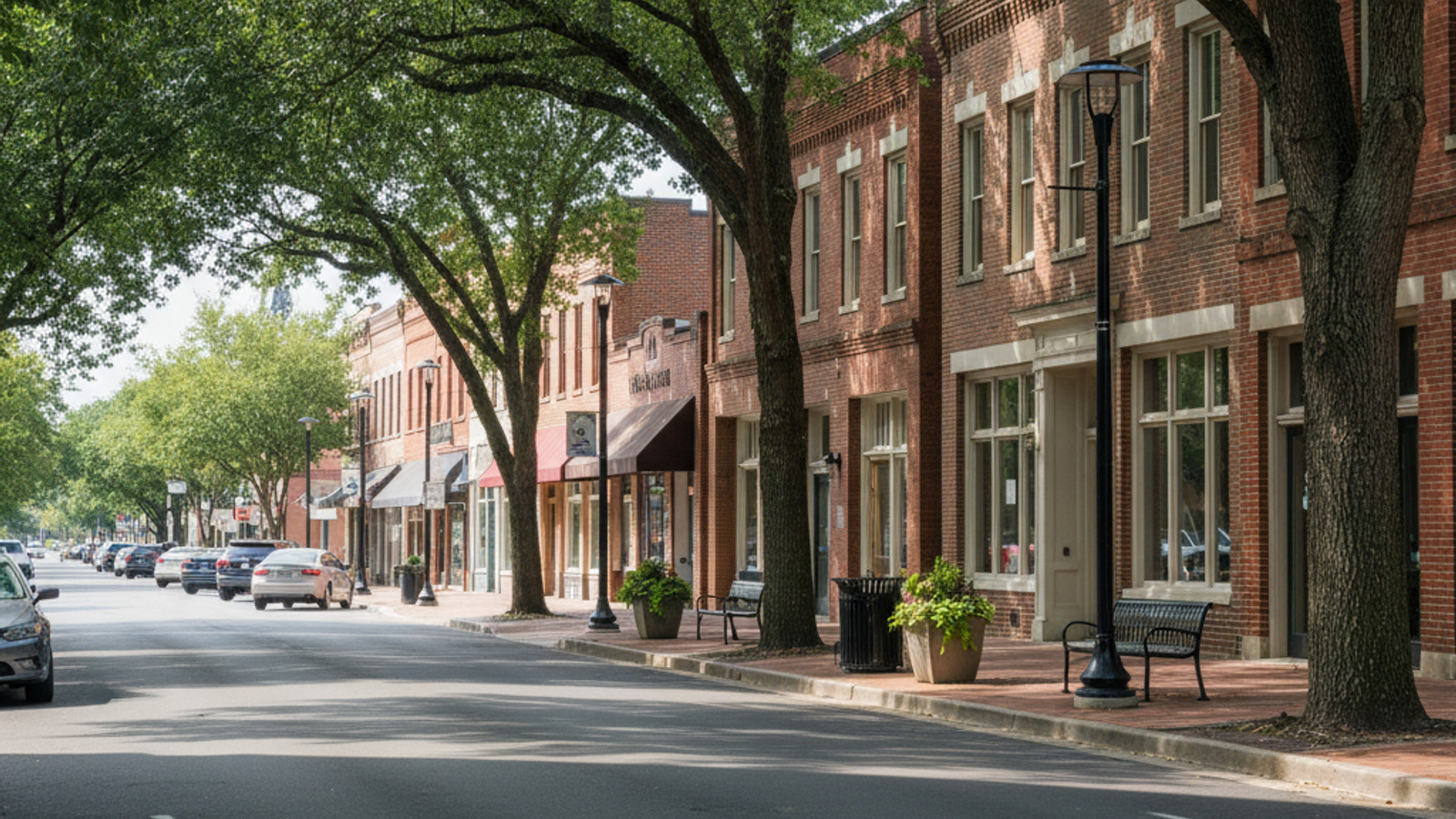
Walking down these streets feels like stepping back in time, especially since over 40 buildings here are officially listed on the National Register of Historic Places. But do not let the vintage brick facades fool you. Today, this area is buzzing with energy, offering an incredible mix of dining, shopping, real estate, and community events.

Whether you are browsing homes for sale in Greer or just planning a weekend visit, this guide will show you exactly what makes downtown Greer so special.


Getting Here: A Central Location on the I-85 Corridor

Location is everything in real estate, and Greer Station absolutely nails it. The downtown area sits right along the booming Interstate 85 corridor, making travel a breeze for locals and visitors alike.

If you fly often for work or leisure, you will love being just minutes away from the Greenville-Spartanburg International Airport. The local economy is incredibly strong here, driven in large part by the nearby BMW Manufacturing plant, which brings a steady stream of jobs and innovation to the region.

Because of this central positioning, living in Greer means you have a remarkably easy commute to both downtown Greenville and downtown Spartanburg. You get the quiet, historic feel of a smaller town without sacrificing quick access to major employment hubs and city amenities.


Top Things to Do in Greer Station: Shopping & Entertainment

When clients ask me about weekend plans in downtown Greer, I always point them straight to Trade Street. The city recently poured a massive $120 million reinvestment into a streetscape project here, and the results are simply stunning.

They implemented a European-style "woonerf" - a curbless street design that makes the entire area incredibly pedestrian-friendly. This open layout perfectly complements the historic brick-paved streets and beautifully preserved storefronts, creating an inviting space to explore.

Here is a quick look at what you can enjoy while strolling through the district:

  • Chic boutiques and artisan shops: Perfect for finding unique clothing, gifts, and locally crafted goods.
  • Antique stores: Spend an afternoon hunting for vintage treasures and historic home decor to match your property.
  • Entertainment venues: Places like Trade Street Social offer a great atmosphere for gathering with friends over games and drinks.
  • Local pottery studios: Great for picking up a new hobby or buying handcrafted local art for your living room.


Award-Winning Restaurants and Downtown Dining

After a day of shopping, you will definitely want to explore the local food scene. Greer Station has quietly become a foodie destination, boasting several award-winning restaurants right within walking distance of each other.

You can find everything from classic southern comfort food to upscale Italian dining for a special night out. A major highlight is the Cartwright Food Hall, which brings multiple fantastic food vendors together under one roof. It is the perfect spot when everyone in your group is craving something different.

Beyond the main dining rooms, the area is dotted with cozy local coffee shops to help you start your morning right. In the evenings, the nightlife is vibrant yet relaxed, with plenty of inviting wine bars and local taprooms to cap off your day.


Community Amenities: Greer City Park and Local Events

A great downtown is about more than just shops and restaurants - it is about the spaces where the community comes together. Right adjacent to the historic district is the beautiful 12-acre Greer City Park.

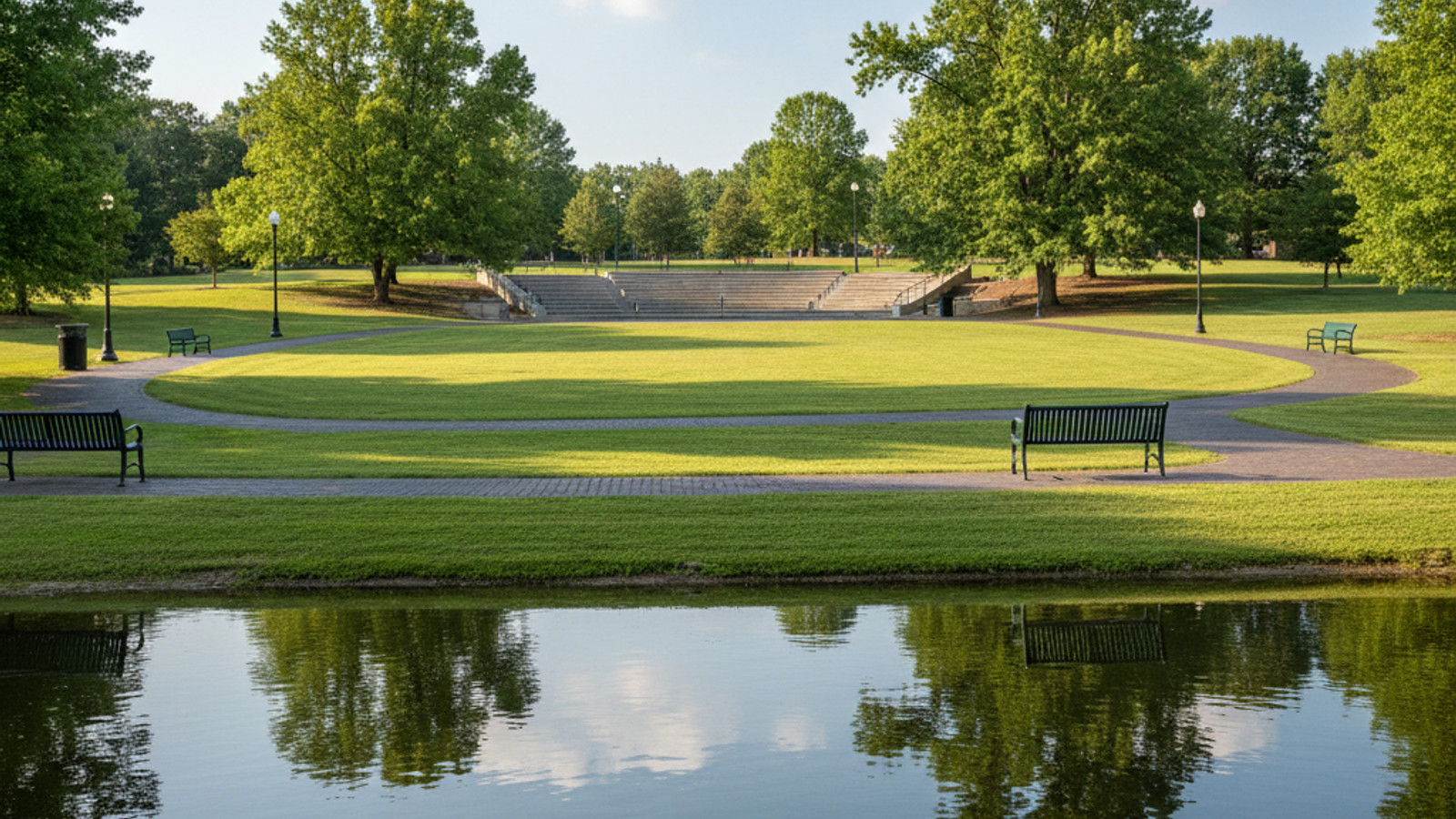
This park is a fantastic green space featuring a scenic pond, an amphitheater, and paved walking paths. It serves as the main hub for local gatherings, including the popular Greer Farmers Market where you can pick up fresh upstate produce and artisan goods. Throughout the year, you will find seasonal festivals and live music events spilling from the park right onto Trade Street.

If you love the water, you are also just a short drive from Lake Robinson. With roughly 800 acres of water, it is a gorgeous spot for kayaking, fishing, and taking in the scenic Blue Ridge Mountain views.


The Greer Station SC Real Estate Market

Let's look at the numbers and housing options if you are thinking about making this area your home. The real estate market around Greer Station offers a fascinating mix of the old and the new.

Just blocks from downtown, you will find charming historic bungalows and beautifully renovated mill homes. If you prefer low-maintenance living, there are also stunning new luxury lofts and apartments right in the heart of the district. As a local expert, I generally see median home prices in the broader Greer area hovering between approximately $330,000 and $400,000, depending on the exact neighborhood and property condition.

Buyers are heavily drawn to the incredible walkability and the convenience of having shops and dining right outside their front door. Another financial perk for buyers moving to the area is South Carolina's favorable 4% primary residence tax assessment ratio, which helps keep annual property taxes quite manageable.


Education and Local Schools

When looking at homes in the upstate, understanding the local school zoning is a crucial step. Greer is uniquely situated right on the border of two different counties - Greenville County and Spartanburg County.

This means that homes on one side of town are zoned for Greenville County Schools, while homes just a few streets over might fall under Spartanburg District 5. Because the lines can be quite intricate, school zoning depends entirely on the specific property address.

I always advise my buyers to independently verify the school zoning boundaries with the respective districts before putting in an offer on a house. Additionally, residents here enjoy great proximity to local libraries and other educational resources to support lifelong learning.


Frequently Asked Questions About Greer Station

Does Greer, SC have a downtown?

Yes, Greer has a thriving downtown area known as Greer Station. It features historic brick-paved streets, chic boutiques, and award-winning restaurants. The city recently invested heavily in a stunning streetscape project to make the area highly walkable and pedestrian-friendly.

Is Greer, SC a good place to live?

Greer offers a fantastic quality of life with its strong local economy, beautiful parks, and rich southern charm. Residents enjoy a balance of historic character and modern amenities, all within a short distance from major upstate employment hubs. The availability of diverse housing options makes it highly appealing for a wide variety of buyers.

How far is Greer Station from Greenville and Spartanburg?

Greer Station is centrally located right between the two major cities, sitting about 12 miles from downtown Greenville and 18 miles from downtown Spartanburg. This prime spot on the Interstate 85 corridor makes commuting to either city incredibly quick and straightforward.

What is the median home price in Greer, SC?

While prices fluctuate based on the specific property and market conditions, the median home price in the Greer area generally sits between $330,000 and $400,000. Historic homes closer to the downtown district or new luxury builds may fall on the higher end of that spectrum.
March 4, 2026

HOA Fees in Greer, SC: What You Need to Know Before You Buy


If you are currently looking at homes for sale in Greer, SC, you have likely noticed a three-letter acronym popping up on almost every listing: HOA.

For many buyers, Homeowner Association (HOA) fees are a bit of a mystery. Are they just an extra bill, or do they actually provide value? In the Upstate, the answer depends entirely on where you buy. From low-maintenance townhomes to sprawling golf course estates, the costs and rules vary wildly.

Let’s grab a cup of coffee and break down exactly what these fees look like in our local market so you can budget with confidence.


Understanding HOA Fees in Greer, SC

In the current housing market, HOAs are incredibly common. In fact, well over 50% of new developments in Greer include a mandatory Homeowner Association. These organizations are designed to manage the community's appearance and amenities, but they aren't all created equal.

The first thing to understand is the difference between "mandatory" and "voluntary" associations. In Greer, the vast majority are mandatory. This means that when you sign the deed, you agree to pay the dues and abide by the rules. It is not optional. If you are researching the cost of living in Greer SC, you need to treat these fees as a hard line item in your budget, just like property taxes or insurance.

There is also a crucial distinction in how these fees are billed based on the property type. If you buy a standard single-family house, you will typically pay an annual fee. However, if you are looking at townhomes or condos, you will almost certainly pay a monthly fee. In South Carolina, you might hear condo fees referred to as "Regime Fees," which is just a local legal term for the same concept.


Average HOA Costs by Property Type

When you are trying to figure out how much house you can afford, it helps to know the "normal" range for these fees. While every neighborhood has its own budget, here is what you can generally expect to pay based on the type of home.

Single-Family Detached Homes

For a traditional house in a subdivision, the fees are usually quite reasonable. Because you are responsible for your own house exterior and lawn, the HOA fee mostly covers common grounds.

  • Typical Cost: $400 - $800 per year

  • Monthly Equivalent: Roughly $33 - $67 per month


Townhomes & Condos

If you browse Greer SC condos for sale, you will see much higher numbers. This is because the fee covers a lot more, often including exterior building maintenance, roof reserves, and landscaping.

  • Typical Cost: $200 - $450 per month


Luxury & Golf Communities

If you are eyeing luxury homes in Greer SC, particularly in golf course communities, the fees step up significantly. These neighborhoods often have extensive grounds, manned security gates, or clubhouse access included in the base assessment.

  • Typical Cost: $3,000+ per year (plus potential club initiation fees)


HOA Fees for Popular Greer Neighborhoods (2025 Estimates)

To give you a concrete idea of what this looks like, let's look at some specific numbers. Keep in mind that these figures are estimates based on recent listings and can change every year based on a board vote.

Also, notice how some neighborhoods have different "sections." For example, a main subdivision might have a low annual fee for houses, while the "Villas" section has a higher monthly fee because lawn care is included.

  • Thornblade

    • Home Type: Single-Family

    • Approx. Fee: ~$3,600

    • Frequency: Annually

  • Thornblade (Villas)

    • Home Type: Condo/Villa

    • Approx. Fee: ~$300+

    • Frequency: Monthly

  • Sugar Creek

    • Home Type: Single-Family

    • Approx. Fee: ~$790

    • Frequency: Annually

  • Sugar Creek (Villas)

    • Home Type: Condo/Villa

    • Approx. Fee: ~$380

    • Frequency: Monthly

  • Silverleaf

    • Home Type: Single-Family

    • Approx. Fee: ~$550

    • Frequency: Annually

  • Pelham Falls

    • Home Type: Single-Family

    • Approx. Fee: ~$625 - $675

    • Frequency: Annually

  • O'Neal Village (Single-Family)

    • Home Type: Single-Family

    • Approx. Fee: ~$600

    • Frequency: Annually

  • O'Neal Village (Townhomes)

    • Home Type: Townhomes

    • Approx. Fee: ~$212

    • Frequency: Monthly


  • Thornblade Crossing

    • Home Type: Townhomes

    • Approx. Fee: ~$220

    • Frequency: Monthly

Note: Always verify the current fees and what they cover with your agent before making an offer.


What Do These Fees Typically Cover?

A common question I get is, "Where does all that money go?" It is a valid question. The value proposition changes depending on whether you are in a neighborhood like Sugar Creek Greer SC real estate or a smaller townhouse community.

For most single-family home communities, your annual dues pay for the "curb appeal" of the neighborhood. This includes landscaping at the front entrance, electricity for street lights, and maintenance of retention ponds (which is a big deal for stormwater management). If the community has amenities, the money also goes toward cleaning the pool, resurfacing tennis or pickleball courts, and maintaining the clubhouse.

For townhomes and condos, the money works harder for you personally. These monthly fees often cover the "termite bond" (pest control for the structure), exterior insurance (studs-out), and repairs to the roof and siding. In many cases, it also covers lawn maintenance, so you can sell your lawnmower.

One important note for budgeting: Trash pickup in Greer is a mix. If you live within city limits, trash is often a city service. If you are in the county, you likely have to hire a private hauler. Trash removal is rarely included in HOA dues unless you are in a specific condo or townhome complex.


Living in an HOA: Pros, Cons, and Red Flags

Deciding to buy in a managed community is about lifestyle as much as it is about money.

On the positive side, HOAs are great for protecting property values. They prevent your neighbor from parking a rusted-out bus on their front lawn or painting their house neon purple. They also provide dispute resolution and manage the amenities that make life fun, like community pools and summer social events.

However, there are cons. The biggest friction point for buyers usually involves "restrictive covenants." These are the legal rules filed with the county. They might dictate exactly what kind of fence you can build, forbid you from parking a boat or RV in your driveway, or restrict the construction of detached sheds.

When you are looking at O'Neal Village homes for sale or any other planned community, keep an eye out for red flags. If the community looks run down despite high fees, that is a bad sign. You should also look into the association's financial health. If they have low cash reserves, you could be hit with a "special assessment" - a surprise bill to pay for a major repair like a new pool pump or road repaving.


Frequently Asked Questions About Greer HOAs

Are HOA fees included in the mortgage?

No, your HOA fees are typically paid separately from your mortgage. However, your lender will "count" them when calculating your debt-to-income ratio to ensure you can afford the total monthly housing payment.


Can HOA fees in Greer go up?

Yes, they can and often do. The Board of Directors usually votes on the budget annually. While drastic spikes are rare in established single-family neighborhoods, small increases to keep up with inflation and landscaping costs are normal.


What happens if you don't pay HOA fees in South Carolina?

In South Carolina, HOAs have significant power. If you fail to pay your dues, the association can place a lien on your property and, in extreme cases, foreclose on your home to recover the debt.


Are there neighborhoods in Greer without an HOA?

Yes, absolutely. If you prefer to avoid fees and rules, you should look for older neighborhoods established before the 1990s or rural properties on the outskirts of Greer. Just keep in mind that without an HOA, there is no one to enforce neighborhood aesthetic standards.

Posted in Buying
March 4, 2026

New Home Developments in Greer, SC: The 2025 Buyer’s Guide


If you have been keeping an eye on the Upstate real estate market, you already know that Greer has hit a serious "sweet spot." It is no longer just the quiet town in between the bigger cities; it is the strategic center of the I-85 corridor. With major employers like BMW Manufacturing and the Inland Port driving growth, Greer has transformed into a hub that balances small-town charm with rapid development.

Because resale inventory has been tight lately, many buyers are turning their attention to new construction. Whether you are relocating to the Upstate for work or just moving across town, the new home market here is booming. In this guide, we are going to walk through the master-planned communities, luxury builds, and timeline expectations you need to know about for 2026.


Market Snapshot: Buying New Construction in Greer

Before we look at specific neighborhoods, let's talk about the numbers and the landscape. The market here is diverse, offering everything from entry-level options to high-end estates. You can find efficiency townhomes starting in the mid-$200s, while luxury builds in exclusive neighborhoods easily push past $600K. Based on what we are seeing on the ground, the median price for a new detached home currently hovers around $400K.

One of the most critical things to understand about living in Greer SC is the "County Line" factor. The city limits of Greer actually span both Greenville County and Spartanburg County. This is a huge detail because it dictates your property tax rates and, more importantly, your school district. When you are looking at a listing or a plot map, always double-check which side of the county line the specific lot sits on.

Inventory is another major consideration. You will generally encounter two types of purchase opportunities: "dirt sales" and "spec homes." Dirt sales mean you pick the lot and the floor plan, then wait for construction. Spec homes (or inventory homes) are houses the builder started without a specific buyer, meaning they are often move-in ready or close to completion. With demand remaining high, move-in ready options tend to go under contract very quickly.


Top New Home Communities in Greer 

New developments in Greer are popping up fast, but they aren't all created equal. Most can be categorized by the lifestyle they offer, from resort-style amenities to low-maintenance living.


Master-Planned & Resort-Style Living

If you are looking for a neighborhood where you never really have to leave, master-planned communities are the way to go. O'Neal Village is arguably the flagship example here. It is a mixed-use community featuring its own retail center, an amphitheater, and a massive pool. Toll Brothers (Heights Collection) and D.R. Horton have been the primary builders here. It is worth noting that O'Neal Village is moving into its final phases, so opportunities to get in are becoming more limited. Pricing here generally runs from the high $300s to the $400s.

For something newer to the market, keep an eye on Lawton Ridge. Great Southern Homes is active here, and it is shaping up to be a strong option for 2026 buyers. Another contender is Parker's Summit by Stanley Martin Homes. This community is drawing attention for its larger floor plans and proximity to the mountains, making it a scenic choice for those who want a bit more room to breathe.


Low-Maintenance Townhomes & Cottages

Not everyone wants to spend their Saturday mowing a massive lawn. If you are looking for a "lock-and-leave" lifestyle, the townhome market in Greer is robust. Valentine Townes by Meritage Homes is a popular choice for buyers who prioritize energy efficiency and modern design.

If your commute takes you to the manufacturing hub, Crossing at Abner Creek Townes offers incredible proximity to BMW and the interstate. For a more upscale, single-level option, check out Manegate Cottages by Rosewood Communities. These are luxury cottages where yard maintenance is included, offering a high-end feel without the chore list. Townhomes in these areas are often the entry point for the market, starting in the mid-$200s.


Luxury & Custom Estate Homes

For buyers seeking larger lots, river views, or custom finishes, the options shift toward the $600K+ range. River Reserve is a standout community featuring homes by Empire Homes. It is known for its river access and larger estate-style lots that are hard to find in denser subdivisions.

If you prefer a home without a Homeowners Association (HOA), you will likely need to look for custom builders working on scattered lots. These opportunities allow for more freedom regarding architectural style and property usage but require a bit more legwork to find.


Builder Spotlight: Who is Building in Greer?

Knowing who is building your house is just as important as where it is located. We have a mix of massive national companies and strong local builders.

  • National Builders: You will see D.R. Horton everywhere - they focus on volume and value. Toll Brothers brings a higher design aesthetic and luxury finishes. Stanley Martin is known for specific lifestyle features, while Meritage Homes leans heavily into spray-foam insulation and energy efficiency.

  • Local & Regional Builders: Rosewood Communities is a local favorite for Craftsman-style architecture and cottage products. SK Builders offers a semi-custom experience that many buyers appreciate. Great Southern Homes is a regional powerhouse known for their GreenSmart technology.

  • Custom Options: If performance and green building are your top priorities, Addison Homes is a local custom builder with a reputation for high-performance construction.


School Districts & Education Ratings

As mentioned earlier, the county line defines the school district. This is often the deciding factor for buyers with children or those thinking about future resale value.

On the Greenville County Schools side, Riverside High School is a major draw. It is highly rated and offers the IB Program, making the surrounding neighborhoods very sought-after. Greer High School and Blue Ridge High (which serves the more northern, rural parts of Greer) are the other main high schools in this district.

On the Spartanburg County side, you are looking at District 5. This district is growing rapidly. Byrnes High School is the anchor here, with Abner Creek Academy serving younger students. It is very common for a home to have a "Greer" address but fall within Spartanburg District 5, so checking the specific attendance zone is a must.


Project Timelines: Coming Soon vs. Quick Move-In

Timing is everything. If you need to move immediately, ask your agent to filter for "Inventory Homes." You can currently find some move-in ready options at O'Neal Village or Valentine Townes, but they don't sit on the market long.

If you want to build from the ground up - selecting your lot and your finishes - you should plan on a timeline of roughly 6 to 9 months. This varies by builder and weather conditions.

Looking ahead to later in 2026 and beyond, there are several "Coming Soon" projects on the radar. Cambric Village by Toll Brothers and Brookside Farms are future phases and developments that are generating early interest. Getting on a VIP list for these communities is a smart move if you aren't in a rush.


Frequently Asked Questions

What new home communities are coming soon to Greer, SC in 2026?

Several exciting projects are in the pipeline. Lawton Ridge is a newer option gaining traction, and Cambric Village by Toll Brothers is one to watch for future release. Additionally, O'Neal Village continues to release its final phases, offering new opportunities in an established neighborhood.


Which builders are active in Greer, SC right now?

The area has a healthy mix of national and local talent. Major players include D.R. Horton, Toll Brothers, Stanley Martin, and Meritage Homes. For local or regional flair, look for Rosewood Communities, SK Builders, and Great Southern Homes.


Does Greer, SC have good school districts for new construction?

Yes, Greer is served by two respected districts. Greenville County Schools (home to the popular Riverside High) covers the west side, while Spartanburg District 5 (home to Byrnes High) covers the east. Both are highly rated, but you must verify which county a specific development falls into.


Where are the new townhomes located in Greer?

You can find new townhomes across the city. Valentine Townes offers energy-efficient living, while Crossing at Abner Creek Townes is located near the BMW plant for an easy commute. Manegate Cottages offers a luxury, single-level variation of the low-maintenance lifestyle.


What are the property taxes like in Greer?

South Carolina is generally tax-friendly for homeowners. For a primary residence, you are taxed at a 4% assessment ratio. However, millage rates differ between Greenville and Spartanburg counties, so your actual bill will depend on which side of the county line your new home sits on.


Note: Before you visit a model home, remember that the on-site agent represents the builder, not you. It is always smart to schedule a consultation with a buyer's agent first to ensure you have representation during the process.

March 4, 2026

Average Rent in Greer, SC: What to Expect in 2025


If you are looking at moving to the Upstate, you’ve likely noticed something interesting happening on the map. Greer used to be considered just a quiet neighbor to Greenville, but those days are long gone. Today, it is a booming satellite city with its own distinct identity, driven by major economic engines like BMW Manufacturing and the Greenville-Spartanburg International Airport (GSP).

For many prospective renters, Greer represents the perfect "middle ground." It offers a genuine historic downtown charm (Greer Station is hard to beat) without the premium price tag of downtown Greenville.

Whether you are relocating for a job at the Inland Port or just looking for more space for your money, understanding the rental landscape here is key. Let’s break down the costs, the neighborhoods, and the lifestyle you get for your rent check.


Average Rent in Greer, SC: 2026 Market Snapshot

If you are trying to budget for your move, here is the bottom line: The rental market in Greer has cooled off slightly after the post-pandemic surge, which is great news for tenants. While prices are still higher than they were five years ago, we are seeing trends stabilize, and in some cases, dip slightly.

Currently, the average rent in Greer generally falls between $1,280 and $1,600 per month, depending heavily on whether you are looking for a standard apartment or a single-family home.

Recent market data suggests a slight year-over-year decrease of about 1% to 3%. This stabilization means you have a bit more negotiating power than before, especially in large apartment complexes where inventory is higher. However, the market for single-family homes remains "warm"—if you see a good house for rent with a fenced yard, it will likely move fast.


Rental Costs by Property Size & Type

Averages are helpful, but they don't tell the whole story. A solo professional looking for a studio near the airport has a very different budget than a household looking for a three-bedroom home near Lake Robinson.

Here is a realistic look at what you can expect to pay based on the size of the unit:

  • Studio Apartments: These are ideal for solo professionals or commuters who travel often. You can typically find modern studios ranging from $1,150 – $1,200.

  • 1-Bedroom Units: This is a popular category for young couples. Expect to budget between $1,250 – $1,320 for a nice one-bedroom unit in a managed complex.

  • 2-Bedroom Units: If you need a home office or have a roommate, this is the sweet spot. A spacious two-bedroom usually runs $1,420 – $1,560.

  • 3-Bedroom+ / Single-Family Homes: This is where inventory gets tighter. For a three-bedroom apartment or a rental house, prices often start at $1,800+ and can go significantly higher depending on the subdivision, HOA fees, and yard size.

If you are looking for luxury apartments in Greer, specifically those with resort-style pools and gyms, you should expect to pay toward the top end of these ranges.


Greer vs. Greenville: Price & Lifestyle Comparison

The most common question we hear from relocators is: "Should I live in Greenville or Greer?" It usually comes down to a trade-off between commute time and monthly savings.

Generally speaking, Greer is about 10-12% cheaper than Greenville when it comes to overall housing costs.

  • The Price Gap: A budget of $1,500 in downtown Greenville (especially the West End) might get you a modest studio or a small one-bedroom. In Greer, that same $1,500 often secures a spacious two-bedroom garden apartment with easy parking.

  • The Lifestyle: Greenville offers high-energy urban nightlife and a bustling walkable city center. Greer offers a tighter-knit community feel. Greer Station has fantastic dining and festivals, but the evenings are quieter.

  • The Commute: Living in Greer might add 15–20 minutes to your drive if you work in downtown Greenville, but for many, the savings on rent and the proximity to I-85 make it worth the drive.

If you are weighing the cost of living in Greenville SC against the benefits of the suburbs, Greer is often the winner for those who prioritize square footage over being in the center of the action.


Best Neighborhoods in Greer for Renters

Greer is geographically large, stretching into both Greenville and Spartanburg counties. The "vibe" changes drastically depending on which side of Wade Hampton Boulevard you are on. Here are a few areas to keep on your radar.


For Young Professionals: Downtown & Pelham Road

If you want walkability, look for rentals near Greer Station. Living near Trade Street puts you steps away from coffee shops, brick-paved streets, and Friday night events. Alternatively, the Pelham Road corridor is perfect if you need quick access to I-85, BMW, or Michelin. This area has the highest density of modern apartment complexes with amenities like gyms and pools.


For Those Seeking Community Amenities: Sugar Creek & O'Neal Village

If you are looking for established subdivisions with active residents, Sugar Creek is a massive draw. It is famous locally for its three community pools, tennis courts, and active calendar of events. O'Neal Village is a newer, master-planned community that offers a "front-porch living" feel with walkable streets and new construction rentals. Silverleaf is another established choice known for quiet, tree-lined streets and solid rental inventory.


For Nature Lovers: Lake Robinson

If you prefer mountain views over city lights, look north toward the Lake Robinson area. It is further removed from the traffic of Wade Hampton Blvd and offers easy access to boating, fishing, and hiking, though you will likely pay a premium for water views.


Total Cost of Living: Budgeting Beyond Rent

Rent is your biggest expense, but it isn't the only one. When calculating your monthly budget for living in Greer SC, keep these hidden costs in mind.

  • Utilities: Utility costs here generally align with national averages. However, it is important to know who your provider is. Inside the city limits, you will likely use Greer CPW (Commission of Public Works) for electric, gas, and water. Outside the city limits, you might be on Duke Energy and a different water provider.

  • Transportation: The Upstate is car-dependent. While gas prices are often lower than the national average, you will be driving a lot. If your commute takes you down Wade Hampton Blvd during rush hour, factor in a little extra gas—and patience—for the traffic.

  • Deposits & Fees: Standard practice here is a security deposit equal to one month’s rent. Application fees usually run between $50 and $100. If you have pets, expect a non-refundable pet fee (often $300+) and potentially a small monthly pet rent ($15–$25).


Frequently Asked Questions

Is rent cheaper in Greer or Greenville, SC?

Yes, Greer is generally more affordable. On average, you can expect rent in Greer to be 10% to 15% cheaper than comparable properties in Greenville. You typically get more square footage and easier parking in Greer for the same price point.


What is a good salary to live in Greer, SC?

Using the standard rule that rent should not exceed 30% of your gross income, and assuming an average rent of $1,286, a salary of roughly $51,500 per year is recommended. This allows for a comfortable lifestyle where you can still save for the future.


Is Greer, SC a safe place to live?

Greer is widely regarded as having a strong community feel with a well-maintained, well-lit downtown area. Like any growing city, experiences vary by neighborhood. It is always a smart idea to check local crime maps and visit a neighborhood at different times of day before signing a lease.


What are the utility providers in Greer?

This depends on your specific address. Residents within the city limits typically use Greer CPW for electricity, natural gas, and water. Those in the surrounding unincorporated areas usually rely on Duke Energy for power and various local districts for water.

Posted in Upstate Living
March 4, 2026

Seller Disclosures in Greer, SC: What You Must Tell Buyers


Selling a home is a whirlwind of staging, showings, and negotiating offers. But before you get to the closing table, there is one crucial step that often stresses sellers out: the paperwork. Specifically, the legal requirement to tell buyers exactly what is wrong with your house.

In the past, South Carolina was strictly a "Caveat Emptor" or "Buyer Beware" state. That meant it was entirely up to the buyer to find defects. Today, however, the South Carolina Residential Property Condition Disclosure Act (found in Title 27, Chapter 50 of the SC Code of Laws) has shifted that burden. Now, transparency isn't just a courtesy; it is the law.

Whether you are selling a historic mill home near downtown Greer or a new construction property in a subdivision, you have a legal obligation to be honest about the property's condition. Hiding defects might seem like a way to protect your sale price, but in reality, it opens the door to post-closing lawsuits that cost far more than a simple repair.


Understanding the SC Residential Property Condition Disclosure Statement (Form 230)

The primary tool for this transparency is the Residential Property Condition Disclosure Statement, commonly known by agents as Form 230. This is a standardized state form that asks you a series of questions about the condition of your home, from the roof down to the foundation.

You are required to provide this completed form to the buyer before you sign a sales contract. If you slip it to them after the ink is dry, the buyer may have the right to back out of the deal penalty-free.

When filling out the form, you generally have three options for every question:

  1. Yes: You know there is a problem.

  2. No: You are not aware of any problem.

  3. No Representation: You are choosing not to answer.

Here is the tricky part about "No Representation." Many sellers think this is a safe "I don't know" option. It isn't. If you choose "No Representation" but a court later proves you had actual knowledge of a defect (like a receipt for a roof patch or a quote from a plumber you didn't hire), you can still be held liable. It is almost always better to be upfront than to appear evasive.


What Counts as a "Material Adverse Fact"?

You don't need to list every scuff mark on the baseboards or a squeaky hinge in the guest room. The law focuses on material adverse facts.

A material adverse fact is a specific defect that significantly reduces the value of the property, significantly reduces the structural integrity, or poses a significant health risk to the occupants.


Think of it this way:

  • Cosmetic: Peeling wallpaper in the hallway? Not a material fact.

  • Material: A structural crack in the foundation that lets water in? Definitely a material fact.

The standard here is "Actual Knowledge." South Carolina law generally does not require you to hire a home inspector or crawl under your own house to hunt for problems you didn't know existed. However, you cannot have "selective amnesia." If you know the HVAC unit freezes up every July, you must disclose it.


Common Disclosure Issues in Greer and Upstate SC

Real estate in the Upstate has its own unique set of challenges due to our climate and geography. When you are preparing your disclosure, pay special attention to these areas, as they are frequent triggers for disputes in our market.


Termites and the CL-100

In South Carolina, it’s often said there are two types of homes: those that have had termites and those that will. You will likely be asked to provide a CL-100 Wood Infestation Report before closing. On your disclosure, you must be honest about any past termite treatments or structural damage caused by wood-destroying organisms. If you have a termite bond, have those documents ready.


Crawl Space Moisture

Greer is humid, and our soil holds moisture. This combination often leads to "wet crawl spaces." High moisture levels can lead to wood rot, mold, or fungal growth. If you have installed a vapor barrier, a dehumidifier, or a french drain to combat standing water, disclose the history of that work. This is one of the top reasons for lawsuits in our area.


Radon Gas

While radon is more associated with the mountains, the foothills around Greer can still see elevated levels. Radon is an odorless, colorless gas that comes from the natural breakdown of uranium in the soil. If you have ever tested for it, you must share the results.


Septic Systems

Many properties in the semi-rural areas surrounding Greer rely on septic tanks rather than city sewer. You should disclose the location of the drain field and the last time the system was pumped. If the system has ever backed up or required a new drain line, that is a material fact.


Red Clay and Drainage

Our famous red clay soil doesn't drain very well. If your yard turns into a swamp after a heavy rainstorm or if water pools against the foundation, this is a drainage issue that needs to be noted.


Federal Requirements: Lead-Based Paint

If your home was built before 1978, you have an additional hoop to jump through. Federal law requires you to comply with the Lead-Based Paint Hazard Reduction Act.

This is particularly relevant for the charming bungalows and historic homes near Greer's trade street. You must:

  • Disclose the presence of any known lead-based paint.

  • Provide the buyer with any records or reports pertaining to lead paint in the home.

  • Give the buyer the official EPA pamphlet "Protect Your Family from Lead in Your Home."


The "As-Is" Sale Misconception

There is a dangerous myth floating around that if you list your home "As-Is," you don't have to fill out the disclosure form. This is false.

Selling a home "As-Is" simply means you are telling the buyer, "I am not going to make any repairs. You get the house exactly how it sits." It does not exempt you from the legal requirement to disclose known defects.

Unless you fall under a very specific exemption (like a foreclosure or estate transfer), you must still complete the Residential Property Condition Disclosure Statement. Hiding a known defect—like a fire-damaged rafter or a leaking pipe—and then hiding behind an "As-Is" clause constitutes fraud.


Consequences of Failing to Disclose

What happens if you decide to keep a secret? The consequences can be severe and expensive.

If a buyer discovers a material defect that you concealed, they have several paths of recourse:

  • Contract Termination: If they find out before closing, they can walk away and likely get their earnest money back.

  • Litigation: Buyers can sue for fraud or negligent misrepresentation after the sale closes.

  • Financial Damages: You could be ordered to pay the buyer's "actual damages" (the cost to fix the problem) plus their attorney fees and court costs.

  • Punitive Damages: In cases where fraud is proven—meaning you intentionally lied to deceive the buyer—the court can award punitive damages on top of the repair costs.

It is always cheaper to disclose a defect and negotiate the price than to defend yourself in a lawsuit three years later.


Frequently Asked Questions

Are property disclosures required in SC for all sales?

Not every single one, but most. There are specific exemptions, such as transfers between spouses (like in a divorce settlement), tax sales, foreclosures, or transfers by an executor of an estate who has never lived in the home. However, standard sales between a homeowner and a buyer require the form.


What happens if I honestly didn't know about a defect?

If you genuinely did not know about a problem, you are generally not liable. The law punishes "actual knowledge" that was withheld, not ignorance. If a pipe bursts three weeks after closing and you had no prior indication of a leak, that is usually considered the new owner's responsibility.


Do I have to disclose a death in the home in South Carolina?

This is known as a "psychological defect." In South Carolina, you are generally not required to voluntarily disclose if a death occurred on the property or if the home is "stigmatized." However, if a buyer asks you directly, you must answer truthfully.


Can I sell my house in Greer without a realtor to avoid disclosures?

No. The Residential Property Condition Disclosure Act applies to the owner of the property, regardless of whether they have a real estate agent. "For Sale By Owner" (FSBO) sellers must still complete Form 230 and provide it to the buyer to comply with state law. Even if you sell my house in Greer without a realtor, you are still liable for material facts.


Disclaimer: I am a real estate professional, not an attorney. This article is for informational purposes only and does not constitute legal advice. Laws regarding property disclosures can change. For specific legal guidance regarding your transaction, please consult with a qualified South Carolina real estate attorney.

Posted in Selling
March 4, 2026

Investing in Greer SC Real Estate: The Upstate’s Strategic Sweet Spot


If you look at a map of the Upstate, Greer sits right in the "golden corridor" between Greenville and Spartanburg. A decade ago, it was seen primarily as a bedroom community. Today, it is an economic powerhouse in its own right.

For investors, Greer represents a strategic middle ground. It offers the job security of an industrial hub combined with a quality of life that rivals downtown Greenville. With the local population projected to hit nearly 50,000 and an annual growth rate hovering around 4-5%, the demand for housing here isn't speculative—it’s structural.

Let’s dig into the numbers and see why smart money is looking closely at this specific slice of South Carolina.


Greer Real Estate Market Trends (2026 Analysis)

The frenzied bidding wars of the post-pandemic years have cooled, leaving us with a much healthier, more sustainable market in 2026. Right now, we are seeing a balanced market that leans slightly toward sellers. Inventory is tightening, but it isn't non-existent.

For an investor, this is good news. It means you aren't overpaying due to panic, but the asset you buy is likely to hold its value. Median sold prices currently sit between $330,000 and $360,000. While that is higher than five years ago, it remains a significantly lower entry point than what you will find just fifteen minutes down the road in downtown Greenville.

Appreciation here is steady rather than volatile. We are tracking year-over-year appreciation at approximately 3.7% to 4.9%. It’s the kind of boring, predictable growth that builds long-term wealth.

However, don't mistake "steady" for "slow." The sale-to-list ratio is hovering around 98%, which tells us that buyers are serious and homes are selling very close to their asking price. The days on market have normalized to about 70-80 days. This is actually a sweet spot for investors; it provides enough breathing room to run your numbers and perform due diligence without losing the deal in hours.


Rental Market Statistics: Cash Flow & Vacancy

If you are looking at buy-and-hold strategies, the rental math in Greer is solid, provided you buy right. Following the post-pandemic boom, rents have stabilized. You can generally expect average rents to land between $1,580 and $1,650 per month.

The tenant pool here is robust. You aren't just relying on one demographic. We see a mix of young professionals working in healthcare or engineering, as well as households prioritizing access to specific school districts. Approximately 28-29% of households in Greer are renter-occupied.

There is one metric to watch closely: vacancy rates are sitting slightly higher than the national average, around 9%. This indicates a competitive market. Tenants have choices. To command top-tier rents and minimize vacancy, your property needs to be well-maintained and located near key amenities. The "slumlord" model does not work here; quality attracts quality tenants.

When analyzing the price-to-rent ratio, many residents still find it attractive to buy, but high interest rates keep a significant portion of the workforce in the rental pool, sustaining demand for single-family rentals.


The Economic Engine: Jobs Driving Housing Demand

Real estate doesn't exist in a vacuum; it follows jobs. Greer has arguably the strongest industrial resume in the state.

BMW Manufacturing is the anchor. It is difficult to overstate the impact of this facility. It’s not just about the direct jobs at the plant; it’s the "multiplier effect." Economists estimate that for every one job at BMW, roughly 3.5 support jobs are created in the surrounding area. With BMW’s recent $1.7B investment in EV production, that anchor is secure for decades.

Beyond automotive, logistics is the new boom. The South Carolina Inland Port in Greer recently completed a massive $55M expansion in the 2024/2025 cycle, doubling its capacity. Cargo growth has exploded by 355% over the last decade. This drives massive demand for warehousing, which in turn drives demand for workforce housing.

Add in the proximity to the Greenville-Spartanburg International Airport (GSP) and major healthcare systems like Prisma Health, and you have a diversified economy that insulates your investment from single-industry downturns.


Where to Invest: Best Neighborhoods & Zip Codes

Greer is geographically large, and the "vibe" changes drastically depending on which zip code you are in. Local agents usually divide the area into the "Greenville side" and the "Spartanburg side."

  • Zip Code 29650 (The Greenville Side): This area borders the Eastside of Greenville. It is generally more expensive, with entry prices often exceeding $400,000. You’ll find established subdivisions like Sugar Creek here. This zip code is excellent for appreciation plays and attracts long-term tenants focused on the highly-rated school district.

  • Zip Code 29651 (The Growth Side): This covers downtown Greer and extends toward Spartanburg. This is where the volume is. You can still find entry points in the low $300s. There is a significant amount of new construction here, offering value-add opportunities or turnkey builder options.

  • Downtown Greer: The historic center has undergone a revitalization. It offers high walkability to restaurants and parks, making it a magnet for young professionals.

  • Rural/Outskirts: As you move further out in 29651, you will find new construction communities. These are popular with investors who want warranty-backed rentals with predictable maintenance costs.

When browsing homes for sale in 29650, expect competition for the best lots. Conversely, looking at homes for sale in 29651 might give you more negotiating power with builders.


Investment Strategies that Win in Greer

Not every strategy works in every market. Here is what is working on the ground in Greer right now.

Long-term Buy & Hold is the safest bet. Given the population growth and the industrial expansion, holding property here for 5-10 years is a proven wealth builder. The appreciation is consistent, and the tenant base is employed in stable sectors.

New Construction Rentals are gaining traction. With the expansion of the 29651 area, many investors are buying new builds. While the upfront cost is higher than a fixer-upper, the CapEx (capital expenditures) are near zero for the first few years, and builders often offer closing cost incentives that improve your cash-on-cash return.

Short-Term Rentals (Airbnb) require caution. While downtown Greer is a great destination, you must verify city ordinances and HOA restrictions. Many subdivisions strictly ban rentals under 30 days. If you go this route, focus on properties near the downtown corridor or unique properties that aren't bound by restrictive covenants.


Frequently Asked Questions About Investing in Greer

Is Greer SC a good place to invest in real estate?

Yes. Greer offers a unique combination of industrial job growth (BMW, Inland Port) and lifestyle appeal. The steady appreciation rates and expanding population provide a stable environment for both cash flow and equity growth.


What is the average property tax rate in Greer SC?

South Carolina has a unique tax structure that investors must understand. Owner-occupied homes are taxed at a 4% assessment ratio, while investment properties (non-primary residence) are taxed at 6%. This can significantly increase your monthly holding costs compared to a primary residence, so always run your numbers using the 6% rate.


How does the rental market in Greer compare to Greenville?

Greer offers a more affordable entry point than downtown Greenville while commanding comparable rents relative to the purchase price. Occupancy remains stable due to the heavy industrial workforce that prefers Greer's proximity to major employers.


What is the 2% rule and does it apply in Greer?

The 2% rule (monthly rent being 2% of the purchase price) is rarely achievable in this market, or almost any stable market in 2026. Investors in Greer should focus on the 1% rule or, more realistically, prioritize long-term appreciation and tax benefits over massive immediate cash flow.

Posted in Buying
March 4, 2026

Building a Custom Home in Greer, SC: The Upstate Dream


So, you’re thinking about planting roots in Greer. It’s easy to see why. You’ve got that historic downtown charm, the Blue Ridge Mountains on the horizon, and GSP International Airport just down the road. It’s a sweet spot in the Upstate that balances small-town feel with serious connectivity.

But if you’ve been scrolling through listings for homes for sale in Greer, you might have noticed something: inventory is tight. Sometimes, the only way to get exactly what you want—whether that’s a chef’s kitchen, a specific architectural style, or a massive backyard—is to build it yourself.

However, building here has a unique quirk you need to know about immediately: The "Two-County" Factor.

Greer sits in both Greenville County and Spartanburg County. Depending on which side of the line your lot falls on, your taxes, school districts, and even some administrative steps will look different. Building a custom home here requires navigating these local regulations, but for many, it’s the only way to secure a true dream home in a competitive market.


Buy vs. Build: Analyzing the Greer Market (2026)

Before we talk about pouring concrete, let’s look at the numbers. Is it smarter to buy an existing house or build new?

Right now, the inventory in Greer is incredibly tight, hovering around 350-400 active listings. Because it is currently a Seller’s Market, desirable properties often end up in bidding wars. If you are looking for a move-in ready home, you have to move fast.

The median sales price for existing homes sits around $361,000. While that is affordable compared to many national markets, that price point doesn't always get you luxury finishes or custom layouts. If you have a specific vision—like a three-car garage or a main-floor primary suite—you might find the existing stock lacking.

The trade-off, of course, is time. Buying an existing home takes 1-2 months to close. Building a custom home is a marathon, typically taking 12+ months. You are trading immediate convenience for the guarantee that every inch of the house suits your lifestyle.


Cost Breakdown: How Much to Build in Greer?

This is the big question everyone asks over coffee: "What is the real price tag?" While every project is unique, here is a realistic look at what you can expect to spend in our current market.


Land Costs

Land prices vary wildly depending on where you look. A lot in downtown Greer with walkability will cost significantly more than a plot out on the rural edges. generally, you should budget between $75,000 and $150,000 for a quality 0.5-acre lot suitable for building.

If you are looking for acreage—say, 3+ acres for a mini-homestead—prices can easily climb toward $450,000 depending on the location and terrain.


Construction Costs (Hard Costs)

This covers the materials and labor to actually build the structure.

  • Semi-Custom / Production Build: Starts around $180 per sq. ft.

  • Luxury Custom Build: Expect to pay $275+ per sq. ft.


Soft Costs

Don't forget the "invisible" costs. Architect fees, engineering, permits, and utility hookups usually add another 15-20% to your total budget.


Site Prep and Soil

Here is a piece of local knowledge you can't ignore: the Red Clay. The Upstate is famous for its heavy clay soil and rolling hills. This often means extra costs for grading, foundation reinforcement, or specific drainage solutions. When you are calculating the cost to build a house in Greer SC, always keep a contingency fund for site work.


Step-by-Step Guide to Building

If the numbers make sense for you, the process involves three main hurdles: finding the dirt, hiring the team, and getting the permission.


Step 1: Finding and Securing Land

Finding vacant land for sale is about more than just the view. You need to verify exactly where the property sits jurisdictionally.

First, check the zoning. Is the lot inside the City of Greer limits, or is it in unincorporated county land? This affects which services (like trash pickup and police) you get and what taxes you pay.

Next, look at utilities. Public water and sewer availability varies. In downtown areas, you are likely fine, but as you move further out, you may need to budget for a septic system and a well. Always demand a survey and a soil test (perc test) during your due diligence period. You do not want to close on a lot only to find out the soil won't support a septic tank.


Step 2: Selecting Your Custom Home Team

Who you hire matters as much as where you build. You generally have two paths here: a "Build on Your Lot" production builder (usually cheaper, fewer choices) or a true custom home builder / design-build firm (higher cost, total freedom).

When vetting builders, check their status with the SC LLR (Labor, Licensing, and Regulation) board. Ask for a portfolio of local projects. Specifically, ask them: "Have you worked with the Greer permitting office recently?" Experience with the local inspectors can save you weeks of delays.


Step 3: Navigating Permits (The City vs. County Maze)

This is where the "Two-County" factor gets tricky. Even if you are building in the City of Greer, you have to deal with the counties first regarding your address.


Most projects go through the City of Greer Building Standards department. They enforce the 2021 International Residential Code (IRC).

However, before the city can issue a permit, you must verify your address with the county.

  • If you are on the Greenville side, you deal with Greenville County E911.

  • If you are on the Spartanburg side, you contact Spartanburg County GIS.


You cannot skip this step. The City of Greer uses a system called eTRAKiT for submitting plans, and if your address isn't verified in the county system, your application will stall.


Timeline: From Design to Move-In

Patience is a requirement for custom building. Here is a realistic schedule for the Upstate area.

  • Pre-Construction (3-5 Months): This includes finalizing your design, securing financing, and getting through the permitting process. Plan reviews in Greer are thorough, so don't expect an overnight approval.

  • Construction (9-12 Months): This covers everything from pouring the foundation to the final coat of paint.

  • The "X" Factors: Weather and supply chains. We have wet winters in the Upstate, and mud stops construction. If we get a rainy season, expect delays.

Total time? Plan for 12 to 18 months from the day you sign the contract to the day you get the keys.


Frequently Asked Questions

How much does it cost per square foot to build in Greer, SC?

It varies by finish level, but generally, you should budget between $180 and $275 per sq. ft. for a custom home. Semi-custom or production homes may come in slightly lower, while ultra-luxury builds with high-end materials will exceed that range.


Can I build an ADU (Accessory Dwelling Unit) in Greer?

Yes, but it depends heavily on your specific zoning classification (like R-S vs R-M). With the rise of multi-generational living, ADUs are becoming more popular, but you must check with the planning department to see if your lot size and zoning allow for a secondary structure.


Do I need a permit for a shed or deck in Greer?

Yes, most detached structures and decks require a permit. You will need to submit a plot plan through the eTRAKiT system to ensure you aren't building over utility easements or too close to the property line.


Is it cheaper to buy or build in Greer right now?

Upfront, it is almost always cheaper to buy an existing home (median price ~$361k). Building is a premium choice for those who want specific luxury custom homes or features that simply don't exist in the current resale market.

Posted in Home Tips
March 4, 2026

Real Estate Commissions in Greer, SC (2026 Guide)


If you’ve been following the news lately, you’ve probably heard some loud headlines about the National Association of Realtors (NAR) settlement and how it’s shaking up the housing market. It’s enough to make anyone’s head spin, especially if you’re thinking about selling your home in Greer or buying a place closer to downtown.

A lot of folks ask me over coffee, "Have commissions actually gone up or down this year?" The short answer is that while the rules on how we talk about fees have changed, the market standards in Greer have remained fairly consistent. Understanding these numbers is crucial because, for most sellers, commissions are the single biggest line item on the closing statement. It directly impacts your net proceeds.

Let’s break down exactly what you can expect to pay (or save) in today’s market, without the confusing legal jargon.


Average Real Estate Commission Rates in Greer

When we talk about commissions, we are usually talking about a total percentage of the final sale price. In the Greer area, that total often lands in the 5.5% to 6% range. However, it is important to remember that there is no federal or state law setting these rates. They are—and always have been—negotiable.

Historically, rates in South Carolina hover slightly higher than the national average, often settling around 5.65% total. This total fee is typically split between two parties:

  • The Listing Agent: The professional marketing your home (typically 2.5% - 3%).
  • The Buyer’s Agent: The professional bringing the buyer to the table (typically 2.5% - 3%).

While 6% used to be the easy mental math everyone used, you’ll see variation depending on the property type. A luxury estate near Lake Robinson might carry a different fee structure than a starter home near wading Hampton Boulevard.


Who Pays Realtor Fees in South Carolina Now?

This is where the biggest confusion lies right now. For decades, the standard practice was simple: the seller paid the full commission, and the listing agent shared a portion of it with the buyer’s agent.

So, has that changed? Yes and no.

Due to the recent NAR settlement, listing agents can no longer advertise an offer of compensation to buyer’s agents directly on the Multiple Listing Service (MLS). This was done to increase transparency. However, just because it’s not on the MLS doesn’t mean it’s gone.

In reality, most sellers in Greer are still choosing to offer concessions or pay the buyer’s agent fee. Why? Competition. If you are selling a home in a neighborhood with plenty of inventory, making it easier for a buyer to afford the purchase is a smart strategic move.

Another major shift you need to know about is the Buyer Agency Agreement. In South Carolina, it is now mandatory for buyers to sign an agreement with their agent before they even tour a home. This document clearly spells out how much that agent expects to be paid. If a seller refuses to pay the buyer’s agent fee, the buyer is now on the hook for it—which might cause them to skip your house entirely in favor of one that covers the cost.


The Real Cost of Selling: A Breakdown by Home Price

Percentages are great, but real dollars make more sense when you are budgeting. Let’s look at what these commissions actually look like for a few common price points in our area.

We will use an estimated 5.65% total commission for these examples. Keep in mind, this is just for illustration; your actual agreement could be different.


Starter Home

  • Sale Price: (~5.65%)$300,000
  • Total Commission:$16,950
  • Listing Agent Split: $8,475
  • Buyer Agent Split: $8,475


Average Greer Home

  • Sale Price: (~5.65%)$450,000
  • Total Commission:$25,425
  • Listing Agent Split: $12,712
  • Buyer Agent Split: $12,712


Luxury/Large Acreage

  • Sale Price: (~5.65%)$700,000
  • Total Commission: $39,550
  • Listing Agent Split: $19,775
  • Buyer Agent Split: $19,775


As you can see, the numbers scale up quickly. For a standard $450,000 home, you are looking at over $25,000 in selling expenses just in commissions. This is why it is vital to get a clear "Net Sheet" from your agent before you list, so you know exactly what you’ll walk away with after the mortgage is paid off.


Are Real Estate Commissions Tax Deductible in SC?

I get asked this every tax season. The quick answer is: No, you cannot deduct commissions as a direct tax deduction in the same way you might deduct mortgage interest.

However, there is a silver lining. Real estate commissions are considered a Selling Expense. This means they reduce your "capital gains" on the property.

Here is how it works: If you bought a house for $200,000 and sold it for $300,000, your gross profit is $100,000. But, you don’t pay taxes on that full $100,000. You can subtract the commissions (let’s say $16,950) and other closing costs from that profit. This lowers your taxable gain to roughly $83,050.

South Carolina also allows a 44% deduction on qualifying capital gains, which can further reduce the tax bite. Of course, I’m a real estate expert, not a CPA, so always verify your specific situation with a tax professional.


Can You Negotiate Realtor Fees in Greer?

Absolutely. The myth that commissions are "fixed" is just that—a myth. In fact, it’s a violation of antitrust laws for agents to suggest otherwise.

If you are looking to save money, here are a few ways you might approach the conversation:

  • Bundle Your Transactions: If you are selling your current home and buying a new one in Greer with the same agent, ask for a "dual agency" discount or a reduced listing fee. Many agents are willing to lower their rate for the guaranteed volume of business.
  • Variable Commissions: You can ask for a variable rate structure. For example, you might agree to 6% total, but if the listing agent finds the buyer themselves (meaning no other agent is involved), the total fee drops to 4% or 5%.
  • Limited Service / Flat Fee MLS: There are services that will list your home on the MLS for a flat upfront fee (often a few hundred dollars) rather than a percentage. The downside is you do the heavy lifting—scheduling showings, negotiating offers, and handling paperwork—yourself. It’s not for everyone, but it is an option.


Frequently Asked Questions About Greer Real Estate Fees

Do I have to pay a buyer's agent in South Carolina in 2026?

No, it is not mandatory. However, most experts highly recommend it. Since buyers are now responsible for their agent's fees if the seller doesn't pay, offering to cover this cost can make your home much more attractive to a wider pool of buyers.


What is the average real estate commission in Greer, SC?

While rates vary and are negotiable, the total average commission in the Greer area typically falls between 5.5% and 6%. This is usually split roughly 50/50 between the listing firm and the buyer's firm.


Are real estate commissions included in closing costs?

Yes, they are part of the seller's closing costs. You generally do not pay these out of pocket before selling; instead, the closing attorney deducts the total amount from the proceeds of the sale at the closing table.


Can I deduct realtor fees from my taxes in SC?

You cannot take them as a standard deduction, but they do count as a selling expense. This effectively lowers your realized profit, which can reduce the amount of Capital Gains Tax you might owe on the sale.


Final Thoughts: Is the Commission Worth It?

Writing a check for $25,000 is painful for anyone. I won’t pretend it isn’t. But in a shifting market like we have now in Greer, having a professional in your corner is often the difference between a sale that closes and one that falls apart during inspections.

A good agent does more than just put a sign in the yard. They navigate the new buyer agency rules, ensure your contract protects you from liability, and negotiate aggressively to keep your net proceeds high.

If you are trying to figure out what your bottom line looks like, don't guess. Reach out to a local expert for a custom net sheet. It’s the best way to see the real numbers before you make a move.

Posted in Buying
March 4, 2026

Home Pricing Strategies in Greer, SC: How to Sell in a Balanced Market


If you are thinking about selling your home in 2026, we need to have a frank conversation about the numbers. If you talk to neighbors who sold back in 2021 or 2022, they might tell you stories of putting a sign in the yard and waking up to ten offers over the asking price. That was a unique moment in history, but it is not the market we are living in today.

The current real estate landscape in Greer has shifted. We aren't seeing a crash—far from it—but we have moved away from the frenzy and into a stabilizing seller’s market. It is a more "balanced" environment where buyers have a little more breathing room and sellers have to be sharper with their strategy. "Aspirational pricing"—listing high just to see what happens—is no longer a winning tactic.

Right now, accurate pricing is the single biggest factor determining whether you close a deal or sit stale on the market. Homes in our area are currently selling at approximately 98% of their list price, rather than the 110% we saw in the boom years. The goal for a smart seller today is to price the home to bridge the gap between Greenville’s higher costs and Spartanburg’s affordability.

With median sales prices hovering between $336,000 and $365,000 depending on the specific neighborhood, there is plenty of equity to be realized. However, with homes taking closer to 70 or 80 days to sell, patience and precision are key. If you are looking for a detailed breakdown of these trends, you might want to review a recent Greer SC Real Estate Market Report to see the raw numbers.


Key Data Points That Should Dictate Your Price

When we sit down to determine the listing price for your home, we don't just pull a number out of thin air. We look at three critical metrics that tell us exactly what Greer buyers are willing to do right now. Understanding these indicators will help you keep your emotions in check and your expectations grounded in reality.


Absorption Rate and Inventory Levels

The first thing we look at is inventory. Currently, Greer has what we call "manageable" inventory, usually sitting between 350 and 400 active listings at any given time. This is a crucial distinction. We are not in a severe housing shortage anymore, which means buyers have choices.

If a buyer looks at your home and feels the price is disconnected from the value, they have 300+ other options to scroll through. Competition exists. Your home needs to stand out not just in condition, but in value. When inventory is this balanced, you cannot rely on desperation to sell your house; you have to rely on being the best option in your price bracket.


Sold-to-List Ratio

This is perhaps the most telling statistic for your bottom line. The sold-to-list ratio in our area is currently hovering just under 100%, typically between 98% and 98.7%.

Here is what that means for you: The strategy of "pricing high to leave room for negotiation" is risky. The data suggests that homes priced accurately at market value tend to sell very close to that number. Conversely, homes priced significantly above market value often don't get offers at all. Buyers today are data-savvy; if they see a premium price without premium features, they simply move on to the next listing.


Days on Market (DOM)

You need to be mentally prepared for the timeline. The average days on market has shifted to approximately 70 days. In the past, if a home didn't sell in a weekend, sellers panicked. Today, if your home is on the market for 45 or 60 days, that is normal.

However, there is a fine line. If you price too high initially, you risk sitting on the market for 100+ days. Once a listing crosses that three-month mark, it starts to develop a stigma. Buyers begin to wonder, "What is wrong with it?" even if the house is perfect. Pricing it right from day one prevents that stagnation.


Neighborhood-Level Pricing: One Strategy Does Not Fit All

One of the things that makes Greer so special is its diversity. We have everything from brand-new master-planned communities to historic bungalows near Trade Street and sprawling acreage in North Greer. You cannot use the same pricing logic for a downtown cottage that you use for a new build in O'Neal Village.


Master-Planned Communities

If you live in a neighborhood like O'Neal Village or Sugar Creek, your pricing strategy is almost entirely commodity-based. Buyers here are comparing "apples to apples." They know exactly what the "Charleston" floor plan sold for down the street three months ago.

In these areas, you must look strictly at the last three comparable sales (comps). If a home with your square footage and finish level sold for $415,000, listing yours at $450,000 because you "feel" it’s worth more will likely backfire. Buyers in these communities have direct data points and will not overpay for a standard model unless you have significant, tangible upgrades.


Historic Downtown and Infill

Pricing becomes much more subjective when we move toward the historic district or infill lots near the city center. Here, we focus on "unique value." Buyers looking in this area are paying for the lifestyle—specifically, the walkability to Greer City Park or the dining scene on Trade Street.

If your home has historic charm, original hardwoods, or a rare architectural style, we can push the price slightly. In this micro-market, character is a scarce resource. A buyer might pay a premium for a 1920s bungalow that they wouldn't pay for a 1990s ranch, simply because they cannot replicate that charm elsewhere.


Rural and Acreage (North Greer)

As we head toward North Greer, the strategy shifts again. Here, the value is often in the land and utility rather than just the heated square footage. We have to factor in elements that don't show up on a standard appraisal as easily: outbuildings, fencing, lack of HOA restrictions, and topography.

For these properties, we market the "freedom" aspect. A buyer looking here wants space for a workshop or a garden. We price based on the utility of the land. However, sellers must be careful not to overvalue their personal improvements. A specialized workshop is valuable to the right buyer, but it doesn't always dollar-for-dollar increase the list price for the general market.


Psychological Pricing Tactics for Upstate Buyers

Once we have a valuation range, we need to pick the specific number that goes on the listing. This is where psychology and search algorithms come into play. We want to capture the attention of the Upstate buyer demographic effectively.


The "Search Band" Strategy

Most buyers search for homes on apps like Zillow or Realtor.com using price filters set in $25,000 or $50,000 increments. This is critical to understand.

If your home is worth about $352,000, and we list it at $355,000, you are only visible to buyers searching from $350,000 to $400,000. However, if we price it at $350,000, you appear in two massive search pools: the buyers looking up to $350,000 and the buyers looking from $350,000 and up. By straddling that line, we effectively double your digital exposure without sacrificing real value.


Charm Pricing vs. Search Visibility

There is an ongoing debate between "charm pricing" (e.g., $399,900) and round numbers ($400,000). Retail psychology tells us that $399,900 feels significantly cheaper than $400,000.

However, in the digital age, the round number often performs better for search visibility. A home priced at $400,000 hits the bottom of one filter and the top of another. Generally, we recommend sticking to clean breakpoints where possible to maximize the number of eyes on your listing.


The 14% Tax Factor

We also need to address the elephant in the room: the recent Greer City tax millage increase, which bumped property taxes up by approximately 14%. Buyers are more sensitive to their monthly payment than ever before.

When buyers run the numbers, they are factoring in that higher tax bill. Pricing your home slightly more aggressively can help offset that anxiety. If a buyer sees that the purchase price helps keep their total monthly payment—mortgage plus taxes—within their budget, they are more likely to move forward.


The Danger Zone: Risks of Overpricing in a Stabilizing Market

What happens if we get it wrong? Some sellers are tempted to "test the market" with a high price, thinking they can always lower it later. In a stabilizing market like ours, this is a dangerous game.


Stagnation and Stigma

As mentioned earlier, listings that sit for over 90 days tend to get ignored. Buyers assume the good homes go fast. If yours is still there after three months, they assume there is a hidden defect. Once you hit this stagnation point, the only offers you usually receive are lowball offers from investors looking for a deal.


Appraisal Gaps

Even if you find a buyer willing to pay an inflated price, the bank still has to agree. Appraisers in the Upstate are conservative. They look at the data, not the emotion. If your home goes under contract for $400,000 but the appraiser says it is worth $380,000, the deal can fall apart, or you will be forced to drop the price anyway. It is much better to price it correctly from the start than to have a deal collapse weeks before closing.


Chasing the Market Down

This is the worst-case scenario. You list high, get no showings, and drop the price after 30 days. You still get no traction, so you drop it again. Now, you look desperate. This is called "chasing the market down." It usually results in selling the home for less than you would have if you had priced it accurately on day one. Launching with the correct price is the strongest leverage you have.


Local Economic Factors Influencing Value

While we focus heavily on the house itself, never forget that you are selling a location. Several external factors in Greer help support a strong pricing floor, and we should highlight these in your listing strategy.

Proximity to Employment Homes located near BMW Manufacturing or the Inland Port command a premium simply due to commute convenience. Time is money. If your home offers a short commute to these major employment hubs, we can be firm on price because that convenience is a tangible financial benefit to the buyer.

School Zones Properties zoned for Riverside High School or Greer High School often see sustained demand. While we don't market homes based on who lives there, we absolutely market the proximity to these educational infrastructures. Homes in these zones historically hold their value well because the demand for access is constant.

Amenities and Lifestyle Finally, walkability is a major value-add. Being able to walk to Trade Street for dinner or take the kids to Greer City Park without getting in the car is a lifestyle feature that buyers are willing to pay for. If your home has this access, it distinguishes it from a similar home five miles out.


Frequently Asked Questions

How does the recent Greer property tax increase affect my home's list price?

The recent approximate 14% increase in the millage rate means buyers are facing higher monthly payments. While this doesn't necessarily lower your home's value, it does mean buyers are more budget-conscious. Pricing your home competitively helps offset their concern about the higher ongoing tax bill, making your property more attractive compared to areas with even higher tax burdens.


Is it better to price high and negotiate down in Greer?

In the current market, no. With a sold-to-list ratio hovering around 98%, the data shows that accurate pricing works best. Pricing significantly above market value often leads to the home sitting on the market, accumulating "days on market," and eventually selling for less than it would have if priced correctly from the start.


How much does a Zestimate reflect actual Greer market value?

Automated valuation models often struggle with Greer’s diverse housing stock. They have a hard time distinguishing between a renovated historic home near downtown and a new construction home in a subdivision like O'Neal Village. While they provide a broad baseline, they cannot account for specific condition, lot utility, or recent neighborhood shifts, so they should not be the sole basis for your pricing strategy.


If you are looking for more details on the logistics of selling, you might want to check out a comprehensive Moving to Greer SC Guide to understand what your potential buyers are looking for.

March 4, 2026

Increase Home Value in Greer, SC: 2025 Seller’s Guide to Maximum ROI


If you have been watching the housing market in the Upstate lately, you know things have shifted. We aren't in the absolute frenzy of a few years ago where a "For Sale" sign in the yard guaranteed a bidding war by sundown. In 2025, we are seeing a more balanced market. Inventory is rising slightly, and buyers are becoming much pickier about where they put their money.

For homeowners in Greer looking to sell, this means your strategy needs to change. You can't just list a home "as-is" and expect top dollar. However, that doesn't mean you should pour money into every possible renovation. The goal here is Return on Investment (ROI). We want to focus on the specific updates that local buyers—from BMW executives to retirees—actually value.

With the median sale price hovering around $361,000 late this year, there is plenty of equity to be captured if you play your cards right. Let's look at how to maximize your sale price without overspending.


What Drives Home Values in Greer?

Before you pick up a hammer, it helps to understand who is buying homes here and why. Greer is unique because it sits right in the economic sweet spot of the Upstate. We aren't just a suburb of Greenville; we are an economic engine in our own right.

Three main factors are keeping property values steady here:

  • Economic Anchors: The proximity to BMW Manufacturing, the expanding Inland Port Greer, and GSP Airport creates a constant flow of employment-driven housing demand.

  • Location: Sitting between Greenville and Spartanburg puts Greer residents in the center of the action. This convenience is a major selling point.

  • Buyer Demographics: We see a lot of corporate transfers looking for turnkey homes, along with residents moving from higher-cost states who are used to modern finishes.

Because of the Inland Port and manufacturing hubs, many buyers are relocating for work. They often don't have the time or desire to fix up a house. They want move-in ready, and they are willing to pay for it.


Curb Appeal: The Highest ROI Projects in the South Atlantic

When we look at the "Cost vs. Value" data for our region (the South Atlantic), the numbers tell a surprising story. The projects with the highest return on investment aren't usually swimming pools or luxury master suites. They are the exterior updates that make a home look solid and updated the moment a buyer pulls into the driveway.

First impressions happen in seconds. If the outside looks dated, buyers assume the inside is too.

Garage Door Replacement This is consistently one of the top ROI projects. In our region, you can often recoup near 194% of the cost. A new, modern garage door changes the entire face of the home, especially for houses where the garage is front-and-center.

Stone Veneer Accents Many homes in Greer feature standard vinyl siding. Adding manufactured stone veneer to the entryway or lower third of the house adds texture and a sense of "luxury." Data shows this update can yield a return of around 153%. It breaks up the monotony of vinyl and makes the home feel custom.

Steel Entry Door Replacing a dated, dented wooden door with a new steel entry door is a smart move. It improves energy efficiency—a big talking point in our hot summers—and boosts security. It’s a relatively low-cost update with a massive impact on perceived value.


Interior Updates: Think "Move-In Ready," Not "Luxury Overhaul"

Once buyers step inside, you want them to feel like they can drop their bags and start living. However, you need to be careful not to "over-improve" for your specific neighborhood. If you put a $60,000 kitchen into a $300,000 house, you likely won't get that money back.

The Kitchen Strategy

You have probably heard that "kitchens sell homes." That is true, but a minor remodel usually nets a better return (~96% ROI) than a major gut job. Instead of knocking down walls, focus on:

  • Painting dark cabinets a creamy white or light gray.

  • Replacing dated laminate countertops with quartz or granite.

  • Swapping out old gold or brass hardware for brushed nickel or matte black.


Bathroom Refresh

Similar to the kitchen, aim for a refresh rather than a rebuild. New vanities, modern lighting fixtures, and re-grouting the tile can make a 15-year-old bathroom look brand new.

Flooring and the "Red Clay" Factor

Here is a specific Upstate tip: We live on red clay. Carpet is a nightmare for keeping clean, and local buyers know it. If you have old carpet, rip it out. Replacing it with Luxury Vinyl Plank (LVP) or refinishing existing hardwoods is crucial. LVP is durable, water-resistant, and handles our soil conditions much better than carpet.

Paint Colors

Stick to "greige" (gray-beige) or warm whites. These neutral tones make rooms feel larger and allow buyers to envision their own furniture in the space.


Upstate Essentials: Outdoor Living & Energy Efficiency

Because of our climate, outdoor living spaces are not just "nice to have"—they are expected amenities. However, the humidity and bugs in South Carolina dictate what kind of outdoor spaces add value.

Screened Porches A standard deck is fine, but a screened porch is a game-changer. It offers a mosquito-free zone, which is essential for enjoying the outdoors here from May through October. If you have the budget to convert a deck into a screened area or a sunroom, it adds usable square footage value.

Composite Decks If you are building or replacing a deck, go with composite materials. Wood decks struggle in our humidity and require constant staining. Composite offers a low-maintenance solution that appeals to busy professionals.

Energy Efficiency With utility costs rising, efficiency is a major selling point. Buyers are looking for:

  • High-efficiency windows: To keep the AC bills down.

  • Modern HVAC systems: Heat pumps are very popular here for their efficiency in our mild winters.

  • Crawl Space Encapsulation: This is a hidden value driver. Encapsulating the crawl space prevents moisture and mold issues, which are very common in the Upstate.


The "Unsexy" Fixes That Save the Deal

While granite countertops are fun to look at, structural integrity is what closes the deal. In the current market, skipping these maintenance items can lead to a deal falling apart during the inspection phase.

  • Roof Condition: Insurance companies in South Carolina are becoming incredibly strict about roof age. If your roof is nearing the end of its life, a buyer may not be able to get insurance, which means they can't get a mortgage. A new architectural shingle roof is a major selling point.

  • HVAC Age: If your unit is over 10 years old, buyers will get nervous. If you don't replace it, be prepared to offer a home warranty.

  • Termite Bonds: Termites are a fact of life in the South. Having an active termite bond is essential. It gives buyers peace of mind that the structure is protected.


Pricing Strategy: The Ultimate Value Driver

You can do all the renovations listed above, but if you miss the mark on pricing, it won't matter.

In a balanced market, the danger of overpricing is real. Listings that sit on the market for too long—beyond the average 40 to 50 days—start to get "stale." Buyers assume something is wrong with the house, and you usually end up selling for less than you would have if you priced it correctly from day one.

This is where a Comparative Market Analysis (CMA) comes in. Automated online estimates (like Zestimates) are fun to look at, but they often miss the nuances of Greer's specific pockets. They might compare your custom-built home to a tract home three streets over. A local CMA looks at the specific upgrades you have made and compares them to recent sales in your immediate subdivision.


Frequently Asked Questions

What is the best month to sell a house in Greer, SC?

Generally, the spring market (April and May) is the busiest because buyers want to settle in before the new school year begins. However, because Greer has so much corporate relocation traffic from BMW and other industries, serious buyers are looking year-round.


How much does a new roof increase home value in South Carolina?

While you might only recoup about 60% of the cost in pure added value, a new roof is often a prerequisite for selling. Many buyers cannot secure home insurance on a roof that is over 15–20 years old, making a replacement necessary to get the deal to the closing table.


Do swimming pools add value to homes in Greer?

In the Upstate, swimming pools are often considered a neutral value or even a liability. While some buyers love them, many see them as a maintenance headache and a safety risk. You typically won't get a dollar-for-dollar return on a pool installation here.


Is Greer, SC a buyer's or seller's market in 2025?

As of 2025, Greer is in a balanced market with a slight advantage to sellers for turnkey properties. Inventory has risen enough to give buyers choices, but well-priced, updated homes are still moving quickly.

Posted in Home Tips