


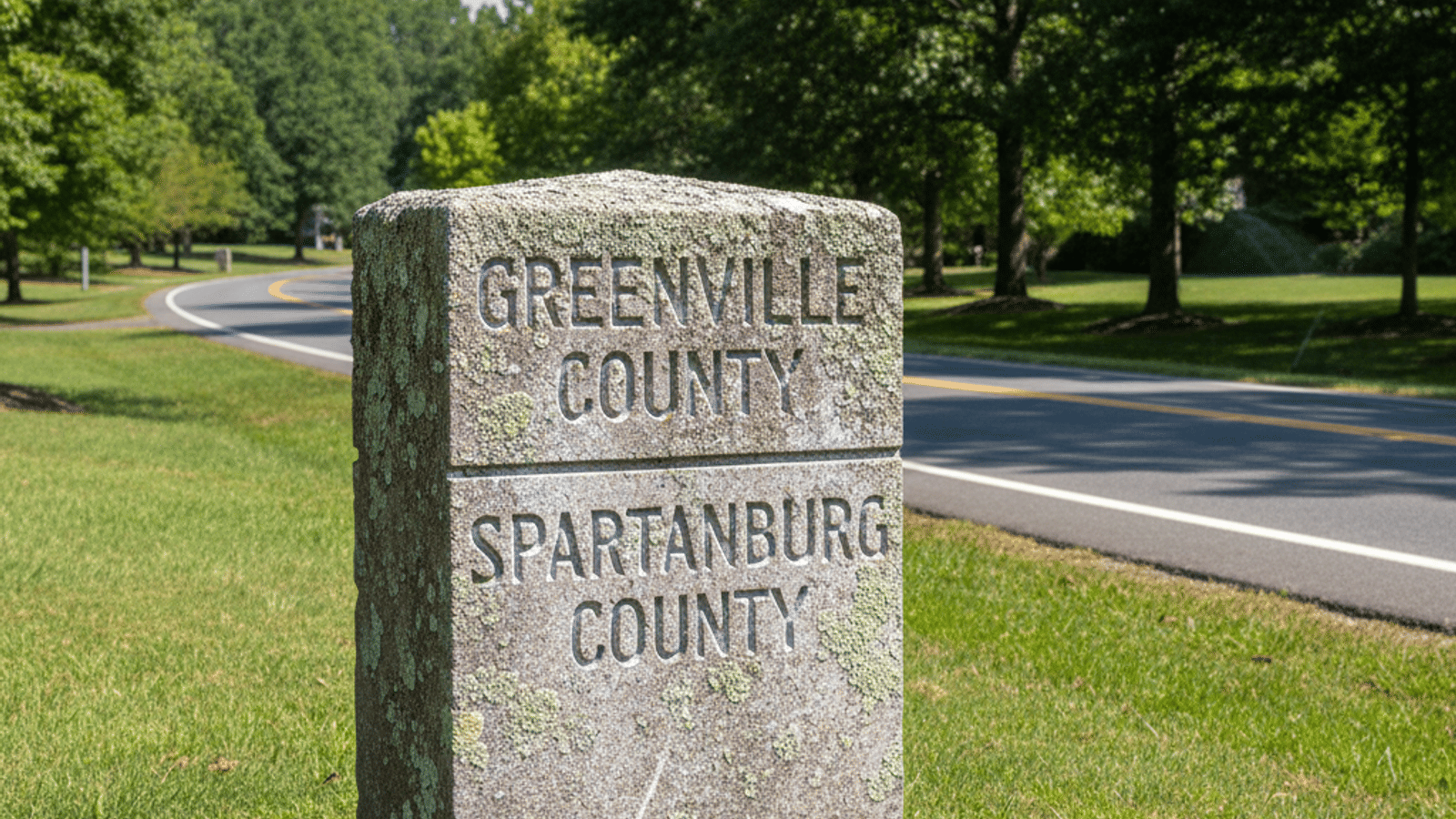
If you are looking at living in Greer SC, you have likely noticed that this area is growing fast. It is a fantastic place to call home, with a bustling downtown and beautiful neighborhoods, but it comes with a unique quirk that often confuses newcomers: the school zoning.
Greer sits right on the border of two counties—Greenville and Spartanburg. Because of this, your address doesn't just determine where you pay taxes; it determines which of two very different school districts your home falls into. You aren't just looking at "Greer schools". You are looking at either Greenville County Schools or Spartanburg District 5 (and occasionally District 1 if you go far enough north).
School zones are often a primary driver for our local real estate market. Whether you are looking for traditional public schools, charter options, or private education, understanding the map is the first step. Let's break down how the lines work so you can make sense of your options.
The District Split: Greenville County vs. Spartanburg District 5
The most important thing to know is that the county line is the deciding factor. You can live in a house with a Greer postal address and be zoned for Spartanburg District 5, or you can live two miles west and be firmly in Greenville County Schools.
Greenville County Schools (GCS) This is the largest district in South Carolina, serving over 77,000 students. Because of its size, it offers a massive variety of resources, including specialized magnet programs and extensive career centers. If you buy a home on the "Greenville side" of Greer, you are part of this large, interconnected system.
Spartanburg District 5 This district covers the eastern side of Greer, stretching into Duncan, Lyman, and Reidville. District 5 services around 10,000 students, giving it a slightly smaller, more tight-knit community feel. The district has made major investments in facilities recently to keep up with the housing boom in this corridor.
A Note on Boundaries Never assume a home's school zone based on its proximity to a building. Zoning lines here can be irregular. There are "attendance islands" where a neighborhood might be zoned for a school slightly further away to balance population numbers. Always verify the specific address before making an offer.
Public Schools in the Greenville County Sector
If your home search lands you on the Greenville County side of Greer, your student will likely be zoned for one of three major high school clusters. Each has a distinct identity and feeder pattern.
Riverside High School
Located on the "Eastside," Riverside High School is widely recognized in the Upstate for its academic rigor. It serves a significant portion of the residential areas between downtown Greer and the Greenville city limit. The feeder pattern typically includes Riverside Middle and Buena Vista Elementary. Because of its reputation, homes for sale near Riverside High School tend to move quickly.
Greer High School
Greer High is located very close to the actual City of Greer municipal complex and downtown area. One of its standout features is the International Baccalaureate (IB) Diploma Program. This is a rigorous, globally recognized curriculum that isn't available at every high school in the region. The attendance zone here covers a broad area, generally fed by Greer Middle School (not to be confused with the charter high school) and elementary schools like Chandler Creek and Crestview.
Blue Ridge High School
If you are looking for property in the northern part of Greer, near Lake Robinson or up toward the mountains, you will likely be in the Blue Ridge attendance zone. This area feels more rural and scenic compared to the bustle of Wade Hampton Boulevard. Blue Ridge High is known for intense community support and "Tiger" pride. It serves a large geographic area but maintains a close community atmosphere.
Public Schools in the Spartanburg District 5 Sector
On the Spartanburg side—generally east of Highway 101 and south toward I-85—the schools are organized differently. Rather than several high schools splitting the town, this area feeds into a single central hub.
James F. Byrnes High School
Byrnes High School is the anchor of District 5. It is a large school known regionally for two main things: a powerhouse athletics program (especially football) and a massive fine arts department. The marching band and theater programs are highly active and well-funded. For many residents here, Friday nights at the stadium are a major community event.
The Freshman Academy
Because Byrnes is a large school, District 5 utilizes a "Freshman Academy" concept. Ninth graders have their own dedicated building and transition program. This helps bridge the gap between middle school and the large high school campus, allowing students to adjust to the high school workload in a more focused environment.
New Elementary Options
This specific corridor of Greer real estate market has seen incredible residential growth. To accommodate this, District 5 has built or expanded several schools recently, such as Abner Creek Academy and River Ridge Elementary. These facilities are modern and designed to handle the influx of new residents moving to the Duncan/Lyman area.
Charter Schools and Magnet Programs
Beyond the zoned options, Greer offers access to "School Choice" through charter and magnet programs. These are public schools, but enrollment usually involves an application process rather than just residency.
Greer Middle College Charter High School
There is often confusion here: this is a high school, not a middle school. It is located right on the Greenville Technical College Greer campus. The school focuses heavily on dual-enrollment, allowing students to graduate with significant college credits already completed. It is consistently high-performing and demand is high, so admission is typically handled through a lottery system.
Langston Charter Middle School
Langston is another popular choice in the area. It utilizes a distinct educational model where core classes are separated by gender—boys and girls are taught separately for main subjects to cater to different learning styles, while electives and lunch are co-ed. It has a strong focus on leadership development.
GCS Magnet Academies
Since Greenville County is a "Choice" district, residents with a Greer address can apply to magnet schools outside their immediate zone, such as Beck Academy (International Baccalaureate Middle Years) or J.L. Mann High School (Math/Science/Technology). However, keep in mind that if you choose a magnet school, transportation is generally the parents' responsibility.
Private and Faith-Based School Options
For those interested in private education, there are several institutions either directly in Greer or within a manageable commute.
Local Greer Options Calvary Christian School offers a K-12 program directly in town. There is also As-Sabeel Academy, which provides Islamic education for students in the Greer area. Preschool options are abundant, ranging from church-based programs like Covenant Christian to national providers like KinderCare.
Commuting to Greenville Many families living in Greer choose to commute into Greenville for private education. Schools like St. Joseph’s Catholic School, Christ Church Episcopal School, and Shannon Forest are accessible via the I-85 or Wade Hampton corridors. While this adds to the morning drive, it is a common route for many residents.
Higher Education & Career Training
Education in Greer extends beyond K-12. The area has solid resources for adult learners and high schoolers getting a head start on their careers.
Greenville Technical College (Greer Campus) Located on West Poinsett Street, this campus specializes in specific career paths. It is a hub for visual and performing arts programs, as well as health sciences like the Physical Therapist Assistant program.
J. Harley Bonds Career Center This facility serves high school students in the Greer and Blue Ridge areas. It provides Career and Technical Education (CTE) in fields like welding, culinary arts, and automotive technology, allowing students to gain certification while still in high school.
Logistics for Homebuyers: Zoning and Commutes
If you are relocating to Greer SC, integrating school logistics into your house hunt is smart. Here is how to handle the practical side of things.
- Verify the Zone: I cannot stress this enough—do not guess. Use the official GIS maps for Greenville County and Spartanburg County. Type in the specific address to see exactly which district and school applies. Real estate listings can occasionally have outdated info.
- Watch for Attendance Islands: Just because a subdivision is across the street from a school doesn't guarantee admission. Some neighborhoods are zoned to schools further away to manage overcrowding.
- Plan for Traffic: School traffic on Wade Hampton Blvd (Hwy 29) is heavy in the mornings and mid-afternoons. If your commute involves dropping kids off, do a test drive during school hours to see what the lines look like.
- Transportation Differences: Traditional zoned schools provide bus service. However, if you get into a charter school like Greer Middle College or a magnet program, you are likely the bus. Make sure your work schedule allows for the drop-off and pick-up loops.
Frequently Asked Questions
Can I live in Greer and attend Greenville County Schools?
Yes, but only if your home is located on the Greenville County side of the line. The city of Greer spans two counties. If your property taxes are paid to Spartanburg County, you will generally attend Spartanburg District 5, even if your mailing address says Greer.
Does Greer High School have an IB program?
Yes. Greer High School is the only high school in this specific zone that offers the International Baccalaureate (IB) Diploma Program. It is an advanced academic track that allows students to earn college credit and a globally recognized diploma.
How do I apply for charter schools in Greer?
Charter schools like Greer Middle College Charter High School and Langston Charter Middle School operate differently than zoned schools. You must apply directly to them, usually during an enrollment window in the winter for the following academic year. Because demand often exceeds capacity, seats are typically awarded via a lottery system.