Expert Real Estate Team: Your Trusted Source for Up-to-Date Real Estate Knowledge

Welcome to the Expert Real Estate Team blog! Whether you're a seasoned realtor, a homeowner looking to sell, or a first-time buyer embarking on your real estate journey, we're here to be your trusted source of valuable information. 

Our blog is packed with insightful articles and expert advice on a wide range of real estate topics. We cover everything from market trends and local insights to navigating the buying and selling process, financing options, and homeownership tips. 

Here's what you can expect:

  • Realtors: Stay ahead of the curve with market updates, marketing strategies, legal and regulatory changes, and expert tips to elevate your real estate career. 
  • Sellers: Get inside knowledge on preparing your home for sale, maximizing your return on investment, and navigating negotiations with confidence. 
  • Buyers: Learn about different mortgage options, discover the secrets to successful homefinding, understand local market dynamics, and make informed decisions. 

Our goal is to empower you with the knowledge and tools you need to achieve your real estate goals. We believe in fostering a community of informed and confident real estate professionals and homeowners. 


April 7, 2026

Overbrook, Greer SC Area Guide: Exploring Greenville's Historic Gem

If you are looking at the broader Greenville-Greer corridor, you might be wondering where to find that perfect blend of historic charm and modern convenience. Overbrook is actually located right in Greenville, but it is incredibly popular with buyers searching the entire area because of its prime location. It sits less than five minutes from Downtown Greenville while maintaining an easy, short commute to Greer via I-385.

Established back in the 1910s and 1920s, Overbrook holds the title of Greenville's first trolley suburb. Today, that history translates into stunning, mature tree-lined streets and a highly walkable community layout. You get the peaceful feeling of a suburban neighborhood without sacrificing quick access to city life.

It is the kind of place where you can step out your front door and immediately feel connected to the vibrant local culture.


Overbrook SC Real Estate Market Trends

Let's talk about housing costs and the types of properties you will actually see while touring the neighborhood. The real estate market in Overbrook is fascinating because it offers a true mix of beautifully restored historic homes and exciting new condo developments. Walking down the sidewalks, you will notice an abundance of 1920s Craftsman bungalows and classic Tudor-style homes that give the area its distinct architectural charm.

Recently, we have also seen a wave of new residential and commercial community developments making their mark. A great example is Overbrook Village, which features stunning NYC brownstone-inspired architecture. When looking at the numbers in early 2026, the typical median home sale price across Greenville sits around $463,000.

If you are eyeing one of those new Overbrook Village condos, you can expect median pricing to hover right around $530,000. Because of the ongoing historic preservation efforts and nearby city developments, the investment potential here remains incredibly strong for buyers. Keeping an eye on homes for sale in Overbrook is a great strategy if you want a property that holds its value.


Living in Overbrook SC: Amenities and Lifestyle

Beyond the beautiful real estate, the day-to-day lifestyle in Overbrook is a major reason people choose to put down roots here. The neighborhood offers incredible proximity to major green spaces, making it easy to get outside and enjoy the South Carolina weather. You are just a stone's throw from Timmons Park, which features a baseball field and a popular disc golf course, as well as the sprawling grounds of Cleveland Park.

One of the most exciting updates for the area is the 2025 and 2026 Swamp Rabbit Trail expansions. Projects like the North Main Connector are linking Overbrook directly into this massive, highly celebrated trail network. It completely changes the game for cyclists and runners who want to navigate the city without relying on a car.

When you are done exploring the trails, the neighborhood boasts a fantastic lineup of local businesses right in your backyard. You can easily stroll over to grab a locally sourced dinner at Fork & Plough, enjoy a scoop of ice cream at Clare's Creamery, or meet up with neighbors at Community Tap. The pedestrian-friendly sidewalks connect residents directly to these retail spots and local day spas, elevating the overall walkability and quality of life.


Getting to Work: The Commute from Overbrook

From there, it is smart to look at the daily commute, especially if you work in one of the surrounding Upstate employment hubs. Overbrook is incredibly well-positioned for professionals who need to move around the region efficiently. Residents enjoy immediate access to major highways, particularly I-385, and main thoroughfares like East North Street.

If your job is located in Greer - perhaps at major employers like BMW Manufacturing - you are looking at a very manageable drive of approximately 15 to 20 minutes. Meanwhile, getting to the heart of Downtown Greenville takes less than five minutes by car.

The city is also investing in future infrastructure improvements aimed specifically at cyclists and pedestrians. These ongoing streetscape projects will only make navigating the area easier and more accessible over time.


Schools in the Overbrook Historic District

For those factoring education into their homebuying decision, the Overbrook area offers access to several established educational facilities. The neighborhood falls under the jurisdiction of the Greenville County School District, which operates numerous campuses across the region.

Properties in this specific area are typically zoned for the following public schools:

  • East North Street Elementary
  • Greenville Middle Academy
  • Eastside High School

Additionally, the neighborhood is home to the Overbrook Child Development Center, which provides local pre-K education options. Residents also benefit from close proximity to several notable private schools and higher education facilities located throughout the broader Greenville area. If you are reviewing a Greenville County Schools overview, you will find that Overbrook's central location makes getting to class simple.


Frequently Asked Questions About the Overbrook/Greer Area

Let's wrap up with some of the most common questions buyers ask when exploring this unique historic district.

What is it like to live in the Overbrook/Greer area of South Carolina?

Living in the Overbrook area offers a unique blend of historic suburban charm and immediate urban accessibility. Residents enjoy highly walkable streets lined with mature trees, alongside quick access to modern amenities like local coffee shops and day spas. With Downtown Greenville less than five minutes away and Greer just a 15-minute drive, it provides a highly connected, vibrant lifestyle.

What is the real estate market like in Overbrook Historic District?

The Overbrook real estate market is highly competitive, featuring a desirable mix of 1920s Craftsman bungalows and new construction projects. As of early 2026, buyers can find beautifully designed new condos in developments like Overbrook Village priced around $530,000. The area holds strong investment potential due to ongoing historic preservation and continuous neighborhood revitalization.

What are the best things to do near Overbrook?

Outdoor enthusiasts love the immediate access to Timmons Park for disc golf and the newly expanded sections of the Swamp Rabbit Trail. For dining and socializing, locals frequently walk to neighborhood staples like Fork & Plough for dinner or Clare's Creamery for dessert. The area is also just minutes from the extensive recreational offerings at nearby Cleveland Park.

What is the commute like in Overbrook/Greer, SC?

The commute from Overbrook is incredibly convenient thanks to its immediate access to I-385 and East North Street. Driving into Downtown Greenville takes under five minutes, while reaching major employment hubs in Greer takes roughly 15 to 20 minutes. Ongoing infrastructure improvements are also making the area increasingly friendly for bicycle commuters.

April 7, 2026

Greer Station, SC Area Guide: Living in Historic Downtown Greer

Welcome to Greer Station: The Heart of Upstate South Carolina

Let's talk about Greer Station. If you are looking for that perfect blend of historic southern charm and modern convenience, this vibrant downtown district in Upstate South Carolina is calling your name. Nestled perfectly between Greenville and Spartanburg, it is a place where history meets a revitalized, walkable lifestyle.

Walking down these streets feels like stepping back in time, especially since over 40 buildings here are officially listed on the National Register of Historic Places. But do not let the vintage brick facades fool you. Today, this area is buzzing with energy, offering an incredible mix of dining, shopping, real estate, and community events.

Whether you are browsing homes for sale in Greer or just planning a weekend visit, this guide will show you exactly what makes downtown Greer so special.


Getting Here: A Central Location on the I-85 Corridor

Location is everything in real estate, and Greer Station absolutely nails it. The downtown area sits right along the booming Interstate 85 corridor, making travel a breeze for locals and visitors alike.

If you fly often for work or leisure, you will love being just minutes away from the Greenville-Spartanburg International Airport. The local economy is incredibly strong here, driven in large part by the nearby BMW Manufacturing plant, which brings a steady stream of jobs and innovation to the region.

Because of this central positioning, living in Greer means you have a remarkably easy commute to both downtown Greenville and downtown Spartanburg. You get the quiet, historic feel of a smaller town without sacrificing quick access to major employment hubs and city amenities.


Top Things to Do in Greer Station: Shopping & Entertainment

When clients ask me about weekend plans in downtown Greer, I always point them straight to Trade Street. The city recently poured a massive $120 million reinvestment into a streetscape project here, and the results are simply stunning.

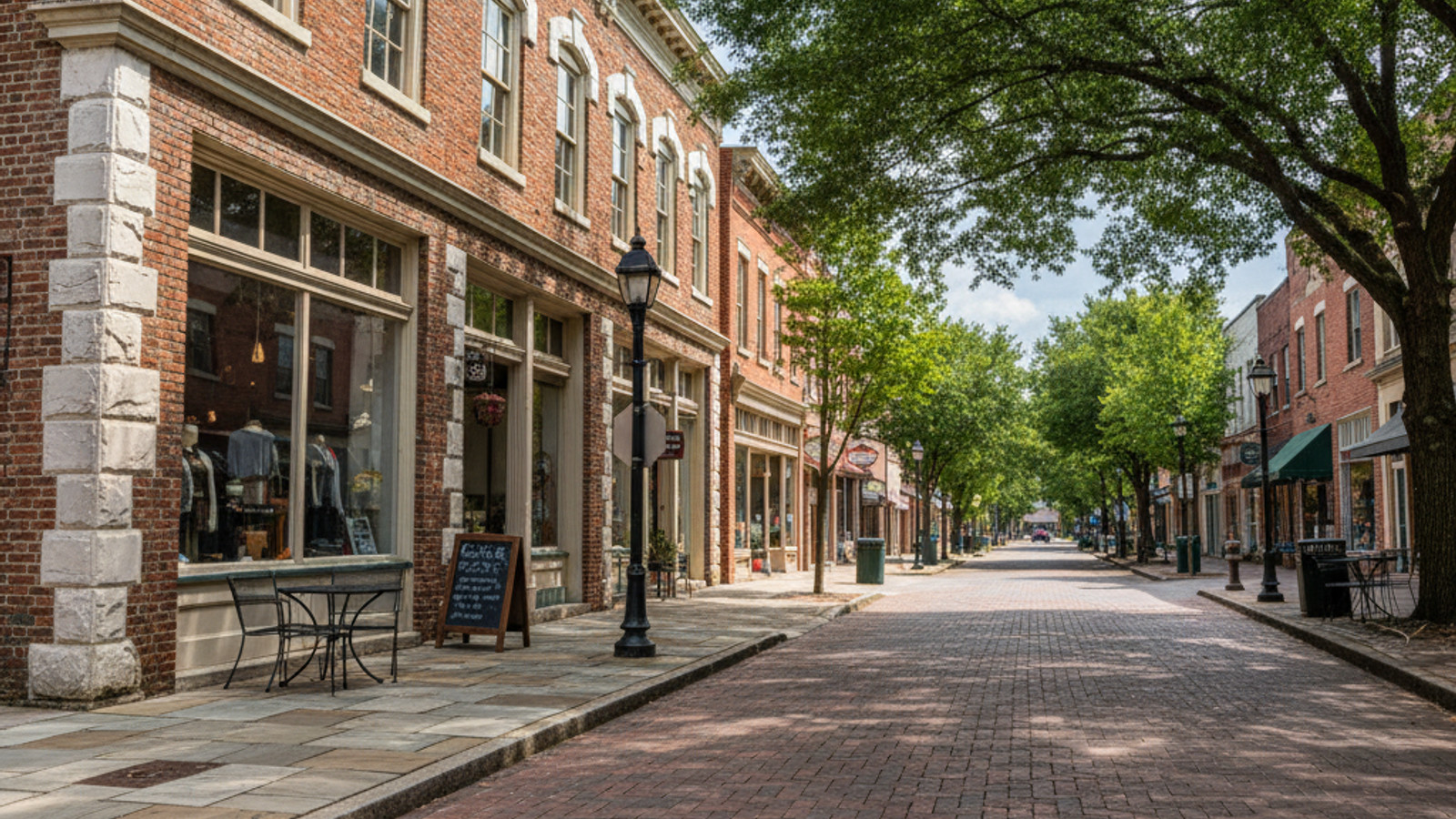
They implemented a European-style "woonerf" - a curbless street design that makes the entire area incredibly pedestrian-friendly. This open layout perfectly complements the historic brick-paved streets and beautifully preserved storefronts, creating an inviting space to explore.

Here is a quick look at what you can enjoy while strolling through the district:

  • Chic boutiques and artisan shops: Perfect for finding unique clothing, gifts, and locally crafted goods.
  • Antique stores: Spend an afternoon hunting for vintage treasures and historic home decor to match your property.
  • Entertainment venues: Places like Trade Street Social offer a great atmosphere for gathering with friends over games and drinks.
  • Local pottery studios: Great for picking up a new hobby or buying handcrafted local art for your living room.


Award-Winning Restaurants and Downtown Dining

After a day of shopping, you will definitely want to explore the local food scene. Greer Station has quietly become a foodie destination, boasting several award-winning restaurants right within walking distance of each other.

You can find everything from classic southern comfort food to upscale Italian dining for a special night out. A major highlight is the Cartwright Food Hall, which brings multiple fantastic food vendors together under one roof. It is the perfect spot when everyone in your group is craving something different.

Beyond the main dining rooms, the area is dotted with cozy local coffee shops to help you start your morning right. In the evenings, the nightlife is vibrant yet relaxed, with plenty of inviting wine bars and local taprooms to cap off your day.


Community Amenities: Greer City Park and Local Events

A great downtown is about more than just shops and restaurants - it is about the spaces where the community comes together. Right adjacent to the historic district is the beautiful 12-acre Greer City Park.

This park is a fantastic green space featuring a scenic pond, an amphitheater, and paved walking paths. It serves as the main hub for local gatherings, including the popular Greer Farmers Market where you can pick up fresh upstate produce and artisan goods. Throughout the year, you will find seasonal festivals and live music events spilling from the park right onto Trade Street.

If you love the water, you are also just a short drive from Lake Robinson. With roughly 800 acres of water, it is a gorgeous spot for kayaking, fishing, and taking in the scenic Blue Ridge Mountain views.


The Greer Station SC Real Estate Market

Let's look at the numbers and housing options if you are thinking about making this area your home. The real estate market around Greer Station offers a fascinating mix of the old and the new.

Just blocks from downtown, you will find charming historic bungalows and beautifully renovated mill homes. If you prefer low-maintenance living, there are also stunning new luxury lofts and apartments right in the heart of the district. As a local expert, I generally see median home prices in the broader Greer area hovering between approximately $330,000 and $400,000, depending on the exact neighborhood and property condition.

Buyers are heavily drawn to the incredible walkability and the convenience of having shops and dining right outside their front door. Another financial perk for buyers moving to the area is South Carolina's favorable 4% primary residence tax assessment ratio, which helps keep annual property taxes quite manageable.


Education and Local Schools

When looking at homes in the upstate, understanding the local school zoning is a crucial step. Greer is uniquely situated right on the border of two different counties - Greenville County and Spartanburg County.

This means that homes on one side of town are zoned for Greenville County Schools, while homes just a few streets over might fall under Spartanburg District 5. Because the lines can be quite intricate, school zoning depends entirely on the specific property address.

I always advise my buyers to independently verify the school zoning boundaries with the respective districts before putting in an offer on a house. Additionally, residents here enjoy great proximity to local libraries and other educational resources to support lifelong learning.


Frequently Asked Questions About Greer Station

Does Greer, SC have a downtown?

Yes, Greer has a thriving downtown area known as Greer Station. It features historic brick-paved streets, chic boutiques, and award-winning restaurants. The city recently invested heavily in a stunning streetscape project to make the area highly walkable and pedestrian-friendly.

Is Greer, SC a good place to live?

Greer offers a fantastic quality of life with its strong local economy, beautiful parks, and rich southern charm. Residents enjoy a balance of historic character and modern amenities, all within a short distance from major upstate employment hubs. The availability of diverse housing options makes it highly appealing for a wide variety of buyers.

How far is Greer Station from Greenville and Spartanburg?

Greer Station is centrally located right between the two major cities, sitting about 12 miles from downtown Greenville and 18 miles from downtown Spartanburg. This prime spot on the Interstate 85 corridor makes commuting to either city incredibly quick and straightforward.

What is the median home price in Greer, SC?

While prices fluctuate based on the specific property and market conditions, the median home price in the Greer area generally sits between $330,000 and $400,000. Historic homes closer to the downtown district or new luxury builds may fall on the higher end of that spectrum.

March 4, 2026

HOA Fees in Greer, SC: What You Need to Know Before You Buy


If you are currently looking at homes for sale in Greer, SC, you have likely noticed a three-letter acronym popping up on almost every listing: HOA.

For many buyers, Homeowner Association (HOA) fees are a bit of a mystery. Are they just an extra bill, or do they actually provide value? In the Upstate, the answer depends entirely on where you buy. From low-maintenance townhomes to sprawling golf course estates, the costs and rules vary wildly.

Let’s grab a cup of coffee and break down exactly what these fees look like in our local market so you can budget with confidence.


Understanding HOA Fees in Greer, SC

In the current housing market, HOAs are incredibly common. In fact, well over 50% of new developments in Greer include a mandatory Homeowner Association. These organizations are designed to manage the community's appearance and amenities, but they aren't all created equal.

The first thing to understand is the difference between "mandatory" and "voluntary" associations. In Greer, the vast majority are mandatory. This means that when you sign the deed, you agree to pay the dues and abide by the rules. It is not optional. If you are researching the cost of living in Greer SC, you need to treat these fees as a hard line item in your budget, just like property taxes or insurance.

There is also a crucial distinction in how these fees are billed based on the property type. If you buy a standard single-family house, you will typically pay an annual fee. However, if you are looking at townhomes or condos, you will almost certainly pay a monthly fee. In South Carolina, you might hear condo fees referred to as "Regime Fees," which is just a local legal term for the same concept.


Average HOA Costs by Property Type

When you are trying to figure out how much house you can afford, it helps to know the "normal" range for these fees. While every neighborhood has its own budget, here is what you can generally expect to pay based on the type of home.

Single-Family Detached Homes

For a traditional house in a subdivision, the fees are usually quite reasonable. Because you are responsible for your own house exterior and lawn, the HOA fee mostly covers common grounds.

  • Typical Cost: $400 - $800 per year

  • Monthly Equivalent: Roughly $33 - $67 per month


Townhomes & Condos

If you browse Greer SC condos for sale, you will see much higher numbers. This is because the fee covers a lot more, often including exterior building maintenance, roof reserves, and landscaping.

  • Typical Cost: $200 - $450 per month


Luxury & Golf Communities

If you are eyeing luxury homes in Greer SC, particularly in golf course communities, the fees step up significantly. These neighborhoods often have extensive grounds, manned security gates, or clubhouse access included in the base assessment.

  • Typical Cost: $3,000+ per year (plus potential club initiation fees)


HOA Fees for Popular Greer Neighborhoods (2025 Estimates)

To give you a concrete idea of what this looks like, let's look at some specific numbers. Keep in mind that these figures are estimates based on recent listings and can change every year based on a board vote.

Also, notice how some neighborhoods have different "sections." For example, a main subdivision might have a low annual fee for houses, while the "Villas" section has a higher monthly fee because lawn care is included.

  • Thornblade

    • Home Type: Single-Family

    • Approx. Fee: ~$3,600

    • Frequency: Annually

  • Thornblade (Villas)

    • Home Type: Condo/Villa

    • Approx. Fee: ~$300+

    • Frequency: Monthly

  • Sugar Creek

    • Home Type: Single-Family

    • Approx. Fee: ~$790

    • Frequency: Annually

  • Sugar Creek (Villas)

    • Home Type: Condo/Villa

    • Approx. Fee: ~$380

    • Frequency: Monthly

  • Silverleaf

    • Home Type: Single-Family

    • Approx. Fee: ~$550

    • Frequency: Annually

  • Pelham Falls

    • Home Type: Single-Family

    • Approx. Fee: ~$625 - $675

    • Frequency: Annually

  • O'Neal Village (Single-Family)

    • Home Type: Single-Family

    • Approx. Fee: ~$600

    • Frequency: Annually

  • O'Neal Village (Townhomes)

    • Home Type: Townhomes

    • Approx. Fee: ~$212

    • Frequency: Monthly


  • Thornblade Crossing

    • Home Type: Townhomes

    • Approx. Fee: ~$220

    • Frequency: Monthly

Note: Always verify the current fees and what they cover with your agent before making an offer.


What Do These Fees Typically Cover?

A common question I get is, "Where does all that money go?" It is a valid question. The value proposition changes depending on whether you are in a neighborhood like Sugar Creek Greer SC real estate or a smaller townhouse community.

For most single-family home communities, your annual dues pay for the "curb appeal" of the neighborhood. This includes landscaping at the front entrance, electricity for street lights, and maintenance of retention ponds (which is a big deal for stormwater management). If the community has amenities, the money also goes toward cleaning the pool, resurfacing tennis or pickleball courts, and maintaining the clubhouse.

For townhomes and condos, the money works harder for you personally. These monthly fees often cover the "termite bond" (pest control for the structure), exterior insurance (studs-out), and repairs to the roof and siding. In many cases, it also covers lawn maintenance, so you can sell your lawnmower.

One important note for budgeting: Trash pickup in Greer is a mix. If you live within city limits, trash is often a city service. If you are in the county, you likely have to hire a private hauler. Trash removal is rarely included in HOA dues unless you are in a specific condo or townhome complex.


Living in an HOA: Pros, Cons, and Red Flags

Deciding to buy in a managed community is about lifestyle as much as it is about money.

On the positive side, HOAs are great for protecting property values. They prevent your neighbor from parking a rusted-out bus on their front lawn or painting their house neon purple. They also provide dispute resolution and manage the amenities that make life fun, like community pools and summer social events.

However, there are cons. The biggest friction point for buyers usually involves "restrictive covenants." These are the legal rules filed with the county. They might dictate exactly what kind of fence you can build, forbid you from parking a boat or RV in your driveway, or restrict the construction of detached sheds.

When you are looking at O'Neal Village homes for sale or any other planned community, keep an eye out for red flags. If the community looks run down despite high fees, that is a bad sign. You should also look into the association's financial health. If they have low cash reserves, you could be hit with a "special assessment" - a surprise bill to pay for a major repair like a new pool pump or road repaving.


Frequently Asked Questions About Greer HOAs

Are HOA fees included in the mortgage?

No, your HOA fees are typically paid separately from your mortgage. However, your lender will "count" them when calculating your debt-to-income ratio to ensure you can afford the total monthly housing payment.


Can HOA fees in Greer go up?

Yes, they can and often do. The Board of Directors usually votes on the budget annually. While drastic spikes are rare in established single-family neighborhoods, small increases to keep up with inflation and landscaping costs are normal.


What happens if you don't pay HOA fees in South Carolina?

In South Carolina, HOAs have significant power. If you fail to pay your dues, the association can place a lien on your property and, in extreme cases, foreclose on your home to recover the debt.


Are there neighborhoods in Greer without an HOA?

Yes, absolutely. If you prefer to avoid fees and rules, you should look for older neighborhoods established before the 1990s or rural properties on the outskirts of Greer. Just keep in mind that without an HOA, there is no one to enforce neighborhood aesthetic standards.

Posted in Buying
March 4, 2026

The Real Cost of Selling a Home in Greer, SC


When you decide to sell your home, the number everyone focuses on is the sales price. It’s the big number that goes on the listing and the one you brag about to your neighbors. But if you want to know what actually lands in your bank account, you need to focus on "Net Proceeds."

The gap between your sales price and your net proceeds is filled with closing costs. In the Greer area, total selling costs typically land between 6% and 9% of the sales price when you factor in real estate commissions. If you strip out the commissions and look strictly at the fees and taxes required to close, you are usually looking at 1% to 3%.

South Carolina is a bit different from other places you might have lived. We are an "attorney closing state," meaning a lawyer handles the transaction rather than a title company. Also, there is a specific state tax called the Deed Recording Fee that often catches sellers off guard. Whether you are selling a home in Greer near the downtown historic district or out by Lake Robinson, understanding these numbers upfront ensures there are no surprises at the closing table.

Disclaimer: I am a real estate professional, not an attorney or CPA. The following information is for educational purposes to help you plan your sale.


Real Estate Commissions: The New Landscape

For most sellers, the largest line item on the settlement statement is the real estate commission. This is the fee paid to the professionals who market your home, manage the legal paperwork, and negotiate the deal.

Historically, this was often discussed as a single percentage split between agents, but the industry has changed following recent national settlements. Today, you typically negotiate a fee with your listing agent to cover their services—marketing, photography, and managing the transaction.

Compensation for the buyer’s agent is handled differently now. It is no longer an automatic set field in the MLS. Instead, offering to pay the buyer’s agent is a negotiable concession. Many sellers in Greer still choose to offer this to make their home attractive to the widest pool of buyers, but it is a strategic choice, not a mandatory requirement.


South Carolina Deed Recording Fees (Deed Stamps)

This is the one expense that you generally cannot negotiate. In South Carolina, every time real estate transfers from one hand to another, the state collects a tax. We call these Deed Stamps or a deed recording fee.

The cost is calculated based on the final sales price of the home. The formula is $1.85 for every $500 of the sales price.

To give you an idea of where that money goes, $1.30 of that rate goes to the state, and $0.55 stays right here in the county (whether that is Greenville County or Spartanburg County).

How to Calculate It

If you sell a home for $350,000, here is how the math works:

  1. Divide the sales price by 500 ($350,000 ÷ 500 = 700).
  2. Multiply that number by $1.85 (700 x $1.85).
  3. Total Fee: $1,295.

This fee must be paid at closing before the deed can be recorded at the Register of Deeds.


Legal Fees: Why You Need a Closing Attorney

As mentioned earlier, South Carolina requires an attorney to oversee the real estate closing. You won't see "Title Company" fees on your settlement statement here; you will see attorney fees.

The closing attorney technically represents the transaction (or the lender), but they ensure the title is clear and the money is handled correctly. As a seller, you have a few specific costs here:

  • Deed Preparation Fee: This is the cost for the attorney to draft the new deed that transfers ownership to the buyer. This typically runs between $250 and $500.
  • Wire and Courier Fees: If you have a mortgage that needs to be paid off, the attorney will charge a small fee to wire those funds to your bank and overnight the necessary documents.
  • Representation: You can hire your own attorney to review documents, or you can agree to have the closing attorney handle the ministerial acts of the closing for you. Total seller legal costs generally range from $400 to $800, depending on the complexity of the title work.


Prorated Property Taxes: Greenville vs. Spartanburg

Property taxes in South Carolina can be confusing because they are paid in arrears. This means the tax bill you receive at the end of the year is actually for the previous year.

When you sell your house, you haven't paid the taxes for the current year yet because the bill hasn't been issued. To make this fair, you will provide a credit to the buyer at closing. This credit covers the taxes for the time you owned the home, from January 1st up to the closing date.

The Greer Geography Factor

Greer is unique because it sits in both Greenville County and Spartanburg County.

  • If your home is in Greenville County, your tax rate is determined by the local millage rate there.
  • If you are across the line in Spartanburg County, the rate will differ slightly.

Additionally, remember the "4% vs. 6%" rule. If you lived in the home as your primary residence, you were taxed at the 4% assessment ratio. If you are selling an investment property or a second home, you were likely taxed at 6%. The proration credit will be based on how the property is currently taxed.


The CL-100 Report (Termite Letter)

If your buyer is getting a mortgage, their lender will almost certainly require a CL-100 Wood Infestation Report. Even for cash deals, savvy buyers usually insist on one.

This report checks for more than just termites. It looks for wood-destroying fungi, wood-boring beetles, and—crucially for our humid climate—high moisture levels in the crawlspace or basement.

While everything is negotiable, it is standard practice in our market for the seller to pay for this report. The cost is usually around $100 to $160. If the report comes back showing active termites or high moisture readings, you may also face repair costs to get the "clear letter" required to close.


Other Potential Seller Expenses

Beyond the major items listed above, you might see a few other costs on your final settlement statement:

  • HOA Transfer Fees: If you live in a subdivision with a Homeowners Association, there is often a fee to transfer the account to the new owner. You may also have to pay a prorated portion of your annual dues.
  • Home Warranty: Buyers frequently ask the seller to pay for a one-year home warranty to cover appliances and HVAC systems. This typically costs $500 to $800.
  • Seller Concessions: In a balanced or buyer's market, you might agree to pay a flat amount (e.g., $5,000) toward the buyer's closing costs to help seal the deal.
  • Mortgage Payoff Items: Don't forget that your payoff amount isn't just your principal balance. It includes interest through the day of closing and a small fee to record the "satisfaction" of the mortgage at the county courthouse.


Example Net Sheet for a Greer Home Sale

To bring this all together, let’s look at a hypothetical scenario. Let's assume you are selling a home in Greer for $400,000. You have a mortgage payoff of $200,000.

Note: Commissions are variable and negotiable, so they are not included in the specific math below, but you should deduct them to get your final number.

Sale Price:  $400,000


Deed Recording Fee:

Estimated Cost: $1,480($400k ÷ 500) x $1.85


Deed Preparation

Estimated Cost: $400Paid to attorney


CL-100 Report

Estimated Cost:$150Wood infestation report


Tax Proration

Estimated Cost:$1,200Estimated credit to buyer (varies by date)


Courier/Wire Fees

Estimated Cost:$100Administrative costs


Mortgage Payoff

Estimated Cost:-$200,000Principal + Interest


Est. Net (Pre-Commission)

Estimated Cost:~$196,670 (Commission would be deducted from this total)


This net sheet gives you a rough baseline. When you are ready to list, your agent can provide a detailed "Estimated Net Sheet" specific to your property taxes and mortgage balance.


Frequently Asked Questions

Who pays for title insurance in South Carolina?

In South Carolina, the buyer typically pays for the lender's title insurance policy as part of their loan costs. An Owner’s Title Policy is also usually a buyer expense, though a seller can choose to pay for it as a concession during negotiations.


How much are closing costs for a seller in SC?

Excluding real estate commissions, seller closing costs generally range from 1% to 3% of the sales price. If you include typical commissions, the total cost to sell usually lands between 6% and 9%.


Does the seller pay the buyer's agent in SC?

Following recent industry changes, the seller is not required to pay the buyer's agent. However, it is a common negotiable concession. Sellers often agree to contribute toward the buyer's agent fee to make the home more affordable for the buyer and to facilitate the sale.


What is the deed recording fee in SC?

The deed recording fee, often called "deed stamps," is a state transfer tax. The rate is $1.85 for every $500 of the property's sales price (or fractional part thereof).

Posted in Selling
March 4, 2026

New Home Developments in Greer, SC: The 2025 Buyer’s Guide


If you have been keeping an eye on the Upstate real estate market, you already know that Greer has hit a serious "sweet spot." It is no longer just the quiet town in between the bigger cities; it is the strategic center of the I-85 corridor. With major employers like BMW Manufacturing and the Inland Port driving growth, Greer has transformed into a hub that balances small-town charm with rapid development.

Because resale inventory has been tight lately, many buyers are turning their attention to new construction. Whether you are relocating to the Upstate for work or just moving across town, the new home market here is booming. In this guide, we are going to walk through the master-planned communities, luxury builds, and timeline expectations you need to know about for 2026.


Market Snapshot: Buying New Construction in Greer

Before we look at specific neighborhoods, let's talk about the numbers and the landscape. The market here is diverse, offering everything from entry-level options to high-end estates. You can find efficiency townhomes starting in the mid-$200s, while luxury builds in exclusive neighborhoods easily push past $600K. Based on what we are seeing on the ground, the median price for a new detached home currently hovers around $400K.

One of the most critical things to understand about living in Greer SC is the "County Line" factor. The city limits of Greer actually span both Greenville County and Spartanburg County. This is a huge detail because it dictates your property tax rates and, more importantly, your school district. When you are looking at a listing or a plot map, always double-check which side of the county line the specific lot sits on.

Inventory is another major consideration. You will generally encounter two types of purchase opportunities: "dirt sales" and "spec homes." Dirt sales mean you pick the lot and the floor plan, then wait for construction. Spec homes (or inventory homes) are houses the builder started without a specific buyer, meaning they are often move-in ready or close to completion. With demand remaining high, move-in ready options tend to go under contract very quickly.


Top New Home Communities in Greer 

New developments in Greer are popping up fast, but they aren't all created equal. Most can be categorized by the lifestyle they offer, from resort-style amenities to low-maintenance living.


Master-Planned & Resort-Style Living

If you are looking for a neighborhood where you never really have to leave, master-planned communities are the way to go. O'Neal Village is arguably the flagship example here. It is a mixed-use community featuring its own retail center, an amphitheater, and a massive pool. Toll Brothers (Heights Collection) and D.R. Horton have been the primary builders here. It is worth noting that O'Neal Village is moving into its final phases, so opportunities to get in are becoming more limited. Pricing here generally runs from the high $300s to the $400s.

For something newer to the market, keep an eye on Lawton Ridge. Great Southern Homes is active here, and it is shaping up to be a strong option for 2026 buyers. Another contender is Parker's Summit by Stanley Martin Homes. This community is drawing attention for its larger floor plans and proximity to the mountains, making it a scenic choice for those who want a bit more room to breathe.


Low-Maintenance Townhomes & Cottages

Not everyone wants to spend their Saturday mowing a massive lawn. If you are looking for a "lock-and-leave" lifestyle, the townhome market in Greer is robust. Valentine Townes by Meritage Homes is a popular choice for buyers who prioritize energy efficiency and modern design.

If your commute takes you to the manufacturing hub, Crossing at Abner Creek Townes offers incredible proximity to BMW and the interstate. For a more upscale, single-level option, check out Manegate Cottages by Rosewood Communities. These are luxury cottages where yard maintenance is included, offering a high-end feel without the chore list. Townhomes in these areas are often the entry point for the market, starting in the mid-$200s.


Luxury & Custom Estate Homes

For buyers seeking larger lots, river views, or custom finishes, the options shift toward the $600K+ range. River Reserve is a standout community featuring homes by Empire Homes. It is known for its river access and larger estate-style lots that are hard to find in denser subdivisions.

If you prefer a home without a Homeowners Association (HOA), you will likely need to look for custom builders working on scattered lots. These opportunities allow for more freedom regarding architectural style and property usage but require a bit more legwork to find.


Builder Spotlight: Who is Building in Greer?

Knowing who is building your house is just as important as where it is located. We have a mix of massive national companies and strong local builders.

  • National Builders: You will see D.R. Horton everywhere - they focus on volume and value. Toll Brothers brings a higher design aesthetic and luxury finishes. Stanley Martin is known for specific lifestyle features, while Meritage Homes leans heavily into spray-foam insulation and energy efficiency.

  • Local & Regional Builders: Rosewood Communities is a local favorite for Craftsman-style architecture and cottage products. SK Builders offers a semi-custom experience that many buyers appreciate. Great Southern Homes is a regional powerhouse known for their GreenSmart technology.

  • Custom Options: If performance and green building are your top priorities, Addison Homes is a local custom builder with a reputation for high-performance construction.


School Districts & Education Ratings

As mentioned earlier, the county line defines the school district. This is often the deciding factor for buyers with children or those thinking about future resale value.

On the Greenville County Schools side, Riverside High School is a major draw. It is highly rated and offers the IB Program, making the surrounding neighborhoods very sought-after. Greer High School and Blue Ridge High (which serves the more northern, rural parts of Greer) are the other main high schools in this district.

On the Spartanburg County side, you are looking at District 5. This district is growing rapidly. Byrnes High School is the anchor here, with Abner Creek Academy serving younger students. It is very common for a home to have a "Greer" address but fall within Spartanburg District 5, so checking the specific attendance zone is a must.


Project Timelines: Coming Soon vs. Quick Move-In

Timing is everything. If you need to move immediately, ask your agent to filter for "Inventory Homes." You can currently find some move-in ready options at O'Neal Village or Valentine Townes, but they don't sit on the market long.

If you want to build from the ground up - selecting your lot and your finishes - you should plan on a timeline of roughly 6 to 9 months. This varies by builder and weather conditions.

Looking ahead to later in 2026 and beyond, there are several "Coming Soon" projects on the radar. Cambric Village by Toll Brothers and Brookside Farms are future phases and developments that are generating early interest. Getting on a VIP list for these communities is a smart move if you aren't in a rush.


Frequently Asked Questions

What new home communities are coming soon to Greer, SC in 2026?

Several exciting projects are in the pipeline. Lawton Ridge is a newer option gaining traction, and Cambric Village by Toll Brothers is one to watch for future release. Additionally, O'Neal Village continues to release its final phases, offering new opportunities in an established neighborhood.


Which builders are active in Greer, SC right now?

The area has a healthy mix of national and local talent. Major players include D.R. Horton, Toll Brothers, Stanley Martin, and Meritage Homes. For local or regional flair, look for Rosewood Communities, SK Builders, and Great Southern Homes.


Does Greer, SC have good school districts for new construction?

Yes, Greer is served by two respected districts. Greenville County Schools (home to the popular Riverside High) covers the west side, while Spartanburg District 5 (home to Byrnes High) covers the east. Both are highly rated, but you must verify which county a specific development falls into.


Where are the new townhomes located in Greer?

You can find new townhomes across the city. Valentine Townes offers energy-efficient living, while Crossing at Abner Creek Townes is located near the BMW plant for an easy commute. Manegate Cottages offers a luxury, single-level variation of the low-maintenance lifestyle.


What are the property taxes like in Greer?

South Carolina is generally tax-friendly for homeowners. For a primary residence, you are taxed at a 4% assessment ratio. However, millage rates differ between Greenville and Spartanburg counties, so your actual bill will depend on which side of the county line your new home sits on.


Note: Before you visit a model home, remember that the on-site agent represents the builder, not you. It is always smart to schedule a consultation with a buyer's agent first to ensure you have representation during the process.

March 4, 2026

Average Cost of a Home in Greer, SC: 2026 Market Analysis


For a long time, Greer was viewed simply as a satellite to Greenville—a place you drove through to get to the airport or the BMW plant. That has changed completely. In early 2026, Greer is a destination in its own right, offering a vibrant downtown and some of the most diverse housing options in the Upstate.

If you are looking to buy right now, you are likely trying to find that sweet spot between affordability and quality of life. The good news is that the market has stabilized significantly compared to the volatility we saw a few years ago.

The short answer: As of February 2026, the median sold price for a home in Greer sits between $330,000 and $365,000. However, that number only tells half the story. Prices vary wildly depending on which side of the county line you are on and whether you are looking for historic charm or brand-new construction.

Let’s break down the real numbers so you can build a realistic budget.


Snapshot: Current Greer Real Estate Statistics (2026)

One of the most important things for buyers to understand right now is the difference between what sellers want and what they are actually getting.

In 2026, we are seeing a noticeable gap between list prices and sold prices. Sellers are still ambitious, often listing homes near the $400,000 mark, but the actual sales data shows that buyers have room to negotiate.

Here is the data at a glance:

MetricCurrent Stats (Feb 2026)What This Means for YouMedian List Price~$399,000Sellers are starting high, testing the market.Median Sold Price$330,000 - $340,000The actual "clearing price" is significantly lower.Days on Market (DOM)~87 DaysHomes are sitting longer; you have time to decide.Sale-to-List Ratio~98%Most homes sell slightly under the asking price.

The average price per square foot is currently hovering in the $160 to $210 range. This is a crucial metric to watch. If you see a standard subdivision home listed at $250 per square foot, it may be overpriced unless it has significant custom upgrades.


Price Ranges by Location: 29650 vs. 29651

Greer is unique because it covers a massive geographic area. When you are browsing homes for sale in Greer SC, the zip code often dictates the price tag more than the house itself.


29650: The Established West Side

This zip code covers the side of Greer closer to Taylors and Greenville. It is generally more expensive, with a median value often exceeding $363,000.

  • The Vibe: Established neighborhoods, mature trees, and a shorter commute into downtown Greenville.

  • The Market: Inventory here is tighter. Because it is built out, you don't see as much new construction, making existing homes more competitive.

  • Example: In premium neighborhoods like Sugar Creek, prices often start around $620,000 and go up from there.


29651: The Growth Zone

This area covers North and East Greer, stretching toward the BMW Manufacturing plant and the Inland Port.

  • The Vibe: Rapid growth. This is where you will find the majority of new subdivisions and land availability.

  • The Market: It is slightly more affordable, with a median price closer to $330,000.

  • Inventory: Because builders are active here, you have more options. This higher supply helps keep prices in check compared to the 29650 side.


Cost Breakdown by Property Type

The "average" cost can be misleading because it lumps together sprawling estates and compact townhomes. To understand what your budget will actually get you, we need to look at property types individually.


Historic Downtown Bungalows

Greer’s downtown—known as "Greer Station"—has become incredibly popular. If you want a renovated bungalow within walking distance of the restaurants on Trade Street, expect to pay a premium.

  • Pricing: While the square footage might be smaller, the price per square foot is often at the top of the market ($220+). You are paying for the lifestyle and walkability.


New Construction Homes

Builders are currently very active in communities like O'Neal Village. In 2026, volume builders are competing for buyers, which is great news for you.

  • Pricing: The median list price for new builds is around $329,000, but this can range from $300,000 to $450,000 depending on finishes.

  • Incentives: Many builders are offering rate buy-downs or closing cost assistance to move inventory, which can lower your monthly payment even if the purchase price seems high.


Townhomes and Condos

If you are looking for an entry-level option or a low-maintenance lifestyle, townhomes are your best bet.

  • Pricing: You can still find quality townhomes in the $230,000 to $280,000 range.

  • Availability: Look for communities like Covington Village for examples of this price point. It is one of the few remaining ways to get into the market for under $300,000.


Is Greer a Buyer's or Seller's Market?

Two years ago, buyers had almost zero leverage. Today, the tables have turned slightly.

We are currently shifting toward a "Balanced Market." Inventory has risen to about 3 to 4 months of supply, with roughly 350 to 400 active listings at any given time.

What this means for your offer:

  • Negotiation Power: You likely won't face a bidding war unless the home is priced perfectly in a highly desirable neighborhood (like the 29650 area).

  • Time: With homes sitting on the market for an average of 87 days, you don't have to waive inspections or make a rash decision within hours of a listing going live.

  • Price: While sellers are still getting close to their asking price (~98%), they are often conceding on repairs or closing costs to get the deal to the closing table.


Contextualizing the Cost: Mortgage vs. Rent

Is it smarter to buy or rent in Greer right now? That is the big financial question.

The average rent in Greer is currently hovering between $1,600 and $1,800 per month.

If you were to buy a $350,000 home with today’s interest rates, your monthly payment (including taxes and insurance) will likely be higher than the average rent. However, buying locks in your housing cost and builds equity, whereas rent prices in the Upstate have been steadily climbing year over year.

A Note on Taxes: When calculating your monthly payment, remember that Greer sits in both Greenville and Spartanburg counties.

  • Spartanburg County side: generally has slightly lower property taxes.

  • Greenville County side: tends to have higher taxes but may offer different service amenities.

  • HOAs: Many older neighborhoods in Greer have no HOA fees, while new construction communities almost always do. This can swing your monthly budget by $50 to $100.


Frequently Asked Questions

Is living in Greer, SC expensive?

Compared to the national average, the cost of living in Greer SC is roughly 8% to 12% lower. However, it is becoming one of the pricier suburbs in the Upstate due to high demand. While it is more expensive than rural Spartanburg County, it remains more affordable than downtown Greenville.


What is the average price per square foot in Greer?

As of early 2026, the average price per square foot generally falls between $160 and $210. This varies by neighborhood; a custom home in Sugar Creek will command a much higher price per foot than a production home in a new subdivision.


Are home prices dropping in Greer, SC?

Prices are not dropping significantly; rather, they are stabilizing. After years of rapid spikes, we are now seeing slow, normal growth of about 1.7% to 3.7% year-over-year. The market is flattening out, which is healthy for long-term value.


How does Greer compare to Greenville for home buying?

Greer is generally more affordable than Greenville city limits. You can typically get a newer, larger home in Greer for the same price as a smaller, older home near downtown Greenville. Plus, with the GSP Airport and major employers nearby, the commute is often easier for those working in manufacturing or logistics.

Posted in Buying
March 4, 2026

Average Rent in Greer, SC: What to Expect in 2025


If you are looking at moving to the Upstate, you’ve likely noticed something interesting happening on the map. Greer used to be considered just a quiet neighbor to Greenville, but those days are long gone. Today, it is a booming satellite city with its own distinct identity, driven by major economic engines like BMW Manufacturing and the Greenville-Spartanburg International Airport (GSP).

For many prospective renters, Greer represents the perfect "middle ground." It offers a genuine historic downtown charm (Greer Station is hard to beat) without the premium price tag of downtown Greenville.

Whether you are relocating for a job at the Inland Port or just looking for more space for your money, understanding the rental landscape here is key. Let’s break down the costs, the neighborhoods, and the lifestyle you get for your rent check.


Average Rent in Greer, SC: 2026 Market Snapshot

If you are trying to budget for your move, here is the bottom line: The rental market in Greer has cooled off slightly after the post-pandemic surge, which is great news for tenants. While prices are still higher than they were five years ago, we are seeing trends stabilize, and in some cases, dip slightly.

Currently, the average rent in Greer generally falls between $1,280 and $1,600 per month, depending heavily on whether you are looking for a standard apartment or a single-family home.

Recent market data suggests a slight year-over-year decrease of about 1% to 3%. This stabilization means you have a bit more negotiating power than before, especially in large apartment complexes where inventory is higher. However, the market for single-family homes remains "warm"—if you see a good house for rent with a fenced yard, it will likely move fast.


Rental Costs by Property Size & Type

Averages are helpful, but they don't tell the whole story. A solo professional looking for a studio near the airport has a very different budget than a household looking for a three-bedroom home near Lake Robinson.

Here is a realistic look at what you can expect to pay based on the size of the unit:

  • Studio Apartments: These are ideal for solo professionals or commuters who travel often. You can typically find modern studios ranging from $1,150 – $1,200.

  • 1-Bedroom Units: This is a popular category for young couples. Expect to budget between $1,250 – $1,320 for a nice one-bedroom unit in a managed complex.

  • 2-Bedroom Units: If you need a home office or have a roommate, this is the sweet spot. A spacious two-bedroom usually runs $1,420 – $1,560.

  • 3-Bedroom+ / Single-Family Homes: This is where inventory gets tighter. For a three-bedroom apartment or a rental house, prices often start at $1,800+ and can go significantly higher depending on the subdivision, HOA fees, and yard size.

If you are looking for luxury apartments in Greer, specifically those with resort-style pools and gyms, you should expect to pay toward the top end of these ranges.


Greer vs. Greenville: Price & Lifestyle Comparison

The most common question we hear from relocators is: "Should I live in Greenville or Greer?" It usually comes down to a trade-off between commute time and monthly savings.

Generally speaking, Greer is about 10-12% cheaper than Greenville when it comes to overall housing costs.

  • The Price Gap: A budget of $1,500 in downtown Greenville (especially the West End) might get you a modest studio or a small one-bedroom. In Greer, that same $1,500 often secures a spacious two-bedroom garden apartment with easy parking.

  • The Lifestyle: Greenville offers high-energy urban nightlife and a bustling walkable city center. Greer offers a tighter-knit community feel. Greer Station has fantastic dining and festivals, but the evenings are quieter.

  • The Commute: Living in Greer might add 15–20 minutes to your drive if you work in downtown Greenville, but for many, the savings on rent and the proximity to I-85 make it worth the drive.

If you are weighing the cost of living in Greenville SC against the benefits of the suburbs, Greer is often the winner for those who prioritize square footage over being in the center of the action.


Best Neighborhoods in Greer for Renters

Greer is geographically large, stretching into both Greenville and Spartanburg counties. The "vibe" changes drastically depending on which side of Wade Hampton Boulevard you are on. Here are a few areas to keep on your radar.


For Young Professionals: Downtown & Pelham Road

If you want walkability, look for rentals near Greer Station. Living near Trade Street puts you steps away from coffee shops, brick-paved streets, and Friday night events. Alternatively, the Pelham Road corridor is perfect if you need quick access to I-85, BMW, or Michelin. This area has the highest density of modern apartment complexes with amenities like gyms and pools.


For Those Seeking Community Amenities: Sugar Creek & O'Neal Village

If you are looking for established subdivisions with active residents, Sugar Creek is a massive draw. It is famous locally for its three community pools, tennis courts, and active calendar of events. O'Neal Village is a newer, master-planned community that offers a "front-porch living" feel with walkable streets and new construction rentals. Silverleaf is another established choice known for quiet, tree-lined streets and solid rental inventory.


For Nature Lovers: Lake Robinson

If you prefer mountain views over city lights, look north toward the Lake Robinson area. It is further removed from the traffic of Wade Hampton Blvd and offers easy access to boating, fishing, and hiking, though you will likely pay a premium for water views.


Total Cost of Living: Budgeting Beyond Rent

Rent is your biggest expense, but it isn't the only one. When calculating your monthly budget for living in Greer SC, keep these hidden costs in mind.

  • Utilities: Utility costs here generally align with national averages. However, it is important to know who your provider is. Inside the city limits, you will likely use Greer CPW (Commission of Public Works) for electric, gas, and water. Outside the city limits, you might be on Duke Energy and a different water provider.

  • Transportation: The Upstate is car-dependent. While gas prices are often lower than the national average, you will be driving a lot. If your commute takes you down Wade Hampton Blvd during rush hour, factor in a little extra gas—and patience—for the traffic.

  • Deposits & Fees: Standard practice here is a security deposit equal to one month’s rent. Application fees usually run between $50 and $100. If you have pets, expect a non-refundable pet fee (often $300+) and potentially a small monthly pet rent ($15–$25).


Frequently Asked Questions

Is rent cheaper in Greer or Greenville, SC?

Yes, Greer is generally more affordable. On average, you can expect rent in Greer to be 10% to 15% cheaper than comparable properties in Greenville. You typically get more square footage and easier parking in Greer for the same price point.


What is a good salary to live in Greer, SC?

Using the standard rule that rent should not exceed 30% of your gross income, and assuming an average rent of $1,286, a salary of roughly $51,500 per year is recommended. This allows for a comfortable lifestyle where you can still save for the future.


Is Greer, SC a safe place to live?

Greer is widely regarded as having a strong community feel with a well-maintained, well-lit downtown area. Like any growing city, experiences vary by neighborhood. It is always a smart idea to check local crime maps and visit a neighborhood at different times of day before signing a lease.


What are the utility providers in Greer?

This depends on your specific address. Residents within the city limits typically use Greer CPW for electricity, natural gas, and water. Those in the surrounding unincorporated areas usually rely on Duke Energy for power and various local districts for water.

Posted in Upstate Living
March 4, 2026

Seller Disclosures in Greer, SC: What You Must Tell Buyers


Selling a home is a whirlwind of staging, showings, and negotiating offers. But before you get to the closing table, there is one crucial step that often stresses sellers out: the paperwork. Specifically, the legal requirement to tell buyers exactly what is wrong with your house.

In the past, South Carolina was strictly a "Caveat Emptor" or "Buyer Beware" state. That meant it was entirely up to the buyer to find defects. Today, however, the South Carolina Residential Property Condition Disclosure Act (found in Title 27, Chapter 50 of the SC Code of Laws) has shifted that burden. Now, transparency isn't just a courtesy; it is the law.

Whether you are selling a historic mill home near downtown Greer or a new construction property in a subdivision, you have a legal obligation to be honest about the property's condition. Hiding defects might seem like a way to protect your sale price, but in reality, it opens the door to post-closing lawsuits that cost far more than a simple repair.


Understanding the SC Residential Property Condition Disclosure Statement (Form 230)

The primary tool for this transparency is the Residential Property Condition Disclosure Statement, commonly known by agents as Form 230. This is a standardized state form that asks you a series of questions about the condition of your home, from the roof down to the foundation.

You are required to provide this completed form to the buyer before you sign a sales contract. If you slip it to them after the ink is dry, the buyer may have the right to back out of the deal penalty-free.

When filling out the form, you generally have three options for every question:

  1. Yes: You know there is a problem.

  2. No: You are not aware of any problem.

  3. No Representation: You are choosing not to answer.

Here is the tricky part about "No Representation." Many sellers think this is a safe "I don't know" option. It isn't. If you choose "No Representation" but a court later proves you had actual knowledge of a defect (like a receipt for a roof patch or a quote from a plumber you didn't hire), you can still be held liable. It is almost always better to be upfront than to appear evasive.


What Counts as a "Material Adverse Fact"?

You don't need to list every scuff mark on the baseboards or a squeaky hinge in the guest room. The law focuses on material adverse facts.

A material adverse fact is a specific defect that significantly reduces the value of the property, significantly reduces the structural integrity, or poses a significant health risk to the occupants.


Think of it this way:

  • Cosmetic: Peeling wallpaper in the hallway? Not a material fact.

  • Material: A structural crack in the foundation that lets water in? Definitely a material fact.

The standard here is "Actual Knowledge." South Carolina law generally does not require you to hire a home inspector or crawl under your own house to hunt for problems you didn't know existed. However, you cannot have "selective amnesia." If you know the HVAC unit freezes up every July, you must disclose it.


Common Disclosure Issues in Greer and Upstate SC

Real estate in the Upstate has its own unique set of challenges due to our climate and geography. When you are preparing your disclosure, pay special attention to these areas, as they are frequent triggers for disputes in our market.


Termites and the CL-100

In South Carolina, it’s often said there are two types of homes: those that have had termites and those that will. You will likely be asked to provide a CL-100 Wood Infestation Report before closing. On your disclosure, you must be honest about any past termite treatments or structural damage caused by wood-destroying organisms. If you have a termite bond, have those documents ready.


Crawl Space Moisture

Greer is humid, and our soil holds moisture. This combination often leads to "wet crawl spaces." High moisture levels can lead to wood rot, mold, or fungal growth. If you have installed a vapor barrier, a dehumidifier, or a french drain to combat standing water, disclose the history of that work. This is one of the top reasons for lawsuits in our area.


Radon Gas

While radon is more associated with the mountains, the foothills around Greer can still see elevated levels. Radon is an odorless, colorless gas that comes from the natural breakdown of uranium in the soil. If you have ever tested for it, you must share the results.


Septic Systems

Many properties in the semi-rural areas surrounding Greer rely on septic tanks rather than city sewer. You should disclose the location of the drain field and the last time the system was pumped. If the system has ever backed up or required a new drain line, that is a material fact.


Red Clay and Drainage

Our famous red clay soil doesn't drain very well. If your yard turns into a swamp after a heavy rainstorm or if water pools against the foundation, this is a drainage issue that needs to be noted.


Federal Requirements: Lead-Based Paint

If your home was built before 1978, you have an additional hoop to jump through. Federal law requires you to comply with the Lead-Based Paint Hazard Reduction Act.

This is particularly relevant for the charming bungalows and historic homes near Greer's trade street. You must:

  • Disclose the presence of any known lead-based paint.

  • Provide the buyer with any records or reports pertaining to lead paint in the home.

  • Give the buyer the official EPA pamphlet "Protect Your Family from Lead in Your Home."


The "As-Is" Sale Misconception

There is a dangerous myth floating around that if you list your home "As-Is," you don't have to fill out the disclosure form. This is false.

Selling a home "As-Is" simply means you are telling the buyer, "I am not going to make any repairs. You get the house exactly how it sits." It does not exempt you from the legal requirement to disclose known defects.

Unless you fall under a very specific exemption (like a foreclosure or estate transfer), you must still complete the Residential Property Condition Disclosure Statement. Hiding a known defect—like a fire-damaged rafter or a leaking pipe—and then hiding behind an "As-Is" clause constitutes fraud.


Consequences of Failing to Disclose

What happens if you decide to keep a secret? The consequences can be severe and expensive.

If a buyer discovers a material defect that you concealed, they have several paths of recourse:

  • Contract Termination: If they find out before closing, they can walk away and likely get their earnest money back.

  • Litigation: Buyers can sue for fraud or negligent misrepresentation after the sale closes.

  • Financial Damages: You could be ordered to pay the buyer's "actual damages" (the cost to fix the problem) plus their attorney fees and court costs.

  • Punitive Damages: In cases where fraud is proven—meaning you intentionally lied to deceive the buyer—the court can award punitive damages on top of the repair costs.

It is always cheaper to disclose a defect and negotiate the price than to defend yourself in a lawsuit three years later.


Frequently Asked Questions

Are property disclosures required in SC for all sales?

Not every single one, but most. There are specific exemptions, such as transfers between spouses (like in a divorce settlement), tax sales, foreclosures, or transfers by an executor of an estate who has never lived in the home. However, standard sales between a homeowner and a buyer require the form.


What happens if I honestly didn't know about a defect?

If you genuinely did not know about a problem, you are generally not liable. The law punishes "actual knowledge" that was withheld, not ignorance. If a pipe bursts three weeks after closing and you had no prior indication of a leak, that is usually considered the new owner's responsibility.


Do I have to disclose a death in the home in South Carolina?

This is known as a "psychological defect." In South Carolina, you are generally not required to voluntarily disclose if a death occurred on the property or if the home is "stigmatized." However, if a buyer asks you directly, you must answer truthfully.


Can I sell my house in Greer without a realtor to avoid disclosures?

No. The Residential Property Condition Disclosure Act applies to the owner of the property, regardless of whether they have a real estate agent. "For Sale By Owner" (FSBO) sellers must still complete Form 230 and provide it to the buyer to comply with state law. Even if you sell my house in Greer without a realtor, you are still liable for material facts.


Disclaimer: I am a real estate professional, not an attorney. This article is for informational purposes only and does not constitute legal advice. Laws regarding property disclosures can change. For specific legal guidance regarding your transaction, please consult with a qualified South Carolina real estate attorney.

Posted in Selling
March 4, 2026

Investing in Greer SC Real Estate: The Upstate’s Strategic Sweet Spot


If you look at a map of the Upstate, Greer sits right in the "golden corridor" between Greenville and Spartanburg. A decade ago, it was seen primarily as a bedroom community. Today, it is an economic powerhouse in its own right.

For investors, Greer represents a strategic middle ground. It offers the job security of an industrial hub combined with a quality of life that rivals downtown Greenville. With the local population projected to hit nearly 50,000 and an annual growth rate hovering around 4-5%, the demand for housing here isn't speculative—it’s structural.

Let’s dig into the numbers and see why smart money is looking closely at this specific slice of South Carolina.


Greer Real Estate Market Trends (2026 Analysis)

The frenzied bidding wars of the post-pandemic years have cooled, leaving us with a much healthier, more sustainable market in 2026. Right now, we are seeing a balanced market that leans slightly toward sellers. Inventory is tightening, but it isn't non-existent.

For an investor, this is good news. It means you aren't overpaying due to panic, but the asset you buy is likely to hold its value. Median sold prices currently sit between $330,000 and $360,000. While that is higher than five years ago, it remains a significantly lower entry point than what you will find just fifteen minutes down the road in downtown Greenville.

Appreciation here is steady rather than volatile. We are tracking year-over-year appreciation at approximately 3.7% to 4.9%. It’s the kind of boring, predictable growth that builds long-term wealth.

However, don't mistake "steady" for "slow." The sale-to-list ratio is hovering around 98%, which tells us that buyers are serious and homes are selling very close to their asking price. The days on market have normalized to about 70-80 days. This is actually a sweet spot for investors; it provides enough breathing room to run your numbers and perform due diligence without losing the deal in hours.


Rental Market Statistics: Cash Flow & Vacancy

If you are looking at buy-and-hold strategies, the rental math in Greer is solid, provided you buy right. Following the post-pandemic boom, rents have stabilized. You can generally expect average rents to land between $1,580 and $1,650 per month.

The tenant pool here is robust. You aren't just relying on one demographic. We see a mix of young professionals working in healthcare or engineering, as well as households prioritizing access to specific school districts. Approximately 28-29% of households in Greer are renter-occupied.

There is one metric to watch closely: vacancy rates are sitting slightly higher than the national average, around 9%. This indicates a competitive market. Tenants have choices. To command top-tier rents and minimize vacancy, your property needs to be well-maintained and located near key amenities. The "slumlord" model does not work here; quality attracts quality tenants.

When analyzing the price-to-rent ratio, many residents still find it attractive to buy, but high interest rates keep a significant portion of the workforce in the rental pool, sustaining demand for single-family rentals.


The Economic Engine: Jobs Driving Housing Demand

Real estate doesn't exist in a vacuum; it follows jobs. Greer has arguably the strongest industrial resume in the state.

BMW Manufacturing is the anchor. It is difficult to overstate the impact of this facility. It’s not just about the direct jobs at the plant; it’s the "multiplier effect." Economists estimate that for every one job at BMW, roughly 3.5 support jobs are created in the surrounding area. With BMW’s recent $1.7B investment in EV production, that anchor is secure for decades.

Beyond automotive, logistics is the new boom. The South Carolina Inland Port in Greer recently completed a massive $55M expansion in the 2024/2025 cycle, doubling its capacity. Cargo growth has exploded by 355% over the last decade. This drives massive demand for warehousing, which in turn drives demand for workforce housing.

Add in the proximity to the Greenville-Spartanburg International Airport (GSP) and major healthcare systems like Prisma Health, and you have a diversified economy that insulates your investment from single-industry downturns.


Where to Invest: Best Neighborhoods & Zip Codes

Greer is geographically large, and the "vibe" changes drastically depending on which zip code you are in. Local agents usually divide the area into the "Greenville side" and the "Spartanburg side."

  • Zip Code 29650 (The Greenville Side): This area borders the Eastside of Greenville. It is generally more expensive, with entry prices often exceeding $400,000. You’ll find established subdivisions like Sugar Creek here. This zip code is excellent for appreciation plays and attracts long-term tenants focused on the highly-rated school district.

  • Zip Code 29651 (The Growth Side): This covers downtown Greer and extends toward Spartanburg. This is where the volume is. You can still find entry points in the low $300s. There is a significant amount of new construction here, offering value-add opportunities or turnkey builder options.

  • Downtown Greer: The historic center has undergone a revitalization. It offers high walkability to restaurants and parks, making it a magnet for young professionals.

  • Rural/Outskirts: As you move further out in 29651, you will find new construction communities. These are popular with investors who want warranty-backed rentals with predictable maintenance costs.

When browsing homes for sale in 29650, expect competition for the best lots. Conversely, looking at homes for sale in 29651 might give you more negotiating power with builders.


Investment Strategies that Win in Greer

Not every strategy works in every market. Here is what is working on the ground in Greer right now.

Long-term Buy & Hold is the safest bet. Given the population growth and the industrial expansion, holding property here for 5-10 years is a proven wealth builder. The appreciation is consistent, and the tenant base is employed in stable sectors.

New Construction Rentals are gaining traction. With the expansion of the 29651 area, many investors are buying new builds. While the upfront cost is higher than a fixer-upper, the CapEx (capital expenditures) are near zero for the first few years, and builders often offer closing cost incentives that improve your cash-on-cash return.

Short-Term Rentals (Airbnb) require caution. While downtown Greer is a great destination, you must verify city ordinances and HOA restrictions. Many subdivisions strictly ban rentals under 30 days. If you go this route, focus on properties near the downtown corridor or unique properties that aren't bound by restrictive covenants.


Frequently Asked Questions About Investing in Greer

Is Greer SC a good place to invest in real estate?

Yes. Greer offers a unique combination of industrial job growth (BMW, Inland Port) and lifestyle appeal. The steady appreciation rates and expanding population provide a stable environment for both cash flow and equity growth.


What is the average property tax rate in Greer SC?

South Carolina has a unique tax structure that investors must understand. Owner-occupied homes are taxed at a 4% assessment ratio, while investment properties (non-primary residence) are taxed at 6%. This can significantly increase your monthly holding costs compared to a primary residence, so always run your numbers using the 6% rate.


How does the rental market in Greer compare to Greenville?

Greer offers a more affordable entry point than downtown Greenville while commanding comparable rents relative to the purchase price. Occupancy remains stable due to the heavy industrial workforce that prefers Greer's proximity to major employers.


What is the 2% rule and does it apply in Greer?

The 2% rule (monthly rent being 2% of the purchase price) is rarely achievable in this market, or almost any stable market in 2026. Investors in Greer should focus on the 1% rule or, more realistically, prioritize long-term appreciation and tax benefits over massive immediate cash flow.

Posted in Buying
March 4, 2026

Building a Custom Home in Greer, SC: The Upstate Dream


So, you’re thinking about planting roots in Greer. It’s easy to see why. You’ve got that historic downtown charm, the Blue Ridge Mountains on the horizon, and GSP International Airport just down the road. It’s a sweet spot in the Upstate that balances small-town feel with serious connectivity.

But if you’ve been scrolling through listings for homes for sale in Greer, you might have noticed something: inventory is tight. Sometimes, the only way to get exactly what you want—whether that’s a chef’s kitchen, a specific architectural style, or a massive backyard—is to build it yourself.

However, building here has a unique quirk you need to know about immediately: The "Two-County" Factor.

Greer sits in both Greenville County and Spartanburg County. Depending on which side of the line your lot falls on, your taxes, school districts, and even some administrative steps will look different. Building a custom home here requires navigating these local regulations, but for many, it’s the only way to secure a true dream home in a competitive market.


Buy vs. Build: Analyzing the Greer Market (2026)

Before we talk about pouring concrete, let’s look at the numbers. Is it smarter to buy an existing house or build new?

Right now, the inventory in Greer is incredibly tight, hovering around 350-400 active listings. Because it is currently a Seller’s Market, desirable properties often end up in bidding wars. If you are looking for a move-in ready home, you have to move fast.

The median sales price for existing homes sits around $361,000. While that is affordable compared to many national markets, that price point doesn't always get you luxury finishes or custom layouts. If you have a specific vision—like a three-car garage or a main-floor primary suite—you might find the existing stock lacking.

The trade-off, of course, is time. Buying an existing home takes 1-2 months to close. Building a custom home is a marathon, typically taking 12+ months. You are trading immediate convenience for the guarantee that every inch of the house suits your lifestyle.


Cost Breakdown: How Much to Build in Greer?

This is the big question everyone asks over coffee: "What is the real price tag?" While every project is unique, here is a realistic look at what you can expect to spend in our current market.


Land Costs

Land prices vary wildly depending on where you look. A lot in downtown Greer with walkability will cost significantly more than a plot out on the rural edges. generally, you should budget between $75,000 and $150,000 for a quality 0.5-acre lot suitable for building.

If you are looking for acreage—say, 3+ acres for a mini-homestead—prices can easily climb toward $450,000 depending on the location and terrain.


Construction Costs (Hard Costs)

This covers the materials and labor to actually build the structure.

  • Semi-Custom / Production Build: Starts around $180 per sq. ft.

  • Luxury Custom Build: Expect to pay $275+ per sq. ft.


Soft Costs

Don't forget the "invisible" costs. Architect fees, engineering, permits, and utility hookups usually add another 15-20% to your total budget.


Site Prep and Soil

Here is a piece of local knowledge you can't ignore: the Red Clay. The Upstate is famous for its heavy clay soil and rolling hills. This often means extra costs for grading, foundation reinforcement, or specific drainage solutions. When you are calculating the cost to build a house in Greer SC, always keep a contingency fund for site work.


Step-by-Step Guide to Building

If the numbers make sense for you, the process involves three main hurdles: finding the dirt, hiring the team, and getting the permission.


Step 1: Finding and Securing Land

Finding vacant land for sale is about more than just the view. You need to verify exactly where the property sits jurisdictionally.

First, check the zoning. Is the lot inside the City of Greer limits, or is it in unincorporated county land? This affects which services (like trash pickup and police) you get and what taxes you pay.

Next, look at utilities. Public water and sewer availability varies. In downtown areas, you are likely fine, but as you move further out, you may need to budget for a septic system and a well. Always demand a survey and a soil test (perc test) during your due diligence period. You do not want to close on a lot only to find out the soil won't support a septic tank.


Step 2: Selecting Your Custom Home Team

Who you hire matters as much as where you build. You generally have two paths here: a "Build on Your Lot" production builder (usually cheaper, fewer choices) or a true custom home builder / design-build firm (higher cost, total freedom).

When vetting builders, check their status with the SC LLR (Labor, Licensing, and Regulation) board. Ask for a portfolio of local projects. Specifically, ask them: "Have you worked with the Greer permitting office recently?" Experience with the local inspectors can save you weeks of delays.


Step 3: Navigating Permits (The City vs. County Maze)

This is where the "Two-County" factor gets tricky. Even if you are building in the City of Greer, you have to deal with the counties first regarding your address.


Most projects go through the City of Greer Building Standards department. They enforce the 2021 International Residential Code (IRC).

However, before the city can issue a permit, you must verify your address with the county.

  • If you are on the Greenville side, you deal with Greenville County E911.

  • If you are on the Spartanburg side, you contact Spartanburg County GIS.


You cannot skip this step. The City of Greer uses a system called eTRAKiT for submitting plans, and if your address isn't verified in the county system, your application will stall.


Timeline: From Design to Move-In

Patience is a requirement for custom building. Here is a realistic schedule for the Upstate area.

  • Pre-Construction (3-5 Months): This includes finalizing your design, securing financing, and getting through the permitting process. Plan reviews in Greer are thorough, so don't expect an overnight approval.

  • Construction (9-12 Months): This covers everything from pouring the foundation to the final coat of paint.

  • The "X" Factors: Weather and supply chains. We have wet winters in the Upstate, and mud stops construction. If we get a rainy season, expect delays.

Total time? Plan for 12 to 18 months from the day you sign the contract to the day you get the keys.


Frequently Asked Questions

How much does it cost per square foot to build in Greer, SC?

It varies by finish level, but generally, you should budget between $180 and $275 per sq. ft. for a custom home. Semi-custom or production homes may come in slightly lower, while ultra-luxury builds with high-end materials will exceed that range.


Can I build an ADU (Accessory Dwelling Unit) in Greer?

Yes, but it depends heavily on your specific zoning classification (like R-S vs R-M). With the rise of multi-generational living, ADUs are becoming more popular, but you must check with the planning department to see if your lot size and zoning allow for a secondary structure.


Do I need a permit for a shed or deck in Greer?

Yes, most detached structures and decks require a permit. You will need to submit a plot plan through the eTRAKiT system to ensure you aren't building over utility easements or too close to the property line.


Is it cheaper to buy or build in Greer right now?

Upfront, it is almost always cheaper to buy an existing home (median price ~$361k). Building is a premium choice for those who want specific luxury custom homes or features that simply don't exist in the current resale market.

Posted in Home Tips